
In This Guide
- Why Utah Is Quietly Perfect for Geothermal
- Quick Verdict: Should You Go Geothermal?
- The FORGE Factor: Utah's Geothermal Credibility
- Climate & Geology: Five Regions, Five Stories
- Geology & Drilling Conditions by Region
- Regional Costs & ROI
- Case Study: Park City Mountain Propane Home
- Case Study: Salt Lake City Natural Gas Home
- Case Study: Draper New Construction + Solar
- Month-by-Month Energy Profile
- Open-Loop System Assessment by Region
- Loop Type Cost Comparison
- Incentive Stacking: Federal ITC & Utah Programs
- Solar + Geothermal: The Wasatch Combo
- Permits & Licensing Requirements
- Finding & Vetting a Qualified Installer
- Maintenance & System Longevity
- Vacation Rental & Ski Home Economics
- How to Claim the Federal Tax Credit (IRS Form 5695)
- Utah vs. Neighboring States
- Frequently Asked Questions
- Bottom Line
- Sources
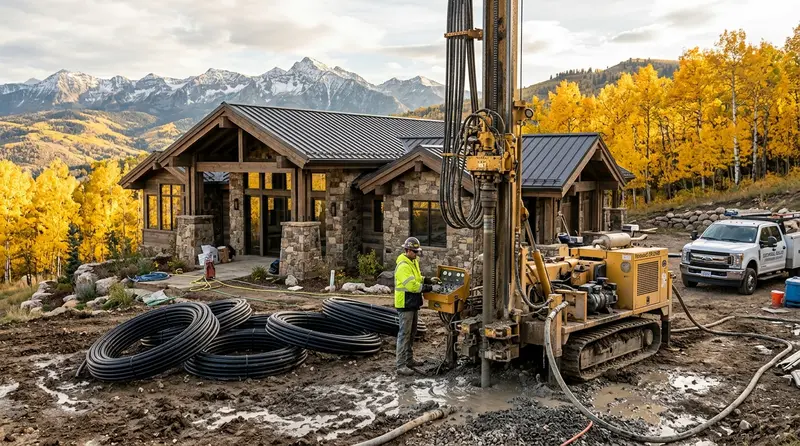
Why Utah Is Quietly Perfect for Geothermal
Utah doesn't usually come up first in geothermal heat pump conversations. Colorado gets the mountain-home attention, Arizona owns the desert-cooling narrative, and Idaho has its volcanic geology. But here's the thing — Utah might actually be the best state in the Interior West for residential ground-source heat pumps, and it's not even close once you run the numbers.
Three factors make Utah stand out:
- Rock-bottom electricity rates. Utah's average residential electricity rate is just 9.97¢/kWh (EIA 2024), ranking it the 10th cheapest state in the nation. That's well below the national average of 16.63¢ and cheaper than every neighboring state except Wyoming. When your electricity is cheap and your geothermal heat pump runs at a COP of 4.0, your operating costs become almost absurdly low.
- A massive propane-dependent mountain population. Park City, Deer Valley, Heber City, Midway — Utah's Wasatch Back is packed with high-end homes that burn through $5,000–$8,000 in propane every winter. These mountain communities sit beyond the natural gas grid, making them the single best payback scenario for geothermal in the entire state.
- Genuine geothermal DNA. This isn't marketing fluff. The U.S. Department of Energy chose Utah as the site for its flagship FORGE (Frontier Observatory for Research in Geothermal Energy) project near Milford — a $220 million investment in enhanced geothermal systems research. The University of Utah's Energy & Geoscience Institute is a world leader in geothermal research. Utah has actual hot springs, actual geothermal power plants, and actual geologists who've been studying subsurface heat for decades. That institutional knowledge trickles down to a contractor base that understands ground-source technology better than most states.
Then there's the construction boom. Utah has been one of the fastest-growing states in America for over a decade, with the Wasatch Front corridor from Ogden to Provo adding thousands of new homes annually. New construction is the lowest-cost entry point for geothermal — you're already digging foundations, already running ductwork, and the incremental cost of adding ground loops is 30–40% less than a retrofit. In a state where new-build subdivisions stretch across the Salt Lake and Utah valleys, that's a big deal.
And let's not forget St. George. Utah's southwestern corner is Arizona with a Utah zip code — 100°F+ summers, 300+ sunny days, and a cooling-dominant load profile that makes geothermal's ground-temperature advantage shine in ways that surprise people who think of Utah as a cold state.
Utah is a state of contrasts — mountain winters at 7,000 feet, desert summers at 2,800 feet, and a whole lot of alluvial valley in between with some of the best groundwater conditions in the West. Let's dig into how those contrasts shape the geothermal equation.
Quick Verdict: Should You Go Geothermal in Utah?
| Situation | Verdict | Why |
|---|---|---|
| Mountain home on propane (Park City, Heber, Midway) | 🟢 Slam dunk | Propane at $3.50+/gal vs. 9.97¢ electricity = 5–7 year payback. Best ROI in the state. |
| Electric resistance heating | 🟢 Strong yes | COP 4.0 beats resistance (COP 1.0) by 4x. Even at Utah's cheap rates, savings are immediate. |
| New construction (Wasatch Front) | 🟢 Excellent | Incremental cost of $8K–$12K over conventional HVAC. 30% federal credit applies. Build it in from day one. |
| Rural/agricultural (REAP eligible) | 🟢 Strong yes | USDA REAP grants cover up to 50% of costs. Stack with federal ITC for 70%+ coverage. |
| St. George cooling-dominant home | 🟡 Good | Ground at 65°F vs. 105°F air = huge cooling advantage. Payback around 8–10 years vs. high-efficiency AC. |
| Salt Lake City natural gas home | 🟡 Moderate | Natural gas is cheap in UT (~$0.80/therm). Payback is 10–14 years. Better as a furnace replacement play. |
| Park City/Deer Valley ski home (high-end) | 🟢 No-brainer | $6K–$10K propane bills, large square footage, and homeowners who value comfort + sustainability. Payback under 6 years. |
| Vacation rental / Airbnb | 🟡 Good if occupied | Geothermal shines with consistent use. If occupancy is 60%+, the economics work. Marketing angle is a bonus. |
The FORGE Factor: Utah's Geothermal Credibility
Most states can't point to a $220 million federal geothermal research project within their borders. Utah can.
The Utah FORGE (Frontier Observatory for Research in Geothermal Energy) project, located near Milford in Beaver County, is the U.S. Department of Energy's flagship enhanced geothermal systems (EGS) research site. Managed by the University of Utah's Energy & Geoscience Institute, FORGE is working on techniques to create geothermal reservoirs in hot dry rock — essentially making geothermal power available everywhere, not just in areas with natural hydrothermal resources.
Now, FORGE is focused on utility-scale geothermal power generation, not residential heat pumps. They're different technologies. But here's why FORGE matters for homeowners considering a ground-source heat pump:
- Institutional expertise. The University of Utah has one of the country's strongest geothermal research programs. That expertise filters into the local drilling and HVAC contractor community. Utah drillers who've worked on geothermal projects understand subsurface conditions in ways that contractors in, say, Ohio simply don't.
- Public awareness. FORGE generates media coverage. Utahns hear about geothermal energy on local news. That familiarity reduces the "that sounds weird" barrier that geothermal heat pumps face in states where the concept is foreign.
- Geological data. FORGE has generated unprecedented subsurface temperature and geological data for Utah. While that data is focused on the Milford site, the research program has spurred broader geological surveys that benefit anyone doing geothermal work in the state.
- Political support. Utah's state government has been consistently supportive of geothermal development. Governor Cox has spoken publicly about geothermal's role in Utah's energy future. That political climate makes permitting and regulatory issues less fraught than in states where geothermal is a niche curiosity.
Utah also has operational geothermal power plants — the Blundell plant near Milford has been generating electricity from geothermal steam since 1984. Roosevelt Hot Springs, Cove Fort, and other sites demonstrate that Utah's subsurface has genuine thermal resources. This isn't theoretical. The heat is real, it's proven, and it's been powering things for four decades.
For a homeowner in Salt Lake City or Park City weighing whether geothermal "works" in Utah, the answer is backed by more geological evidence than almost any other state in the country.
Climate & Geology: Five Regions, Five Stories
Utah spans from the 2,800-foot Mojave-adjacent desert of St. George to the 7,000-foot alpine terrain of Park City — and the geothermal equation is different in each zone. Here's what you need to know about the five main residential regions:
Salt Lake Valley (4,200–4,800 ft)
The state's population center, home to roughly 1.2 million people. Salt Lake City sits in a broad alluvial valley filled with deep deposits of gravel, sand, and clay — sediment washed down from the Wasatch Range over millions of years. This is excellent ground for geothermal loops. The alluvial material provides good thermal conductivity, and the water table is relatively shallow in much of the valley (20–50 feet in many areas).
Ground temperatures in the Salt Lake Valley average 52–55°F at depth — comfortably moderate for both heating and cooling. The climate is four-season, with genuine winter cold (average January low of 22°F) and real summer heat (average July high of 93°F). Salt Lake City logs roughly 5,700 heating degree days and 1,100 cooling degree days annually — heating-dominant, but with enough cooling load to keep the ground thermally balanced.
The biggest factor here: most Salt Lake Valley homes are on natural gas, supplied by Dominion Energy Utah. Gas is cheap — roughly $0.80–$1.00 per therm for residential customers. That makes the payback calculation tighter than in propane country, and it's the honest reason why geothermal adoption in the valley has been slower than the mountains.
Utah Valley / Provo-Orem (4,500–4,700 ft)
Similar geology to Salt Lake Valley — alluvial deposits from the Wasatch Range, good thermal conductivity, moderate water table. Ground temperatures average 53–55°F. The climate is nearly identical to SLC with slightly less inversion-related smog (which doesn't affect geothermal, but affects the quality-of-life argument for electrification).
Utah Valley has been one of the fastest-growing metro areas in the country. Lehi, Eagle Mountain, Saratoga Springs — these towns are adding subdivisions at a remarkable pace. For builders doing 50+ homes at a time, geothermal ground loop installation can be bid at community-scale pricing, bringing per-home costs down significantly. The new construction angle is strongest here.
Park City / Wasatch Back (6,000–7,500 ft)
This is where the geothermal story gets exciting. Park City, Deer Valley, Heber City, Midway, and Kamas sit at high elevation on the eastern side of the Wasatch Range. Winters are long and cold — Park City averages over 7,500 heating degree days, with January lows regularly hitting single digits. Snow stays on the ground from November through April.
Critically, most homes in the Wasatch Back are not on the natural gas grid. They heat with propane, which is delivered by truck and stored in tanks on the property. At current prices of $3.00–$4.00 per gallon (higher during cold snaps), a 3,500 sq ft mountain home can easily burn through $6,000–$10,000 in propane per winter. That's the baseline you're replacing with geothermal — and the math gets very favorable very fast.
The geology is trickier. Park City sits on a mix of sedimentary rock (sandstone, limestone, shale) and volcanic deposits. Drilling through rock costs more than drilling through Salt Lake Valley alluvium — expect $15–$20 per foot instead of $10–$15. But the savings from eliminating propane are so large that the higher drilling costs barely dent the ROI.
Ground temperatures at Park City's elevation run 48–52°F — cooler than the valley, which slightly reduces heating efficiency but improves cooling efficiency for those who need AC during the increasingly warm mountain summers.
St. George / Southern Utah (2,800–3,500 ft)
St. George is Utah's Arizona. Summer highs regularly exceed 100°F, with stretches above 110°F not uncommon. This is a cooling-dominant climate — roughly 2,500+ cooling degree days against only 2,800 heating degree days. The ground-temperature advantage for cooling is massive: when it's 107°F outside and your ground loop is sitting at 63–65°F, you're rejecting heat into a heat sink that's 40+ degrees cooler than ambient air.
The geology in southern Utah is a mix of red sandstone (Navajo Sandstone and its relatives) and desert alluvium. Sandstone provides decent thermal conductivity but can be harder to drill through than valley sediment. The water table is deep in many areas, which generally rules out open-loop systems.
St. George is growing fast — retirees, remote workers, and families drawn by affordable housing and 300+ sunny days. The solar potential is enormous, and pairing geothermal with rooftop solar creates a particularly compelling package (more on that later).
Rural Utah / Uintah Basin (4,800–5,500 ft)
The Uintah Basin in northeastern Utah and the rural areas of central and western Utah present a different picture. Population is sparse, homes are spread out, and many rely on propane or electric resistance heating. Ground temperatures in the Uintah Basin average 48–52°F, and winters are genuinely harsh — Vernal and Roosevelt see January lows around 5°F.
For rural properties, the USDA REAP (Rural Energy for America Program) grant can cover up to 50% of a geothermal system's cost. Combined with the 30% federal ITC, rural Utah homeowners can potentially cover 70%+ of their system cost through incentives. The catch: REAP applications are competitive and paperwork-heavy. But for those who qualify, the economics are extraordinary.
Geology & Drilling Conditions by Region
Utah's geology varies dramatically from the alluvial valleys to the mountain bedrock to the desert sandstone. Understanding what your driller will encounter directly affects your installation cost and loop design. Here's a region-by-region breakdown of what's underfoot:
| Region | Dominant Geology | Thermal Conductivity (BTU/hr·ft·°F) | Typical Bore Depth | Drilling Cost/ft | Key Challenges |
|---|---|---|---|---|---|
| Salt Lake Valley (West Side) | Alluvial gravel, sand, clay — Lake Bonneville sediments | 1.0–1.4 | 150–200 ft | $10–$14/ft | Shallow water table (15–40 ft) may require casing. Easy drilling — fastest in the state. |
| Salt Lake Valley (East Bench/Foothills) | Alluvium over Wasatch Range outwash, increasing cobble/gravel with depth | 1.1–1.5 | 175–250 ft | $12–$16/ft | Cobble layers can slow drilling. Deeper water table (50–150 ft). Good conductivity overall. |
| Utah Valley (Provo–Orem–Lehi) | Lake Bonneville lacustrine clay, alluvial gravel, Utah Lake sediments | 0.9–1.3 | 175–225 ft | $11–$15/ft | Clay-rich zones in valley center have lower conductivity. West side better for open-loop (shallower aquifer). |
| Park City / Wasatch Back | Sedimentary (sandstone, limestone, shale), some volcanic intrusives | 1.2–1.8 | 200–300 ft | $15–$20/ft | Rock drilling — 30–50% premium over valley. Variable formation changes require experienced driller. Access can be tight on steep lots. |
| St. George / Southern Utah | Navajo Sandstone, Kayenta Formation, desert alluvium, red rock | 1.0–1.6 | 200–275 ft | $13–$18/ft | Sandstone varies from soft (easy drill) to well-cemented (hard). Deep water table (100–300+ ft) rules out open-loop. Caliche possible in alluvial zones. |
| Ogden / Weber County | Alluvial outwash, Bonneville sediments, Weber River deposits | 1.0–1.4 | 150–225 ft | $11–$15/ft | Similar to SLC valley — good alluvial conditions. Transition to rock toward the Wasatch foothills. Shallow groundwater near river corridors. |
| Rural / Uintah Basin | Green River Formation shale, Uinta sandstone, Duchesne River sediments | 0.8–1.3 | 200–275 ft | $12–$17/ft | Variable formation quality. Oil/gas region — drillers available but may need geothermal-specific grouting experience. Cold ground temps (46–50°F). |
Reading Utah's Geology Before You Drill
Before committing to a loop design, smart homeowners and contractors should check the Utah Geological Survey's (UGS) well log database. The state maintains records of water well drilling logs that reveal what drillers encountered at various depths — formation types, water strikes, and drilling rates. This data is publicly accessible through the Division of Water Rights' well database and can help your installer estimate drilling conditions and costs before mobilizing equipment.
For Park City and mountain installations specifically, ask your driller about their experience with the local formations. The Weber Quartzite, Park City Formation, and Thaynes limestone each drill differently, and a driller who's done 50 bores in Summit County will know the typical formation changes at 80 feet, 150 feet, and 220 feet in ways that a flatland driller won't. This local knowledge is worth paying for.
The UGS also publishes thermal gradient data from their geothermal resource studies. While this data is primarily used for deep geothermal power assessments, it confirms that Utah's subsurface temperatures are predictable and well-characterized — you're not drilling into unknowns the way you might in states with less geological survey infrastructure.
Regional Costs & ROI
| Region | Avg. System Cost (4-ton) | Ground Loop Cost/ft | Typical Annual Savings | Payback (Before Incentives) | Payback (After 30% ITC) |
|---|---|---|---|---|---|
| Salt Lake Metro | $24,000–$30,000 | $12–$16/ft | $800–$1,400 (vs. gas) | 17–25 years | 12–18 years |
| Utah Valley / Provo (new build) | $18,000–$24,000* | $11–$15/ft | $1,000–$1,600 (vs. gas) | 12–18 years | 8–13 years |
| Park City / Wasatch Back | $28,000–$38,000 | $15–$20/ft | $3,500–$5,500 (vs. propane) | 5–9 years | 4–6 years |
| St. George / Southern UT | $24,000–$32,000 | $13–$17/ft | $1,200–$2,000 (vs. AC + gas) | 12–18 years | 8–13 years |
| Rural / Uintah Basin | $26,000–$35,000 | $12–$18/ft | $2,500–$4,000 (vs. propane) | 7–12 years | 5–8 years |
*Utah Valley new construction costs reflect incremental cost over conventional HVAC, not full system cost. Retrofit costs would be $24,000–$32,000, comparable to Salt Lake Metro.
The pattern is clear: propane displacement drives the best payback. If your home is on natural gas, geothermal still works — it's a better system with lower emissions and superior comfort — but the financial case is longer-term. If you're burning propane, the conversation shifts from "should I?" to "why haven't I already?"
One thing that helps across the board: Utah's electricity rate of 9.97¢/kWh is the cheapest among its neighbors. Colorado averages around 14.4¢, Nevada around 11.5¢, and Arizona around 13.2¢. When you're running an electric heat pump, the cost of electricity is your operating expense — and Utah's is about as low as it gets in the Western U.S.
Case Study: Park City Mountain Home — Propane to Geothermal
The Setup
A 4,200 sq ft home in the Snyderville Basin area near Park City, built in 2008. Two-story construction with a finished basement, 4 bedrooms, vaulted ceilings. The home heated with two propane furnaces (one for upstairs, one for the basement level) and had central AC for summer. Elevation: 6,800 feet.
The Old System Costs
- Propane consumption: ~1,600 gallons/year (heating + hot water + cooktop)
- Propane price: $3.65/gallon average (2024–2025 delivery prices)
- Annual propane cost: $5,840
- Summer AC electricity: ~$520/year (4 months of cooling)
- Total HVAC cost: $6,360/year
The Geothermal System
- Equipment: Two-stage 5-ton WaterFurnace 7 Series with variable-speed compressor
- Loop: Four vertical bores at 250 feet each (1,000 linear feet total), drilled through mixed sedimentary rock
- Desuperheater: Installed for partial domestic hot water preheating
- Drilling cost: $18,500 ($18.50/ft — higher than valley pricing due to rock)
- Equipment + installation: $16,800
- Ductwork modifications: $2,200 (existing ducts mostly reused)
- Total system cost: $37,500
- Federal ITC (30%): −$11,250
- Net cost: $26,250
The New Operating Costs
- Geothermal electricity (heating + cooling): ~$1,680/year (estimated 16,800 kWh at 9.97¢)
- Propane (cooktop only): ~$180/year (~50 gallons)
- Total HVAC cost: $1,860/year
The Math
- Annual savings: $6,360 − $1,860 = $4,500/year
- Simple payback (after ITC): $26,250 ÷ $4,500 = 5.8 years
- 20-year net savings: ($4,500 × 20) − $26,250 = $63,750
And that calculation doesn't account for propane price increases. If propane ticks up even $0.50/gallon — which it regularly does — the payback shortens to under 5 years. This family eliminated their propane tank, freed up space in their utility room, and gained even heating throughout the house (the old furnaces had significant temperature variation between floors).
Verdict: This is the geothermal sweet spot in Utah. High-altitude, propane-dependent, large square footage, with homeowners who plan to stay for 10+ years. The system pays for itself and then puts money back in their pocket every single year after that.
Case Study: Salt Lake City Gas Home — An Honest Assessment
The Setup
A 2,400 sq ft ranch-style home in the Sugar House neighborhood of Salt Lake City, built in 1975. Single story with unfinished basement, 3 bedrooms. Heated with a natural gas furnace (92% AFUE, installed 2018) and cooled with a 14 SEER central AC unit. Elevation: 4,400 feet.
The Old System Costs
- Natural gas (heating + hot water): ~850 therms/year
- Gas price: $0.85/therm average (Dominion Energy Utah residential rate)
- Annual gas cost: $722
- Summer AC electricity: ~$380/year
- Total HVAC cost: $1,102/year
The Geothermal System
- Equipment: 3-ton ClimateMaster Tranquility 30 with two-stage compressor
- Loop: Three vertical bores at 200 feet each (600 linear feet), drilled through Salt Lake Valley alluvium
- Desuperheater: Installed
- Drilling cost: $8,400 ($14/ft — easier alluvial drilling)
- Equipment + installation: $12,600
- Ductwork modifications: $1,800
- Total system cost: $22,800
- Federal ITC (30%): −$6,840
- Net cost: $15,960
The New Operating Costs
- Geothermal electricity (heating + cooling): ~$750/year (estimated 7,500 kWh at 9.97¢)
- Total HVAC cost: $750/year
The Math
- Annual savings: $1,102 − $750 = $352/year
- Simple payback (after ITC): $15,960 ÷ $352 = 45 years
Yeah. That's a long payback. Let's be honest about it.
When you're replacing a relatively new, high-efficiency gas furnace in a state with cheap natural gas, the annual savings just aren't dramatic enough to justify the upfront cost on pure economics. Utah's natural gas rates are among the lowest in the West, and a 92% AFUE furnace is already pretty efficient.
When the SLC Gas Home Case DOES Make Sense
That said, there are scenarios where it flips:
- Furnace end of life. If your gas furnace is 20+ years old and needs replacing anyway, you're spending $5,000–$8,000 on a new furnace + AC. The incremental cost to go geothermal drops from $22,800 to $15,000–$17,000 (net ~$10,500–$12,000 after ITC), and payback drops to 30 years. Still long, but within the equipment's lifespan.
- Carbon reduction priority. If reducing your home's carbon footprint is a genuine goal (not just a talking point), geothermal eliminates direct fossil fuel combustion. Utah's grid is still coal-heavy, but it's cleaning up — Rocky Mountain Power is retiring coal plants through 2042.
- Salt Lake City's inversion. The Salt Lake Valley's notorious winter inversions trap pollution at ground level. Every gas furnace contributes. Switching to electric heating via geothermal reduces local air pollution — a tangible quality-of-life benefit in a valley that battles poor air quality for weeks at a time.
- Rising gas prices. If Dominion Energy's rates increase 3–5% annually (plausible as the utility transitions away from fossil fuels), the payback period compresses significantly over 15–20 years.
Verdict: This isn't the slam-dunk that Park City propane is. If your furnace still has 10 years of life, it's hard to make a purely financial argument for switching right now. But if you're building new, replacing aging equipment, or prioritizing air quality and emissions — the case gets much stronger. And once you factor in the comfort improvement (even, consistent heating without the blast-and-coast of a furnace), many homeowners who make the switch say they'd do it again regardless of the spreadsheet.
Case Study: Draper New Construction — Geothermal + Solar from Day One
The Setup
A 3,200 sq ft two-story home under construction in Draper, at the southern end of the Salt Lake Valley where the foothills meet the flatland. Elevation: 4,600 feet. The buyers — a family of four — chose geothermal over a standard gas furnace + AC package during the design phase. They also added a 9.6 kW rooftop solar array. The subdivision sits on alluvial soil with good drilling conditions.
Conventional HVAC Package (What They Would Have Paid)
- 96% AFUE gas furnace + 16 SEER2 AC: $12,500 installed (builder bid)
- Estimated annual gas + electricity: $1,680/year (gas heat + AC + hot water)
The Geothermal + Solar System
- Equipment: 4-ton WaterFurnace 5 Series with two-stage compressor + desuperheater
- Loop: Three vertical bores at 175 feet each (525 linear feet) — drilled during foundation excavation, same mobilization
- Drilling cost: $6,825 ($13/ft — builder negotiated bulk rate, shared drill mobilization)
- Equipment + installation: $14,200
- Ductwork: $0 incremental (designed for heat pump airflow from the start)
- Total geothermal cost: $21,025
- Incremental over conventional: $21,025 − $12,500 = $8,525
- Solar array (9.6 kW): $24,200 installed
- Combined total (geo + solar): $45,225
- Federal ITC (30% on both): −$13,568
- Net combined cost: $31,657
- Net incremental (geo only, after ITC): $8,525 − $2,558 ITC = $5,968
The New Operating Costs
- Geothermal electricity (heating + cooling): ~$910/year (estimated 9,130 kWh at 9.97¢)
- Hot water (desuperheater + electric backup): ~$140/year
- Solar production: ~14,400 kWh/year (9.6 kW × 1,500 kWh/kW Utah insolation)
- Net electricity cost: Solar covers 100%+ of geo + household baseload — annual electric bill approaches $0–$120/year depending on net metering credits
- No gas bill. No gas meter fee. Savings on the monthly $12 Dominion meter charge alone = $144/year.
The Math (Geothermal Incremental Only)
- Annual savings vs. conventional HVAC: $1,680 − $120 = $1,560/year
- Incremental geo cost (after ITC): $5,968
- Simple payback on geo increment: $5,968 ÷ $1,560 = 3.8 years
The Math (Combined System)
- Total savings vs. conventional (gas + electric): ~$2,280/year (eliminated gas bill + net-zero electric)
- Net combined cost after ITC: $31,657
- Net incremental over conventional: $31,657 − $12,500 = $19,157
- Combined payback on incremental: $19,157 ÷ $2,280 = 8.4 years
- 25-year net savings: ($2,280 × 25) − $19,157 = $37,843
The family's mortgage payment increased by roughly $110/month to finance the incremental cost — but their energy bills dropped by $140/month. They were cash-flow positive from day one. No waiting for payback. No hoping gas prices rise. They're saving money every single month compared to the conventional HVAC option, starting the month they moved in.
Verdict: New construction in Utah's valleys is the stealth play. The incremental cost is modest, the drilling is easy, the solar synergy is excellent, and you never install gas infrastructure that you'll eventually want to remove. If you're building in Lehi, Eagle Mountain, Saratoga Springs, Herriman, or Draper, this is the template. Talk to your builder about geothermal before the foundation goes in — it's dramatically cheaper to install during construction than to retrofit later.
Month-by-Month Energy Profile: Utah Geothermal Home
This table models a 3,000 sq ft home in the Salt Lake Valley with a 4-ton geothermal system. It illustrates how the system's load shifts from heating-dominant in winter to cooling-dominant in summer, with shoulder seasons providing near-free operation.
| Month | Avg. High / Low (°F) | Ground Temp (°F) | Dominant Mode | Estimated kWh | Estimated Cost |
|---|---|---|---|---|---|
| January | 37 / 22 | 53 | Heating | 1,450 | $145 |
| February | 43 / 26 | 52 | Heating | 1,220 | $122 |
| March | 53 / 33 | 52 | Heating | 880 | $88 |
| April | 62 / 40 | 53 | Light heating | 420 | $42 |
| May | 72 / 49 | 54 | Minimal | 180 | $18 |
| June | 83 / 57 | 55 | Cooling | 520 | $52 |
| July | 93 / 66 | 56 | Cooling | 820 | $82 |
| August | 91 / 64 | 57 | Cooling | 750 | $75 |
| September | 80 / 54 | 56 | Light cooling | 340 | $34 |
| October | 65 / 42 | 55 | Minimal | 220 | $22 |
| November | 49 / 31 | 54 | Heating | 920 | $92 |
| December | 37 / 22 | 53 | Heating | 1,380 | $138 |
| Annual Total | 9,100 | $910 |
Notice the shoulder seasons — May and October are practically free. The system barely runs when outdoor temperatures are moderate, and when it does, it's just nudging the temperature a few degrees. That's one of the underappreciated advantages of geothermal: the shoulder-season efficiency is extraordinary because you're not fighting a large temperature differential.
For a St. George home, shift the profile: winter heating costs drop by 40%, but summer cooling costs double. July and August in St. George would run closer to $120–$150/month as the system handles sustained 100°F+ days — still dramatically cheaper than conventional AC struggling against that same heat.
Open-Loop System Assessment by Region
Utah has some genuinely excellent groundwater in its valley aquifers, which opens the door to open-loop geothermal systems in ways that many Western states can't match. Open-loop systems pump groundwater directly through the heat pump and return it — simpler, cheaper to install, and often more efficient than closed-loop. But they require adequate water supply, acceptable water quality, and legal permission to use the water.
| Region | Open-Loop Feasibility | Water Table Depth | Water Quality | Permitting Notes |
|---|---|---|---|---|
| Salt Lake Valley (west side) | 🟢 Excellent | 15–40 ft | Good — low TDS in most areas | Requires Utah Division of Water Rights approval. Well permits generally straightforward. |
| Salt Lake Valley (east bench) | 🟡 Moderate | 50–150 ft | Good | Deeper water table increases well cost. Still viable but closed-loop may be more cost-effective. |
| Utah Valley (Provo-Orem) | 🟢 Good | 20–60 ft | Good — moderate TDS | Similar to SLC. Excellent alluvial aquifer. Utah Lake proximity helps recharge. |
| Park City / Wasatch Back | 🔴 Poor | Highly variable | Variable — some mineral-rich | Mountain bedrock makes open-loop impractical. Fractured rock aquifers are unreliable. Stick with closed-loop. |
| St. George / Southern UT | 🔴 Poor | 100–300+ ft | Variable — high TDS common | Deep water table, desert conditions. Water rights are contentious in southern UT. Closed-loop only. |
| Uintah Basin | 🟡 Variable | 30–100 ft | Variable — some areas have high mineral content | Depends heavily on specific location. Some areas near Green River have usable aquifers. Consult local driller. |
The Salt Lake Valley's west side is the open-loop sweet spot. The shallow alluvial aquifer provides abundant, clean groundwater at manageable depths. If you're building or retrofitting in West Valley City, Magna, Kearns, or West Jordan, open-loop should be seriously investigated — it can cut your ground-loop installation cost by 30–50% compared to vertical closed-loop, and the system will likely run at higher efficiency due to the excellent heat transfer properties of direct water contact.
One important note: Utah's Division of Water Rights requires a permit for any well, and return water must be properly managed — either returned to the aquifer via a return well or discharged to an approved surface location. Get the water rights conversation handled early in the project. Your driller should be experienced with this process.
Loop Type Cost Comparison
| Loop Type | Installed Cost (4-ton) | Best For | Utah Suitability | Notes |
|---|---|---|---|---|
| Vertical Closed-Loop | $20,000–$32,000 | Most homes, limited lot space | 🟢 Excellent statewide | Standard choice. Works in valley alluvium and mountain rock. 150–300 ft bores depending on soil. |
| Horizontal Closed-Loop | $14,000–$22,000 | Rural properties with land | 🟢 Good in valleys | Needs 1,500–2,000 sq ft of open land. Shallow rocky soil on mountain properties makes this difficult above 6,000 ft. |
| Open-Loop (Well Water) | $12,000–$20,000 | Properties with good groundwater | 🟢 Excellent in SLC/UT valleys | Lowest cost, highest efficiency. Requires water rights permit. Not viable in mountains or southern UT. |
| Pond/Lake Closed-Loop | $13,000–$19,000 | Properties adjacent to water | 🟡 Niche — limited applicability | Some irrigation ponds in rural UT. Reservoirs (Jordanelle, Deer Creek) near Park City are theoretical but unproven for residential. |
| Slinky Closed-Loop | $15,000–$23,000 | Moderate land, budget-conscious | 🟡 Good in valleys | Coiled pipe in shorter trenches. Good compromise between vertical and horizontal. |
For most Utah homes, the decision comes down to vertical closed-loop vs. open-loop (in the valleys) or vertical closed-loop as the default (everywhere else). Horizontal works great if you've got the acreage, but typical Wasatch Front subdivisions don't have the lot space.
Incentive Stacking: Federal ITC & Utah Programs
Here's the current incentive landscape for Utah homeowners installing a geothermal heat pump system:
Federal Investment Tax Credit (ITC) — 30%
The big one. Under the Inflation Reduction Act (IRC Section 25D), geothermal heat pump systems installed through 2032 qualify for a 30% federal tax credit. This covers the entire cost of the system — equipment, drilling, installation labor, ductwork modifications, and even the electrical panel upgrade if needed. There's no cap on residential systems.
For a $30,000 system, that's a $9,000 tax credit. This is a direct credit against your federal tax liability, not a deduction — dollar for dollar. If you don't owe $9,000 in the tax year of installation, the unused credit carries forward to future tax years.
Rocky Mountain Power Programs
Rocky Mountain Power (a PacifiCorp subsidiary) serves roughly 80% of Utah's residential electricity customers. Their energy efficiency rebate program has historically offered rebates for qualifying heat pump installations, though the specific programs and amounts change periodically.
As of early 2026, Rocky Mountain Power's Utah energy efficiency programs include rebates for qualifying ENERGY STAR heat pumps. Specific geothermal heat pump rebates should be verified directly with the utility — their program offerings have been restructured multiple times in recent years. [NEEDS VERIFICATION — contact Rocky Mountain Power at 1-888-221-7070 or check rockymountainpower.net for current geothermal-specific rebates]
If available, utility rebates typically range from $500–$2,000 and stack on top of the federal ITC.
Utah State Incentives
Utah does not currently offer a state-level tax credit specific to geothermal heat pumps. The state's Renewable Energy Systems Tax Credit (originally established under HB 192) previously offered a state credit of up to 25% (capped at $2,000 for residential), but this program has expired for most renewable energy systems. [NEEDS VERIFICATION — check Utah State Tax Commission and DSIRE for any reinstated or new programs]
USDA REAP Grants (Rural Properties)
If your property is in a rural area (most of Utah outside the Wasatch Front metro qualifies), the USDA Rural Energy for America Program (REAP) can provide grants covering up to 50% of the system cost, or loan guarantees covering up to 75%. REAP is competitive and has application deadlines (typically spring and fall), but the potential payoff is enormous.
For a rural Utah homeowner installing a $35,000 geothermal system:
- REAP grant (25%): −$8,750
- Federal ITC (30% of remaining $26,250): −$7,875
- Net cost: $18,375
- Effective discount: 47.5%
If you receive the full 50% REAP grant, the math gets even better — potentially covering 65%+ of the total system cost when stacked with the federal ITC.
REAP Deep-Dive: Sanpete County Ranch Example
A ranch property outside Ephraim in Sanpete County runs a 2,800 sq ft farmhouse on propane ($4,200/year) with a failing 25-year-old furnace. The property qualifies for REAP as an agricultural operation (small herd cattle, hay).
| Line Item | Amount |
|---|---|
| 4-ton vertical closed-loop system (installed) | $28,000 |
| USDA REAP grant (25%) | −$7,000 |
| Remaining eligible cost | $21,000 |
| Federal ITC (30% of $21,000) | −$6,300 |
| Net out-of-pocket | $14,700 |
| Annual savings (vs. propane) | $3,400 |
| Simple payback | 4.3 years |
If the rancher secures a 40% REAP grant (competitive round, strong application), the net cost drops to $10,080 — a 3.0-year payback. For a system that lasts 25+ years, that's a return on investment that makes Wall Street jealous.
REAP applications are submitted to the USDA Utah State Office in Salt Lake City. The process requires an energy audit (your geothermal installer can often provide this), a business plan demonstrating the energy savings, and competitive scoring based on energy reduction percentage and project economics. Applications open in spring and fall — plan 3–6 months ahead of your installation date.
High-Efficiency Electric Home Rebate Act (HEEHRA)
The IRA's point-of-sale electrification rebates (administered through state energy offices) may provide up to $8,000 for heat pump installations for qualifying low- and moderate-income households. Utah's implementation of HEEHRA through the Utah Office of Energy Development is still rolling out — check energy.utah.gov for current program status and income eligibility thresholds. [NEEDS VERIFICATION]
Maximum Stack Example
| Incentive | Amount | Notes |
|---|---|---|
| System cost | $30,000 | Typical 4-ton vertical closed-loop in SLC area |
| Federal ITC (30%) | −$9,000 | No cap. Carries forward if needed. |
| Rocky Mountain Power rebate | −$500 to −$2,000 | [NEEDS VERIFICATION] |
| HEEHRA (if income-eligible) | −$8,000 | [NEEDS VERIFICATION — program rollout in progress] |
| Best-case net cost | $11,000–$12,500 | Urban Wasatch Front homeowner |
For rural properties, add REAP and the net cost can drop below $10,000 for a full geothermal system. That's astonishing value for a system that'll last 25+ years with minimal maintenance.
Solar + Geothermal: The Wasatch Combo
Utah gets a lot of sun. Salt Lake City averages 222 sunny days per year. St. George gets over 300. And because a geothermal heat pump runs on electricity, pairing it with rooftop solar creates a self-reinforcing loop: the panels generate the electricity that powers the heat pump that heats and cools your home.
Here's why the combination is particularly strong in Utah:
- Net metering (for now). Rocky Mountain Power's net metering program is transitioning — new solar customers are being moved to time-of-use and export credit rates that are less favorable than traditional 1:1 net metering. But the fundamentals still work: your solar panels generate during the day, your geothermal system runs the heaviest in the morning and evening, and the grid acts as your battery in between. Even under less-favorable export rates, self-consumption of solar to power geothermal maximizes the value of every kilowatt-hour.
- Both qualify for the 30% ITC. Solar panels and geothermal heat pumps each independently qualify for the 30% federal tax credit. Install both and you get 30% off the combined cost. For a $30,000 geothermal system + $20,000 solar array, that's $15,000 in tax credits.
- Summer synergy in St. George. In southern Utah, your solar panels are producing maximum electricity at the same time your geothermal system needs it most — summer afternoon cooling. The solar production curve and the cooling demand curve overlap almost perfectly. In a net-zero scenario, your summer electricity bill can approach zero.
- Winter mismatch (but still helps). In northern Utah, winter is when you need the most heating — and it's when solar production is lowest due to shorter days, lower sun angle, and snow cover. The solar + geothermal combo is less synergistic in winter, but the geothermal system's high COP means it needs relatively little electricity even during peak heating months. A well-designed 8–10 kW solar array can cover 60–80% of a geothermal system's annual electricity needs in the Salt Lake Valley.
The combined system is also a powerful hedge against future rate changes. If Rocky Mountain Power's rates increase (and they likely will as coal plants retire and grid modernization costs are passed through), having both your own generation and an ultra-efficient heating/cooling system insulates you from utility rate volatility.
Permits & Licensing Requirements
Utah's permitting for geothermal heat pumps is relatively straightforward compared to states with more complex regulatory environments, but there are several layers to navigate — especially if you're considering an open-loop system.
Mechanical/Building Permit (All Installations)
Every geothermal installation requires a mechanical permit from your local building department. This covers the heat pump equipment, ductwork modifications, and electrical connections. The process is similar to any HVAC replacement:
- Salt Lake County: Apply through the Salt Lake County Building Services Division or your city's building department. Typical turnaround: 5–10 business days. Fee: $75–$200 depending on project value.
- Summit County (Park City): Summit County Building Department handles permits for unincorporated areas. Park City has its own building department for in-city installations. Mountain installations may require additional site plan review due to steep slopes and drainage concerns. Fee: $100–$300.
- Washington County (St. George): Washington County or City of St. George building department. Standard mechanical permit process. Fee: $75–$150.
- Utah County (Provo-Orem): County or city building department. New construction permits typically bundle the geothermal with the overall building permit at no additional cost.
Well Drilling Permit — Division of Water Rights
This is the Utah-specific layer that catches some homeowners off guard. The Utah Division of Water Rights (DWR) has jurisdiction over any well drilling in the state — including geothermal boreholes.
- Closed-loop vertical bores: Technically require a "start card" filed with DWR before drilling begins. Many counties have streamlined this process for closed-loop geothermal, which is non-consumptive (no water is withdrawn). Some jurisdictions treat closed-loop bores as exempt from full water rights permitting since no water is appropriated. Your driller should know the current local practice.
- Open-loop systems: Require a full water right or change application through DWR. This involves demonstrating that adequate water exists, that your use won't impair existing water rights holders, and that return water will be properly managed. The process can take 2–6 months depending on the area and whether protests are filed. Do not wait until construction is underway to start this process.
- Return well requirements: Open-loop systems typically require a return (injection) well to put water back into the aquifer. DWR requires that the return well meet construction standards and that the return water quality meets state standards. In practice, geothermal return water is nearly identical to the source water — the system only changes its temperature by 5–10°F.
Well Driller Licensing
Utah requires that all water wells (including geothermal wells) be drilled by a licensed well driller. The Utah Division of Water Rights maintains a list of licensed well drillers. Your geothermal installer should either hold a well drilling license or subcontract to a licensed driller. Verify this before signing a contract — unlicensed drilling can result in project delays, permit violations, and inadequate bore construction.
HVAC Contractor Licensing
Utah requires HVAC contractors to be licensed through the Division of Occupational and Professional Licensing (DOPL). For geothermal installations, look for contractors with:
- S350 — HVAC Contractor License: Required for installing the heat pump, ductwork, and related mechanical components.
- E100 — General Electrical License (or appropriate subcontract): For electrical connections, thermostat wiring, and any panel upgrades.
Verify any contractor's license at the DOPL License Lookup page. A valid S350 license is non-negotiable. Any contractor who can't produce this should be immediately disqualified.
HOA Considerations
Utah has enacted legislation (Utah Code § 57-8a-218) that limits HOA restrictions on energy-efficient improvements. However, HOAs can still regulate the placement of equipment and require aesthetic standards. Most geothermal installations are invisible — the loop is underground and the heat pump is indoors — so HOA conflicts are rare. The main potential issue is drilling equipment access: if your lot requires a drill rig to cross common areas, you'll need HOA board approval for temporary access.
Typical Permit Timeline
| Step | Timeframe | Notes |
|---|---|---|
| Mechanical permit application | 5–10 business days | Standard for most jurisdictions |
| DWR start card (closed-loop) | 1–5 business days | Some areas accept same-day filing |
| DWR water right (open-loop) | 2–6 months | Start early. Protests can extend timeline. |
| Drilling | 1–3 days | Weather dependent in mountains |
| Equipment installation | 2–4 days | Includes piping, connections, commissioning |
| Final inspection | 1–3 business days | Schedule before the inspector's Friday rush |
| Total (closed-loop) | 3–5 weeks | From permit application to operational system |
| Total (open-loop) | 3–7 months | Water rights process is the bottleneck |
Finding & Vetting a Qualified Installer
Utah has a growing but still relatively small pool of experienced geothermal installers. The state's drilling heritage (mining, oil/gas, water wells) means there are skilled drillers available, but not all drillers understand the specific requirements of geothermal bore construction — grouting procedures, loop pressure testing, and thermal conductivity considerations differ from water well drilling.
Where to Find Installers
- IGSHPA Accredited Installer Directory: The International Ground Source Heat Pump Association maintains a directory of accredited installers searchable by state. This is the gold standard — IGSHPA accreditation requires specific geothermal training and testing.
- WaterFurnace Dealer Locator: waterfurnace.com/dealer-locator — factory-trained on the leading residential brand.
- ClimateMaster Dealer Network: climatemaster.com/residential/find-a-dealer
- Bosch Geothermal Contractor Locator: bosch-thermotechnology.us
- GeoExchange Directory: geoexchange.org — industry association listing.
- DOPL License Lookup: dopl.utah.gov/licenselookup — verify any contractor holds a valid S350 HVAC license.
Regional Installer Availability
| Region | Estimated Qualified Installers | Wait Time (Typical) | Notes |
|---|---|---|---|
| Salt Lake Valley | 8–12 | 4–8 weeks | Best availability in the state. Multiple firms with 10+ years experience. |
| Utah Valley (Provo-Orem) | 5–8 | 4–8 weeks | Growing market. Some SLC firms serve this area too. |
| Park City / Wasatch Back | 3–5 | 6–12 weeks | Seasonal demand (summer drilling season). Book early — spring is the busiest scheduling window. |
| St. George / Southern UT | 2–4 | 6–10 weeks | Limited local options. Some installers travel from SLC — add mobilization fee ($500–$1,500). |
| Ogden / Weber County | 4–6 | 4–8 weeks | SLC firms often serve this area. Good availability. |
| Rural / Uintah Basin | 1–2 | 8–16 weeks | Very limited. May need SLC-based installer. Water well drillers can handle bores but need HVAC partner. |
8-Point Vetting Checklist
Before signing with any geothermal installer, verify these eight items:
- Valid Utah S350 HVAC license — check at dopl.utah.gov/licenselookup. No license = no deal.
- IGSHPA accreditation or manufacturer certification — proves geothermal-specific training, not just general HVAC.
- Licensed well driller on staff or under contract — verify at waterrights.utah.gov. Required for all bore drilling in Utah.
- At least 10 completed geothermal installations — ask for a reference list. Visit a completed job if possible.
- Manual J load calculation included in proposal — any contractor who sizes equipment without a load calc is guessing.
- Written warranty covering equipment, labor, and loop — equipment typically 10 years, labor 1–2 years, HDPE loop 25–50 years from manufacturer.
- Proper insurance (general liability + workers' comp) — drilling involves heavy equipment. Request a certificate of insurance.
- Itemized bid with drilling, equipment, labor, and permits separated — bundled bids hide markups. You should see each cost component.
Red Flags
- Quoting a system size without visiting the property or performing a load calculation
- Unable to provide references from Utah installations (not just "heat pump" installs — specifically ground-source)
- Driller without Utah DWR well driller license
- Pressure to sign immediately or "lock in pricing" — reputable firms don't use high-pressure sales tactics
- No mention of loop pressure testing or commissioning in the proposal
- Quoting per-ton without specifying bore depth, loop length, or antifreeze concentration
Maintenance & System Longevity
One of geothermal's best selling points is its low maintenance requirements. With no outdoor unit exposed to Utah's weather extremes — from Park City's heavy snow to St. George's 110°F heat — the system's longevity advantage over conventional HVAC is significant.
Maintenance Schedule
| Task | Frequency | DIY or Pro? | Utah-Specific Notes |
|---|---|---|---|
| Check/replace air filter | Every 1–3 months | DIY | Monthly during winter inversions (SLC) — poor air quality means filters load faster. Monthly during St. George dust season. |
| Inspect condensate drain | Twice yearly (spring/fall) | DIY | Low humidity in most of Utah means less condensate than eastern states, but still check — especially in St. George cooling-heavy season. |
| Clean supply/return registers | Annually | DIY | Utah's dry climate generates fine dust. Clean registers and visible ductwork openings yearly. |
| Check loop pressure/antifreeze | Annually | Pro | Critical for Park City mountain installations where freeze protection must handle −20°F+ extremes. Valley installations are less critical but still worth checking. |
| Desuperheater inspection | Annually | Pro | Utah's hard water (especially in Utah Valley and St. George) can scale desuperheater heat exchangers faster than soft-water areas. Annual descaling if needed. |
| Compressor and electrical check | Every 2–3 years | Pro | Check refrigerant pressures, electrical connections, thermostat calibration. Standard HVAC maintenance. |
| Full system commissioning check | Every 5 years | Pro | Flow rates, entering/leaving water temps, COP verification, ductwork inspection. The "geothermal physical." |
| Ductwork inspection/sealing | Every 5–7 years | Pro | Important in older homes — Utah's dry climate can shrink duct sealant over time. Leaky ducts kill efficiency. |
System Lifespan
| Component | Expected Lifespan | Replacement Cost | Notes |
|---|---|---|---|
| Heat pump unit (indoor) | 20–25 years | $6,000–$10,000 | No outdoor exposure to Utah weather. Protected from snow, heat, UV, hail. |
| Ground loop (HDPE pipe) | 50–75+ years | $0 (doesn't need replacing) | Buried below frost line. No moving parts, no weather exposure. Your grandchildren may still use this loop. |
| Circulating pump | 10–15 years | $500–$1,200 | The most common replacement part. Variable-speed pumps last longer than single-speed. |
| Compressor | 15–20 years | $2,000–$4,000 | Scroll compressors in modern units are very reliable. Variable-speed runs at lower stress most of the time. |
| Desuperheater | 15–20 years | $400–$800 | Hard water areas (Utah Valley, St. George) may see shorter lifespan due to scaling. Annual maintenance extends life. |
| Thermostat/controls | 10–15 years | $200–$500 | Smart thermostats integrate well with geothermal. Replace as technology improves. |
| Antifreeze solution | 10–15 years | $300–$600 | Propylene glycol degrades over time. Test annually; replace when pH drops below specification. |
The key insight: when your first heat pump reaches end of life at year 20–25, the ground loop is still perfectly functional. Your replacement cost is just the indoor equipment ($6,000–$10,000), not another $15,000–$25,000 for drilling. This makes the second-generation cost dramatically lower than the initial installation — and it's the reason geothermal's 50-year economics are so compelling even when the first-generation payback seems long.
Utah-Specific Longevity Advantages
- No outdoor unit: Conventional AC condensers in Park City endure heavy snow loads, ice, and 9,000+ HDD cycles. In St. George, they bake in 110°F heat and UV radiation. Your geothermal heat pump sits indoors — in a basement, mechanical room, or utility closet — where it never sees weather.
- Dry climate helps: Utah's low humidity means less corrosion risk than coastal or humid states. The indoor unit operates in a dry environment, extending electrical component and compressor lifespan.
- Stable ground temps: Utah's ground temperatures are remarkably stable year-round (within 3–5°F). The system never has to handle the kind of extreme entering water temperatures that stress equipment in states with very cold ground or very hot ground. This temperature moderation reduces compressor wear.
Vacation Rental & Ski Home Economics
Utah's tourism economy creates a unique geothermal opportunity. The state hosts roughly 30 million visitors annually — ski season in Park City, mountain summers across the Wasatch, national park trips through southern Utah, and year-round Salt Lake City business travel. For property owners running vacation rentals, geothermal adds both a marketing angle and an operational advantage.
Park City / Deer Valley Ski Rentals
Park City is one of America's premier ski destinations, and the vacation rental market is enormous. High-season nightly rates for a 3-bedroom mountain home range from $400 to $1,200 depending on proximity to resorts. These homes need reliable heating from November through April — and propane delivery during peak season is both expensive and sometimes logistically challenging (road closures, delivery backlogs during cold snaps).
Geothermal eliminates propane dependency entirely. No more worrying about tank levels, delivery schedules, or price spikes during the coldest weeks. The system runs on electricity — always available, always consistent, and at 9.97¢/kWh, remarkably cheap.
The marketing angle is real too. "Geothermal heated & cooled" is a differentiator on Airbnb and VRBO. It signals sustainability, modernity, and superior comfort to the eco-conscious traveler segment — which overlaps significantly with the affluent ski-vacation demographic.
For a Park City rental generating $60,000–$120,000/year in bookings, the $4,500/year in propane-to-geothermal savings drops straight to the bottom line. And the premium you can charge for a "net-zero mountain retreat" (geo + solar) can add $30–$75/night in competitive markets.
Heber Valley & Midway
The Heber Valley has emerged as Park City's more affordable alternative, with hot springs resorts (Homestead Crater, Crater Springs) drawing year-round visitors. Vacation rentals here are growing fast. Same propane dependency, same geothermal opportunity, with lower property prices making the ROI even stronger relative to home value.
St. George / Zion Gateway Rentals
St. George serves as the gateway to Zion National Park, with vacation rentals catering to national park visitors year-round. For cooling-dominant properties, geothermal's advantage is operational silence and consistent comfort. When summer temperatures hit 110°F, guests notice the difference between a home where the AC is struggling to keep up and one where the geothermal system is quietly maintaining 72°F without breaking a sweat. It's a comfort differentiator in a market where guest reviews drive bookings.
Moab & Southern Utah Adventure Rentals
Moab's position near Arches and Canyonlands national parks creates strong vacation rental demand. Cooling season is the primary draw — summer visitors need reliable AC. Off-grid or propane-dependent properties near Moab can benefit from geothermal, though the limited installer availability in the area makes logistics more complex. Consider pairing with solar for properties where grid power is expensive or limited.
Vacation Rental Tax Considerations
If you use a property as a vacation rental (business use), geothermal systems qualify for different — and potentially more favorable — tax treatment. Instead of the residential Section 25D credit, business-use properties can claim the Section 48 Investment Tax Credit and depreciate the system using MACRS (Modified Accelerated Cost Recovery System) with a 5-year schedule. A rental property owner could potentially recover 60–70% of the system cost through tax credits and depreciation in the first 5 years. Consult a tax professional familiar with rental property energy improvements.
How to Claim the Federal Tax Credit (IRS Form 5695)
- Confirm system eligibility. Verify your geothermal heat pump meets ENERGY STAR requirements and was installed at your primary or secondary residence (rental properties don't qualify for the 25D residential credit — use the Section 48 commercial credit instead).
- Gather documentation. Collect your final invoice showing total system cost (equipment, drilling, installation labor, ductwork modifications), the installer's ENERGY STAR certification, and proof of payment.
- Download IRS Form 5695. Get it from irs.gov. Use the version for the tax year your system was placed in service — this is the date installation was completed, not when you signed the contract.
- Complete Part I — Residential Clean Energy Credit. Enter your total qualified geothermal heat pump costs on Line 4. Calculate 30% on Line 6b.
- Calculate your credit. The credit is 30% of all qualified costs with no upper limit for residential systems. If your tax liability is less than the credit amount, the excess carries forward to future tax years — you don't lose it.
- Transfer to Form 1040. Move the credit from Form 5695 Line 15 to Schedule 3 (Form 1040), Line 5. This reduces your tax bill dollar-for-dollar.
- Keep records. Retain all receipts, invoices, ENERGY STAR certificates, and a copy of Form 5695 for at least 6 years. The IRS can request documentation if they audit your return.
Pro tip: If you're installing both geothermal and solar in the same tax year, you can claim both credits on the same Form 5695. The geothermal costs go on Line 4 and the solar costs go on Line 1. Both get the 30% credit.
Utah vs. Neighboring States
How does Utah stack up against its neighbors for geothermal heat pump feasibility? Here's the comparison:
| Factor | Utah | Colorado | Nevada | Arizona | Idaho | Wyoming | New Mexico |
|---|---|---|---|---|---|---|---|
| Avg. Electricity Rate | 9.97¢ | 14.40¢ | 11.47¢ | 13.16¢ | 10.58¢ | 9.43¢ | 13.87¢ |
| Ground Temp Range | 48–65°F | 45–55°F | 55–72°F | 60–75°F | 48–55°F | 42–50°F | 55–68°F |
| State Tax Credit | Expired | None | None | 25% (capped) | None | None | None |
| Open-Loop Potential | Excellent (valleys) | Good (Front Range) | Poor (water scarcity) | Poor (water scarcity) | Excellent | Good | Poor-Fair |
| Propane Dependency | High (mountains) | High (mountains) | Moderate | Low | High (rural) | Very high | Moderate |
| Drilling Difficulty | Moderate | Moderate-Hard | Hard (caliche) | Moderate-Hard | Easy-Moderate | Moderate | Moderate-Hard |
| New Construction Rate | Very high | High | High | Moderate | High | Low | Moderate |
| Permitting Complexity | Low-Moderate | Moderate | Moderate | Moderate | Low | Low | Moderate-High |
| Installer Availability | Good (Wasatch) | Good (Front Range) | Limited | Limited | Good | Very limited | Limited |
| Overall Geo Rating | ⭐⭐⭐⭐½ | ⭐⭐⭐⭐ | ⭐⭐⭐ | ⭐⭐⭐ | ⭐⭐⭐⭐½ | ⭐⭐⭐⭐ | ⭐⭐⭐ |
Utah's combination of cheap electricity, strong open-loop potential in the valleys, significant propane-dependent mountain population, and high new construction rates gives it one of the best overall profiles in the region. Only Idaho matches it, and Idaho has a smaller population and less diverse climate range.
The one area where Utah lags is state-level incentives. Arizona's 25% state credit (though capped) and some Colorado utility programs offer better local support. But Utah's low electricity rates compensate — your operating costs will be lower than in any neighboring state except Wyoming, and Wyoming has a fraction of the contractor infrastructure.
Colorado's Front Range mountain communities have a very similar propane-to-geothermal story as Utah's Wasatch Back. If you're comparing the two states for a mountain home, the key differences are electricity cost (Utah wins decisively) and contractor availability (Colorado has more geothermal installers due to larger overall population).
Frequently Asked Questions
Does geothermal work at high altitude in Utah?
Yes. Geothermal heat pumps work well at altitude because they use ground temperature, not air temperature, as their heat source. At Park City's 7,000-foot elevation, ground temperatures run 48–52°F — cooler than the valley but perfectly adequate. The system's COP may be slightly lower in extreme cold, but because it's extracting heat from 50°F ground rather than 5°F air, it still dramatically outperforms air-source alternatives.
How much does a geothermal system cost in Utah?
A typical 4-ton residential geothermal system in Utah costs $24,000–$38,000 depending on region and loop type. Salt Lake Valley installations tend toward the lower end ($24,000–$30,000) due to easier drilling in alluvial soil. Park City mountain installations run higher ($28,000–$38,000) due to rock drilling. After the 30% federal tax credit, net costs range from $17,000 to $27,000.
Can I use an open-loop system in Salt Lake City?
In many parts of the Salt Lake Valley, yes. The valley has excellent alluvial aquifers with a shallow water table (15–40 feet on the west side). You'll need a well permit from the Utah Division of Water Rights and a return well or approved discharge point. Open-loop systems are typically 30–50% cheaper to install than vertical closed-loop and run at higher efficiency. Consult a local driller experienced with geothermal wells.
Is geothermal worth it if I have natural gas in Utah?
Honestly, it depends. Utah's natural gas rates are low (~$0.80/therm from Dominion Energy), so the annual savings from switching a working gas furnace to geothermal are modest ($300–$600/year). The payback can stretch to 15–25 years. However, if your furnace is at end of life and you're replacing it anyway, or if reducing carbon emissions and improving air quality (especially during Salt Lake's winter inversions) is a priority, the economics improve significantly.
What's the best geothermal system for a Park City ski home?
For Park City and Wasatch Back mountain homes, a vertical closed-loop system is the standard choice — mountain geology (mixed sedimentary rock) makes open-loop impractical, and lot sizes are often too small for horizontal loops. Plan for 200–300 foot deep bores at $15–$20/ft. Two-stage or variable-speed equipment (WaterFurnace 7 Series, ClimateMaster Trilogy) handles the wide temperature range from -5°F winter nights to 90°F summer days.
Does Rocky Mountain Power offer geothermal rebates?
Rocky Mountain Power has offered various energy efficiency rebates including heat pump incentives, but their specific programs change frequently. As of early 2026, check rockymountainpower.net or call 1-888-221-7070 to confirm current geothermal heat pump rebate availability and amounts for Utah customers. Any utility rebates stack on top of the 30% federal tax credit.
How does geothermal handle St. George's extreme summer heat?
Extremely well. When it's 107°F outside, a conventional AC unit struggles to reject heat into that blazing air. A geothermal system dumps heat into 63–65°F ground — roughly 40°F cooler than the air. This temperature advantage translates to COP improvements of 40–60% over air-source units during peak heat. Your compressor works less, uses less electricity, and delivers more consistent cooling.
What permits do I need for a geothermal system in Utah?
You'll need a mechanical permit from your local building department and a well start card filed with the Division of Water Rights for closed-loop bores. Open-loop systems require a full water right application through DWR, which can take 2–6 months. Your installer should hold a valid Utah S350 HVAC license (verify at dopl.utah.gov), and your driller must be licensed with the Division of Water Rights.
Can I combine geothermal with solar panels in Utah?
Yes, and it's a great combination. Both systems qualify independently for the 30% federal tax credit. Utah gets 222+ sunny days per year (300+ in St. George), and solar panels can generate 60–80% of the electricity your geothermal system needs annually. The combination minimizes grid dependence and hedges against future rate increases from Rocky Mountain Power.
How long does a geothermal system last in Utah's climate?
The indoor heat pump equipment typically lasts 20–25 years with proper maintenance — comparable to a high-quality furnace. The ground loop itself lasts 50+ years because it's just HDPE pipe buried underground with no moving parts and no exposure to weather. Utah's dry climate and moderate ground temperatures are ideal for equipment longevity. When you replace the indoor unit at year 20–25, you reuse the existing ground loop — making the replacement cost a fraction of the original installation.
What contractor license is required for geothermal installation in Utah?
Your geothermal installer must hold a valid Utah S350 HVAC Contractor License, which you can verify at dopl.utah.gov/licenselookup. The well driller must be licensed through the Utah Division of Water Rights. Look for additional credentials like IGSHPA accreditation or manufacturer certification (WaterFurnace, ClimateMaster, Bosch) which demonstrate geothermal-specific training beyond general HVAC work.
How often does a geothermal system need maintenance in Utah?
Basic maintenance is minimal: change the air filter every 1–3 months (monthly during SLC winter inversions or St. George dust season), check the condensate drain twice yearly, and have a professional inspect loop pressure and antifreeze concentration annually. A full system commissioning check every 5 years is recommended. Total annual maintenance cost typically runs $150–$300 — far less than a conventional system that requires both furnace and AC maintenance plus annual propane tank inspection.
Bottom Line
Utah is one of the best states in the Interior West for geothermal heat pumps — and it's not because of any single factor. It's the combination: cheap electricity (9.97¢/kWh), excellent valley aquifers for open-loop, a large propane-dependent mountain population with killer payback potential, one of the nation's highest new construction rates, and a geothermal research ecosystem that's literally world-class.
If you're in Park City or the Wasatch Back burning propane, geothermal is one of the best investments you can make in your home. A 5–6 year payback after the federal tax credit, with $4,000+ in annual savings after that, makes this a financial no-brainer that also happens to dramatically reduce your emissions and improve your comfort.
If you're in the Salt Lake Valley on natural gas, the picture is more nuanced. The economics are slower to pencil out, but the air quality argument is real (those inversions aren't getting better), the comfort improvement is significant, and as Utah's grid gets cleaner and gas prices likely increase over time, the decision looks better with each passing year. Time your geothermal installation to coincide with furnace replacement for the best value.
If you're building new anywhere along the Wasatch Front — Lehi, Eagle Mountain, Herriman, Draper, Saratoga Springs — the new construction play is the stealth opportunity. A $6,000 net incremental cost that makes you cash-flow positive from day one when paired with solar. Talk to your builder before the foundation goes in.
If you're in St. George, think of it as the Utah version of the Arizona geothermal story — your ground is 40°F cooler than summer air, your cooling bills are the dominant expense, and a geothermal system paired with solar is as close to energy independence as you can get.
And if you're a builder putting up homes anywhere along the Wasatch Front, geothermal as a standard feature — or at least a buyer option — is a differentiation play that's increasingly hard to ignore. The incremental cost in new construction is modest, the federal credit sweetens the deal, and buyers are starting to ask for it.
Utah's geothermal moment is here. The FORGE project is putting geothermal on the national map. The economics work for most scenarios. The contractor base is growing. And the ground beneath the Beehive State — from the desert floors of St. George to the alluvial valleys of the Wasatch Front to the mountain bedrock of Park City — is ready to heat and cool your home for the next half-century.
Sources
- U.S. Energy Information Administration — Utah Electricity Profile 2024. Average residential rate: 9.97¢/kWh.
- U.S. Department of Energy — Utah FORGE: Frontier Observatory for Research in Geothermal Energy.
- University of Utah Energy & Geoscience Institute — Utah FORGE Project Management.
- Internal Revenue Service — Form 5695: Residential Energy Credits. 30% credit for geothermal systems through 2032.
- U.S. Department of Energy — Residential Geothermal Energy Overview.
- USDA Rural Development — REAP Grants Program.
- Rocky Mountain Power — Savings & Energy Choices (Utah).
- Utah Division of Water Rights — Well Permitting and Water Rights.
- Dominion Energy Utah — Residential Natural Gas Rates.
- Database of State Incentives for Renewables & Efficiency (DSIRE) — Utah Incentives.
- Utah Geological Survey — Geothermal Resources in Utah.
- U.S. Department of Energy — Homeowner's Guide to the Federal Tax Credit. (Applicable to geothermal under same IRC Section 25D.)
- Utah Office of Energy Development — State Energy Programs and HEEHRA Implementation.
- National Renewable Energy Laboratory — Solar Resource Maps. Utah solar irradiance data.
- Utah Division of Occupational and Professional Licensing — Contractor License Lookup. S350 HVAC license verification.
- International Ground Source Heat Pump Association (IGSHPA) — Accredited Installer Directory.
- WaterFurnace International — Dealer Locator.
- GeoExchange — Geothermal Heat Pump Industry Directory.
- Utah Division of Water Rights — Licensed Well Drillers Directory.