
In This Guide
- Why South Dakota's Clean Grid Makes Geothermal a No-Brainer
- Quick Verdict: Should You Go Geothermal?
- Does Geothermal Work in South Dakota's Extreme Winters?
- South Dakota Geology: Prairie Soils, Black Hills Granite & Badlands Clay
- Seven-Region Drilling Conditions
- Regional Costs & ROI
- Case Study 1: Rural Brookings County Propane Farmhouse
- Case Study 2: Sioux Falls Gas Home — An Honest Look
- Case Study 3: Sioux Falls New Construction + Solar
- Month-by-Month Energy Profile
- Open-Loop System Assessment by Region
- Loop Type Cost Comparison
- Incentive Stacking: Federal ITC & USDA REAP
- Incentive Stacking Math
- USDA REAP Deep-Dive for South Dakota
- Solar + Geothermal: Wind Country's Ground-Source Play
- Vacation Rental, Hunting Lodge & Ranch Analysis
- Permits & Licensing in South Dakota
- Finding & Vetting Installers
- Maintenance & Longevity in South Dakota's Climate
- How to Claim the Federal Tax Credit (IRS Form 5695)
- South Dakota vs. Neighboring States
- Frequently Asked Questions
- Bottom Line
- Sources
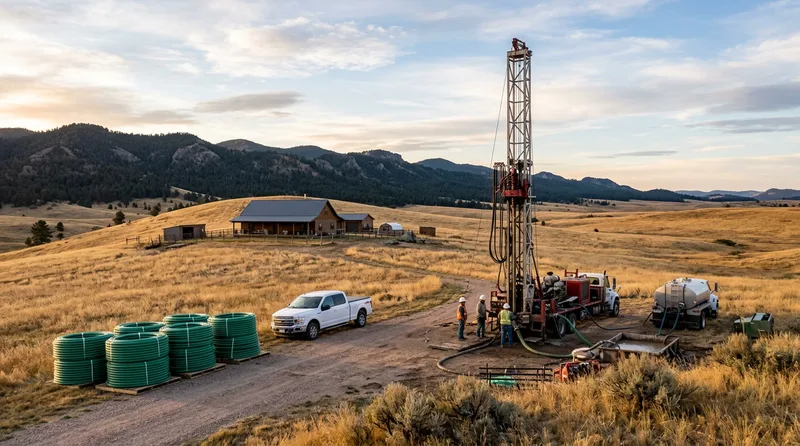
Why South Dakota's Clean Grid Makes Geothermal a No-Brainer
South Dakota operates one of the cleanest electrical grids in the United States. With wind as its primary energy source and CO2 emissions of just 318 lbs/MWh (EIA 2024) — ranking 48th out of all states and D.C. — every kilowatt-hour you consume is already remarkably clean. When you pair that grid with a geothermal heat pump running at a COP of 3.5 to 4.5, you're effectively heating your home with the environmental equivalent of 71 to 91 lbs of CO2 per million BTU. That's 85% cleaner than propane and 90% cleaner than heating oil.
But South Dakota has a problem that most clean-grid states don't face: extreme cold. Sioux Falls sees 7,000+ heating degree days. Aberdeen regularly hits -30°F. Rapid City swings 130°F from summer highs to winter lows. These are conditions that brutalize air-source heat pumps — stripping their efficiency precisely when you need them most.
Ground-source heat pumps don't care what the air temperature is. Six feet below a South Dakota wheat field, the ground stays between 45°F and 50°F year-round. At -25°F outside, your ground loop is still extracting heat from 47°F soil. That's the fundamental advantage, and in a state with 8,900 farms and ranches averaging 1,400 acres (USDA 2022 Census), the land is there to use.
Electricity costs 10.87¢/kWh average (EIA 2024, rank 36) — cheap but not the cheapest. The real story isn't the rate; it's the combination of cheap clean electricity, extreme heating demand, widespread propane dependence in rural areas, and USDA REAP grants that can cover 50% of system cost for agricultural operations. For ranchers burning through 1,200+ gallons of propane per winter, the math is compelling.
Quick Verdict: Should You Go Geothermal in South Dakota?
| Your Situation | Payback Period | Verdict |
|---|---|---|
| Rural propane home (western SD / Black Hills) | 6–10 years | ✅ Strong yes — especially with REAP |
| Rural propane home (eastern SD prairie) | 7–11 years | ✅ Yes — horizontal loops on flat land cut costs |
| Ranch/farm with USDA REAP eligibility | 3–6 years | ✅✅ Best case — 50% REAP + 30% ITC |
| New construction (any region) | 4–7 years (incremental) | ✅ Yes — incremental cost is modest |
| Electric resistance heat (rural, no gas) | 5–8 years | ✅ Strong yes — 60–70% electricity reduction |
| Aging heat pump replacement (15+ years old) | 3–7 years (incremental) | ✅ Yes — compare incremental, not total |
| Vacation cabin (Black Hills/Custer) | 8–14 years | ⚠️ Maybe — depends on rental income |
| Sioux Falls / natural gas home | 25–45 years | ❌ Not financially viable — gas is too cheap |
The bottom line: South Dakota is a propane-and-REAP story. If you heat with propane or electric resistance — especially on a farm or ranch — geothermal heat pumps offer genuine, verifiable savings. If you heat with natural gas in Sioux Falls, Rapid City, or Aberdeen, the numbers don't work. We'll prove both cases below with real math.
Compare pricing from IGSHPA-certified geothermal installers in your area. No obligation, no pressure.
Average savings: $1,800–$3,200/year for SD propane homes
Does Geothermal Work in South Dakota's Extreme Winters?
This is the first question every South Dakotan asks, and it deserves a clear answer: yes, unequivocally.
Ground-source heat pumps don't extract heat from the air — they extract it from the ground. In South Dakota, ground temperatures at loop depth (6–8 feet for horizontal, 150–300 feet for vertical) range from 45°F to 50°F depending on your region:
| Region | Ground Temp (°F) | Heating Design Temp (°F) | Heating Degree Days |
|---|---|---|---|
| Sioux Falls / SE South Dakota | 48–50°F | -14°F | 7,100 |
| Aberdeen / NE South Dakota | 45–47°F | -22°F | 8,400 |
| Rapid City / Black Hills | 47–49°F | -11°F | 7,200 |
| Pierre / Central SD | 48–50°F | -16°F | 7,600 |
| Brookings / Eastern Prairie | 46–48°F | -18°F | 7,800 |
| Hot Springs / Southern Hills | 50–52°F | -6°F | 6,400 |
When it's -25°F outside in Aberdeen and your air-source heat pump's COP has dropped to 1.2 (basically an expensive electric space heater), your ground loop is still delivering 46°F source water to your heat pump compressor. The COP stays between 3.2 and 4.0 all winter long. That's the difference between paying $0.09/kWh equivalent for heat (ground-source) and $0.30+/kWh equivalent (air-source in extreme cold).
South Dakota's cold actually strengthens the geothermal case — the colder the climate, the more hours you need heating, and the more those high-COP hours compound into real dollar savings.
South Dakota Geology: Prairie Soils, Black Hills Granite & Badlands Clay
South Dakota's geology divides cleanly into four distinct zones, each with different implications for geothermal loop installation:
Eastern Prairie (Sioux Falls, Brookings, Aberdeen, Watertown)
Glacial till deposits — mixed clay, sand, gravel, and boulders left by the last ice age. This is excellent ground for horizontal loops: deep topsoil, good thermal conductivity (1.0–1.4 BTU/hr·ft·°F), and flat terrain that makes trenching cheap. Occasional boulders can complicate drilling, but experienced contractors know to expect them. Water table is generally 20–60 feet, making open-loop systems viable in many locations with proper DENR permitting.
James River Valley (Mitchell, Huron, Yankton)
Alluvial deposits along the James and Missouri rivers — sand and gravel with high thermal conductivity (1.2–1.6 BTU/hr·ft·°F). Some of the best conditions in the state for both horizontal and vertical loops. Shallow water tables (10–30 feet in flood plains) make open-loop systems attractive but require careful DENR review for aquifer protection.
Black Hills (Rapid City, Spearfish, Deadwood, Custer)
Precambrian granite and metamorphic rock surrounded by a ring of Paleozoic sedimentary formations (the "Red Valley"). Drilling costs are significantly higher — granite requires specialized equipment and runs 30–50% more per foot than prairie drilling. However, granite has excellent thermal conductivity (1.4–2.0 BTU/hr·ft·°F) once you're through it. Vertical closed-loop is the standard approach. The Madison Limestone aquifer provides open-loop potential in some foothill locations, but the Black Hills are a critical watershed — DENR permitting is strict.
Badlands / West River Prairie (Pierre, Winner, Murdo)
Pierre Shale and bentonite clay formations — the same material that makes gumbo mud famous. Thermal conductivity is lower (0.6–0.9 BTU/hr·ft·°F), and the clay swells when wet, which can stress loop piping. Vertical loops need to be grouted carefully to prevent ground movement. This is the most challenging geology in the state, but it's also where many propane-dependent ranches are located. Budget 10–20% more for loop installation in Pierre Shale territory.
Seven-Region Drilling Conditions
For contractors and detail-oriented homeowners, this table breaks South Dakota into seven geological regions with specific drilling expectations. Ground conditions vary enormously — a bore in glacial lake clay near Watertown is nothing like drilling Precambrian granite outside Deadwood.
| Region | Primary Geology | Drilling Difficulty | Thermal Conductivity (BTU/hr·ft·°F) | Typical Bore Depth | Cost Premium vs. State Avg. | Notes |
|---|---|---|---|---|---|---|
| Black Hills | Precambrian granite core + Paleozoic limestone rim | Hard — specialist rigs required | 1.4–2.0 | 150–250 ft | +30–50% | Excellent conductivity offsets fewer bore feet; Red Valley sediments easier on the rim; historic mining areas may have unexpected voids |
| Pierre Shale / Central SD | Cretaceous marine shale (bentonite-rich) | Moderate — soft but problematic | 0.6–0.9 | 200–300 ft | +10–20% | Expansive clay swells when wet — thermally-enhanced grout critical; lower conductivity means more loop footage needed |
| James River Lowland | Glacial lake sediments (silt, clay, fine sand) | Easy — soft, uniform | 1.2–1.6 | 150–200 ft | Baseline / −5% | Best drilling conditions in the state; shallow water table (10–30 ft) supports open-loop; flood plain sites need seasonal groundwater assessment |
| Coteau des Prairies / Eastern SD | Glacial drift over Sioux Quartzite bedrock | Variable — drift easy, quartzite very hard | 1.0–1.8 | 150–250 ft | +0–15% | Drift layer 50–200 ft thick; if bores hit Sioux Quartzite, costs spike; horizontal loops in drift layer avoid the problem entirely |
| Missouri River Breaks | Mixed Cretaceous/Tertiary formations | Moderate — layered strata | 0.8–1.3 | 175–275 ft | +5–15% | Alternating shale, sandstone, and limestone layers; bluff terrain complicates horizontal loop access; good vertical loop conditions in sandstone zones |
| Badlands / White River | Oligocene/Eocene sediments (Brule, Chadron formations) | Variable — soft but erosion-prone | 0.7–1.1 | 200–300 ft | +10–25% | Loose volcanic ash-derived sediments; erosion gullies limit horizontal loop sites; loop headers must be protected from surface erosion; limited contractor access |
| Northeast Glacial Lakes | Sandy glacial moraines, outwash plains | Easy — sandy, well-sorted | 1.1–1.5 | 150–200 ft | Baseline | High water table ideal for open-loop; glacial sand/gravel easy to drill; lake-effect moisture keeps soil conductivity consistent; Watertown, Milbank, Sisseton area |
Practical takeaway: If you're in the James River Lowland or Northeast Glacial Lakes region, you're sitting on some of the best geothermal drilling conditions in the Northern Plains. If you're in the Black Hills core or Badlands, budget 20–50% more for the loop field — but don't let that stop you. The higher thermal conductivity of granite means you need fewer total bore feet, partially offsetting the per-foot cost premium.
Regional Costs & ROI
South Dakota geothermal costs vary dramatically by geology and population density. The state has a limited number of IGSHPA-certified installers — most are based in Sioux Falls, Rapid City, or the I-90 corridor — so travel charges affect pricing in remote areas.
| Region | 2,000 sq ft Home | 2,500 sq ft Home | 3,000 sq ft Home | Primary Loop Type | Notes |
|---|---|---|---|---|---|
| Sioux Falls Metro | $20,000–$32,000 | $25,000–$38,000 | $28,000–$44,000 | Horizontal / Vertical | Best contractor availability; competitive pricing |
| Eastern Prairie (Brookings, Watertown, Aberdeen) | $21,000–$34,000 | $26,000–$40,000 | $30,000–$46,000 | Horizontal preferred | Flat terrain = cheap trenching; travel charges for remote sites |
| Rapid City / Black Hills Foothills | $24,000–$38,000 | $29,000–$44,000 | $34,000–$52,000 | Vertical (granite) | Rock drilling premium 30–50%; fewer local contractors |
| James River Valley (Mitchell, Yankton) | $19,000–$30,000 | $24,000–$36,000 | $27,000–$42,000 | Horizontal / Open-loop | Best geology, lowest costs; alluvial deposits easy to work |
| West River / Badlands (Pierre, Winner) | $23,000–$36,000 | $28,000–$42,000 | $32,000–$48,000 | Vertical | Pierre Shale premium; remote site charges; limited contractors |
Cost drivers unique to South Dakota:
- Contractor travel: With most installers based along the I-90 corridor, West River ranches can pay $1,000–$3,000 extra for mobilization
- Black Hills granite: Vertical bore drilling in Precambrian granite runs $18–$28/foot vs. $12–$18/foot in eastern prairie glacial till
- Flat terrain advantage: Eastern SD has some of the cheapest horizontal loop installation in the country — 160 acres of wheat stubble is the ideal work surface
- Frozen ground window: Installation season runs April through November; winter installation is possible but adds 10–15% to costs
Case Study 1: Rural Brookings County Propane Farmhouse
The Property
A 2,400 sq ft ranch-style farmhouse built in 1985, located 12 miles south of Brookings on 320 acres. Currently heated with a propane furnace (installed 2012) and central air conditioning (installed 2015). Annual propane consumption: 1,100 gallons. Annual electric bill for cooling: $680.
| Item | Amount |
|---|---|
| System: 4-ton WaterFurnace 7 Series, horizontal slinky loop | $24,500 |
| Federal ITC (30% of $24,500) | −$7,350 |
| USDA REAP Grant (25% of $24,500) | −$6,125 |
| Net cost after incentives | $11,025 |
| Annual propane cost eliminated (1,100 gal × $2.65/gal) | $2,915 |
| Annual cooling savings (SEER 14 → EER 25+) | $340 |
| New annual electricity cost for geothermal | −$1,180 |
| Net annual savings | $2,075 |
| Simple payback | 5.3 years |
Why this works so well: The REAP grant drops net cost below $12,000, flat farmland means the cheapest possible horizontal loop installation ($8/linear foot for slinky in glacial till), and propane at $2.65/gallon means every gallon eliminated saves real money. At $3.25/gallon (not unusual for rural SD delivery surcharges), payback drops to 4.1 years.
Without REAP (non-farm): Net cost rises to $17,150 (ITC only), payback extends to 8.3 years. Still solid for a propane home — just takes longer.
Case Study 2: Sioux Falls Gas Home — An Honest Look
The Property
A 2,200 sq ft two-story home in a Sioux Falls subdivision, built 2005. Natural gas furnace (96% AFUE), central AC. Annual gas bill: $1,150. Annual electric cooling: $520.
| Item | Amount |
|---|---|
| System: 3.5-ton ClimateMaster Tranquility 30, vertical loop | $26,000 |
| Federal ITC (30%) | −$7,800 |
| Net cost after ITC | $18,200 |
| Annual gas heating cost eliminated | $1,150 |
| Annual cooling savings | $260 |
| New annual electricity cost for geothermal | −$890 |
| Net annual savings | $520 |
| Simple payback | 35.0 years |
Why this doesn't work: Natural gas in South Dakota costs roughly $0.85/therm (MidAmerican Energy territory) — among the cheapest in the nation. When you're replacing a 96% efficient gas furnace, the operating cost gap between gas and geothermal shrinks to almost nothing. You're paying $18,200 net to save $520/year. The system will outlast two owners before it pays for itself.
The honest verdict: If you heat with natural gas in Sioux Falls, Rapid City, or Aberdeen, geothermal is an environmental choice, not a financial one. The math changes only if (a) gas prices double, (b) you're doing new construction and can compare incremental costs, or (c) you need to replace both your furnace and AC simultaneously and can use the avoided replacement cost to offset the geothermal premium.
Case Study 3: Sioux Falls New Construction + Solar — Near-Zero Energy
The Property
A 2,600 sq ft all-electric new-build home in southeast Sioux Falls (2026 construction). Two-story, 2x6 walls with R-23 spray foam, R-49 attic, triple-pane windows, ERV ventilation. The builder offered geothermal as an upgrade option alongside a 6 kW rooftop solar array. No gas line run to the lot — all-electric design from the start.
| Item | Amount |
|---|---|
| Geothermal system: 3.5-ton WaterFurnace 7 Series, vertical loop (3 bores × 200 ft) | $28,000 |
| Conventional HVAC alternative: 96% gas furnace + 16 SEER AC + gas line run | −$14,500 |
| Incremental cost for geothermal over conventional | $13,500 |
| Federal ITC (30% of $28,000 full geothermal cost) | −$8,400 |
| Net incremental cost after ITC | $5,100 |
| Solar add-on (claimed separately): | |
| 6 kW rooftop solar array (installed) | $15,600 |
| Federal ITC (30% of $15,600) | −$4,680 |
| Net solar cost after ITC | $10,920 |
| Annual operating cost comparison: | |
| Conventional HVAC annual cost (gas heat + electric AC + gas water heater) | $2,280 |
| Geothermal annual electricity (heat + cool + desuperheater hot water) | $1,340 |
| Solar offset (8,100 kWh/yr × $0.1087 net metering credit) | −$880 |
| Net annual energy cost with geo + solar | $460 |
| Annual savings vs. conventional | $1,820 |
| Combined payback (incremental geo + solar net costs) | 8.8 years |
| Geothermal-only payback (incremental) | 5.4 years |
Why new construction changes the equation: The critical number is the incremental cost — not the total. You'd spend $14,500 on a gas furnace + AC + gas line anyway. The geothermal upgrade adds $13,500 before the ITC, and the 30% credit applies to the full geothermal system cost ($28,000), not just the increment. After the ITC, you're paying $5,100 more for a system that saves $940/year in heating/cooling alone. That's a 5.4-year payback — even in a natural gas market.
The solar multiplier: South Dakota's eastern prairie gets 4.8–5.5 peak sun hours. A 6 kW array produces ~8,100 kWh/year, offsetting 66% of the geothermal system's annual electricity consumption. Combined, the home's net energy cost drops to roughly $460/year — that's $38/month for all heating, cooling, and hot water in a 2,600 sq ft home in a 7,100 HDD climate.
Clean grid bonus: On SD's 318 lbs/MWh wind-powered grid, this home's total carbon footprint for space conditioning is approximately 0.3 tons CO2/year — compared to 4.8 tons for the gas furnace alternative. That's a 94% reduction.
The builder's perspective: Several Sioux Falls-area builders now offer geothermal as a standard upgrade option on new developments. The additional cost folds into the mortgage — adding roughly $30/month to a 30-year mortgage payment while saving $75+/month in energy costs from day one. Positive cash flow on month one.
Month-by-Month Energy Profile
This table shows estimated monthly costs for a 2,400 sq ft propane-heated home near Brookings after converting to a 4-ton ground-source heat pump. Based on 10.87¢/kWh electricity, 1,100 gallons propane baseline, 7,800 HDD.
| Month | Old Propane Cost | Old Electric (AC) | New Geo Electric | Monthly Savings |
|---|---|---|---|---|
| January | $520 | $0 | $195 | $325 |
| February | $465 | $0 | $175 | $290 |
| March | $350 | $0 | $140 | $210 |
| April | $180 | $0 | $80 | $100 |
| May | $45 | $30 | $55 | $20 |
| June | $0 | $95 | $65 | $30 |
| July | $0 | $140 | $90 | $50 |
| August | $0 | $125 | $80 | $45 |
| September | $40 | $55 | $55 | $40 |
| October | $175 | $0 | $75 | $100 |
| November | $340 | $0 | $130 | $210 |
| December | $480 | $0 | $180 | $300 |
| Annual Total | $2,595 | $445 | $1,320 | $1,720 |
Key insight: January and December deliver 36% of total annual savings. South Dakota's heating-dominant climate means geothermal earns its keep in winter — cooling savings are a modest bonus. The desuperheater provides essentially free domestic hot water May through September, saving an additional $200–$350/year not shown in this table.
Open-Loop System Assessment by Region
Open-loop (pump-and-dump or standing column) systems use groundwater directly, offering 15–25% better efficiency than closed-loop — but South Dakota's Department of Environment and Natural Resources (DENR) regulates groundwater use through water rights permits.
| Region | Aquifer | Open-Loop Viability | Key Consideration |
|---|---|---|---|
| Sioux Falls Metro | Big Sioux Aquifer | ⚠️ Site-specific | Municipal wellhead protection zones restrict many suburban sites; DENR review required |
| James River Valley | Alluvial / glacial drift | ✅ Generally viable | Shallow water table, good yields; permits straightforward outside city limits |
| Eastern Prairie (rural) | Glacial drift aquifers | ✅ Generally viable | Many farms already have domestic wells; water quality testing needed (iron/manganese) |
| Aberdeen / NE SD | Elm-Moccasin aquifer | ⚠️ Site-specific | Variable quality and yield; some areas have high sulfate levels that damage heat exchangers |
| Black Hills | Madison Limestone | ❌ Not recommended | Critical watershed; strict DENR controls; high mineral content; environmental sensitivity |
| West River / Badlands | Limited / deep | ❌ Not viable | Pierre Shale has no significant aquifer; water depths 200+ feet where present |
DENR Water Right Process: All open-loop systems require a DENR Water Right Permit Application (Form WR-2). The process takes 30–90 days and requires: proof that the proposed use won't impair existing water rights, water quality analysis, and a disposal plan for discharge water. Discharge to surface water requires an additional NPDES permit. Many residential open-loop systems discharge to a second well (pump-and-reinjection) to simplify permitting. Contact SD DENR Water Rights Program at (605) 773-3352.
Loop Type Cost Comparison
| Loop Type | Cost Range (3-ton) | Land Required | Best For | SD-Specific Notes |
|---|---|---|---|---|
| Horizontal (straight) | $3,500–$6,500 | 1,500–2,000 sq ft | Eastern prairie farms with flat, unobstructed land | Cheapest option in SD; glacial till trenches easily with standard backhoe; avoid Sioux Quartzite contact zones in Coteau des Prairies |
| Horizontal (slinky) | $4,000–$7,000 | 800–1,200 sq ft | Smaller rural lots; reduces trench length 30–40% | Popular in Brookings/Watertown area where lot sizes are moderate; frost heave monitoring recommended in first 2 winters |
| Vertical closed-loop | $7,000–$14,000 | Minimal (drill pad) | Black Hills granite, city lots, limited yard space | Required in Black Hills granite ($18–$28/ft); standard in Pierre Shale ($14–$20/ft); eastern prairie vertical is cheaper ($12–$18/ft) |
| Open-loop (pump & dump) | $4,500–$8,000 | Well access + discharge | James River Valley, eastern prairie with good aquifers | DENR Form WR-2 required; 15–25% efficiency advantage; high iron/manganese in some eastern SD wells requires cupro-nickel heat exchangers |
| Pond/lake loop | $3,000–$5,500 | Pond ≥½ acre, 8+ ft deep | Ranch stock ponds, Missouri River reservoirs (Oahe, Sharpe, Francis Case) | Best-kept secret for SD ranches — thousands of qualifying stock ponds; no drilling, no trenching, no DENR permit for closed coils; ice cover is fine if depth ≥ 8 ft |
South Dakota advantage — pond loops: The state has four major Missouri River reservoirs (Oahe, Sharpe, Francis Case, Lewis & Clark) plus thousands of ranch stock ponds. Pond/lake loops are the cheapest installation method and avoid all drilling costs. If your property includes a pond that's at least half an acre and 8 feet deep (not uncommon on SD ranches), this should be your first consideration. The loop coils sit on the pond bottom — no excavation, no drilling, no permitting headaches.
Incentive Stacking: Federal ITC & USDA REAP
South Dakota has no state-level geothermal tax credits or rebates as of March 2026. The state's tax structure (no income tax) means there's no mechanism for state tax credits. No major SD utility currently offers geothermal-specific rebates [NEEDS VERIFICATION — check Black Hills Energy, Xcel Energy SD, and rural electric co-ops].
That said, the available federal incentives are substantial:
| Incentive | Value | Eligibility | Status |
|---|---|---|---|
| Federal Residential Clean Energy Credit (IRC §25D) | 30% of total system cost | All homeowners (primary + second homes) | ✅ Confirmed through 2032 |
| USDA REAP Grant | Up to 50% of project cost | Agricultural producers, rural small businesses | ✅ Active — competitive application |
| USDA REAP Guaranteed Loan | Up to 75% of project cost | Same as grant | ✅ Active |
| Rural Electric Cooperative rebates | Varies ($500–$2,000) | Members of participating co-ops | [NEEDS VERIFICATION] |
USDA REAP: South Dakota's Secret Weapon
This is where the South Dakota geothermal story gets interesting. USDA REAP (Rural Energy for America Program) grants can cover up to 50% of a geothermal system's cost for qualifying agricultural producers and rural small businesses. Combined with the 30% federal ITC, a qualifying ranch can offset up to 80% of system cost.
Here's the real math for a South Dakota ranch:
| Line Item | Amount |
|---|---|
| Geothermal system (4-ton, horizontal slinky on ranch land) | $24,500 |
| USDA REAP Grant (50% — maximum competitive award) | −$12,250 |
| Federal ITC (30% of remaining $12,250) | −$3,675 |
| Net out-of-pocket cost | $8,575 |
| Annual propane savings (net of new electricity) | $2,075 |
| Payback period | 4.1 years |
Important REAP note: The 50% grant is a competitive maximum — not guaranteed. Typical REAP grants in the SD/ND region run 25–40% of project cost. Even at 25% ($6,125), payback for the Brookings County case study drops to 5.3 years. Applications through USDA Rural Development South Dakota State Office in Huron, (605) 352-1100.
Incentive Stacking Math: What South Dakota Owners Actually Pay
South Dakota's lack of state incentives is a reality — but federal programs and business depreciation can still slash net costs dramatically. Here's how the incentive math works for three different owner types on a $25,000 system:
| Incentive Layer | Homeowner (non-farm) | Ranch/Farm (REAP 25%) | Ranch/Farm (REAP 50%) |
|---|---|---|---|
| System cost | $25,000 | $25,000 | $25,000 |
| SD state credit | $0 (none exists) | $0 (none exists) | $0 (none exists) |
| USDA REAP grant | N/A | −$6,250 (25%) | −$12,500 (50%) |
| Federal ITC (30% of cost minus REAP) | −$7,500 | −$5,625 | −$3,750 |
| MACRS depreciation (5-yr, business use) | N/A | −$3,281* | −$2,188* |
| Net out-of-pocket | $17,500 | $9,844 | $6,562 |
| Effective discount | 30% | 61% | 74% |
*MACRS value assumes 25% marginal tax rate on business depreciation over 5 years (simplified present value). Actual benefit depends on your tax situation — consult your CPA.
Key insight for South Dakota: Non-farm homeowners get 30% — period. That's still meaningful on a $25,000 system, but it's not the game-changer. The real story is ranchers stacking REAP + ITC + MACRS to reduce net cost by 60–74%. No other incentive combination in the Northern Plains matches this for agricultural operations.
USDA REAP Deep-Dive for South Dakota
REAP is the single most impactful geothermal incentive available in South Dakota. Because the state offers zero state-level support, REAP effectively is South Dakota's geothermal incentive program — it just happens to be federal. Here's everything you need to know to apply successfully.
Real Example: Brown County Cattle Ranch
A 1,800-acre cattle operation near Aberdeen, Brown County. The ranch house (2,800 sq ft, built 1978) burns 1,400 gallons of propane per winter through a 30-year-old furnace. The rancher also heats a 1,200 sq ft shop building with a propane unit heater.
| Item | Amount |
|---|---|
| System: 5-ton WaterFurnace 5 Series, stock pond loop (3-acre ranch pond, 10 ft deep) | $30,000 |
| USDA REAP Grant (25% — competitive award) | −$7,500 |
| Federal ITC (30% of $22,500 remaining) | −$6,750 |
| Net out-of-pocket | $15,750 |
| Annual propane eliminated (1,400 gal × $2.85/gal rural delivery) | $3,990 |
| New annual electricity (geothermal) | −$1,580 |
| Net annual savings | $2,410 |
| Simple payback | 6.5 years |
| With MACRS depreciation (25% bracket) | ~5.0 years |
Stock pond advantage: This ranch's 3-acre, 10-foot-deep stock pond eliminated all drilling costs. The pond loop installation cost approximately $4,800 — compared to $10,000–$14,000 for vertical bores in the Pierre Shale formation that underlies Brown County. The pond continues to serve livestock. The loop coils sit undisturbed on the bottom beneath winter ice.
REAP Application: 7-Step Process
- Step 1: Confirm Eligibility — You must be an agricultural producer (≥50% gross revenue from ag operations) or a rural small business (located in a town with population under 50,000). Most of South Dakota qualifies as rural outside Sioux Falls metro.
- Step 2: Get an Energy Audit or Renewable Energy Feasibility Study — REAP applications for systems over $80,000 require a professional energy audit. For residential-scale geothermal ($20,000–$40,000), a simplified feasibility analysis from your installer is typically sufficient. USDA Rural Development can clarify which level you need.
- Step 3: Obtain Contractor Bids — Get at least two competitive bids from IGSHPA-certified installers. REAP applications are scored partly on cost-effectiveness — competitive bids demonstrate you've done due diligence.
- Step 4: Complete Form RD 4280-3A — This is the main REAP application. It requires: project description, energy savings estimates, total project cost, matching fund documentation, and your farm's financial information.
- Step 5: Submit Environmental Review Documentation — USDA requires a basic environmental checklist. For standard geothermal installations on existing farmland, this is usually straightforward. Wetland or floodplain locations require additional review.
- Step 6: Submit to SD USDA State Office — Applications go to: USDA Rural Development South Dakota State Office, 200 4th Street SW, Federal Building Room 210, Huron, SD 57350. Phone: (605) 352-1100. Application deadlines are typically March 31 and October 31 each year (verify current cycle).
- Step 7: Wait for Scoring & Award — REAP is competitive. Applications are scored on energy saved, cost-effectiveness, small/disadvantaged producer status, and prior REAP history. Awards typically announced 60–120 days after deadline. Do not begin construction until you receive written authorization — pre-started projects are ineligible.
Pro tip for South Dakota ranchers: The REAP application scores higher when you can document current energy costs with actual propane delivery receipts. Save 2–3 years of propane bills before applying. Ranches spending $3,000+/year on propane consistently score well because the energy savings percentage is dramatic.
Solar + Geothermal: Wind Country's Ground-Source Play
South Dakota gets 4.5–5.5 peak sun hours per day across the state (NREL) — solid solar resource that varies by region. Eastern SD prairie averages 4.8–5.2 hours; the Black Hills see 5.0–5.5 hours due to elevation and lower humidity. The combination with geothermal works particularly well because:
- Solar generates most in summer when your geothermal system uses least electricity (cooling loads are lighter than heating loads in SD)
- Geothermal uses most in winter when solar generates least — but at 10.87¢/kWh, grid electricity is cheap enough that the winter gap isn't painful
- SD's grid is already 80%+ wind-powered — so even your grid-supplied winter electricity is clean. Adding solar doesn't dramatically improve the environmental story; it improves the economics
- Net metering varies by utility: Black Hills Energy and Xcel Energy SD offer net metering at retail rate for systems under 25 kW [NEEDS VERIFICATION]. Rural electric co-ops vary — check with your specific co-op
Combined System Payback Math
| Scenario | Geo Cost (net ITC) | Solar Cost (net ITC) | Combined Net | Annual Savings | Combined Payback |
|---|---|---|---|---|---|
| Propane home + 6kW solar (no REAP) | $17,150 | $10,920 | $28,070 | $2,600 | 10.8 years |
| Propane ranch + 6kW solar (REAP 25%) | $11,025 | $10,920 | $21,945 | $2,600 | 8.4 years |
| New construction + 6kW solar (incremental geo) | $5,100 | $10,920 | $16,020 | $1,820 | 8.8 years |
| Propane ranch + 10kW solar (REAP 25%) | $11,025 | $17,500 | $28,525 | $3,050 | 9.3 years |
Combined system example: A 2,400 sq ft ranch home with a 4-ton geothermal system ($24,500) and a 6 kW solar array ($14,000) = $38,500 total investment. After 30% ITC on both ($11,550) and 25% REAP on the geothermal ($6,125): net cost $20,825. Combined annual energy cost drops from $3,040 to approximately $200 (grid electricity during winter cloud cover). That's $2,840/year in savings, 7.3-year payback, and near-zero energy bills for the life of both systems.
SD's clean grid twist: Unlike neighboring states with coal-heavy grids (North Dakota at 1,122 lbs/MWh, Wyoming at 1,680 lbs/MWh), South Dakota homeowners can't claim huge carbon savings by going solar — the grid is already clean at 318 lbs/MWh. The solar argument in SD is purely economic: lock in your electricity rate at $0.00/kWh for 25 years instead of riding rate increases. Geothermal multiplies that lock-in because it converts each solar kWh into 3.5–4.5 kWh of heating/cooling equivalent.
Vacation Rental, Hunting Lodge & Ranch Analysis
Black Hills Vacation Cabins
The Black Hills and Custer State Park corridor attracts 4+ million visitors annually. Vacation rental cabins near Keystone, Hill City, Custer, and Deadwood face a unique challenge: they need heating for shoulder-season guests (May and September nights drop into the 30s) and cooling for peak summer, but occupancy is concentrated June–August with a secondary hunting/snowmobile season in winter.
Geothermal makes sense for larger, premium cabins where:
- The property is marketed as a premium/luxury rental (guests expect comfort)
- Propane delivery is expensive and unreliable during peak season
- "Eco-friendly" or "net-zero" marketing commands a 15–25% nightly rate premium on Airbnb/VRBO
- The property operates year-round (winter tourism adds heating months)
For small seasonal cabins heated 3–4 months, the payback stretches past 14 years. Focus geothermal investment on properties with 200+ nights of occupancy.
Hunting Lodges — South Dakota's Hidden Geothermal Market
South Dakota's pheasant season (mid-October through early January) is a national draw. The state hosts an estimated 100,000+ non-resident hunters annually, many staying at lodges charging $300–$600/night for guided hunts. These lodges — concentrated in the Missouri River corridor (Gregory, Winner, Chamberlain, Pierre) and central prairies — have a unique geothermal calculus:
- Peak season = peak heating: Pheasant season runs October 15 – January 1, perfectly overlapping with geothermal's highest-savings months
- Propane dependence: Most hunting lodges are in rural, off-gas-main locations burning 2,000–4,000 gallons/season
- Commercial property benefits: Lodge operators can claim MACRS 5-year accelerated depreciation on the geothermal system as business equipment, generating tax savings worth 20–25% of system cost for profitable operations
- Guest comfort marketing: "Quiet geothermal heating — no propane furnace cycling at 4 AM" is a legitimate differentiator for premium lodges
- REAP eligibility: Many hunting lodge operators also farm the surrounding land, making them REAP-eligible agricultural producers
Lake Properties (Big Stone, Oahe, Lewis & Clark)
South Dakota's reservoir communities — particularly Lake Oahe (Pierre/Mobridge), Lewis & Clark Lake (Yankton), and Big Stone Lake (northeast corner) — have growing seasonal and year-round populations. Lake properties are natural candidates for pond/lake loops, potentially using the lake itself as the heat source. Key considerations:
- Lake loops: Properties with lake frontage can install closed-loop coils in the lake bed (check local and Army Corps of Engineers regulations for Missouri River reservoirs)
- Seasonal use: Many lake cabins are 3-season — payback requires year-round use or high rental income
- Desuperheater value: Lake properties with heavy summer use get significant hot water savings from the desuperheater during cooling season
Ranch Operations
South Dakota's 8,900 farms and ranches are the single biggest untapped geothermal market in the state. The advantages compound:
- Land: Unlimited space for horizontal loops at the lowest possible cost
- Stock ponds: Free loop field — no drilling, no trenching
- REAP eligibility: Most ranches qualify for 25–50% grant coverage
- Propane dependence: Most ranch homes are beyond the gas main
- Ag buildings: Geothermal can also heat livestock facilities, milk houses, and shop buildings (separate REAP-eligible projects)
Permits & Licensing in South Dakota
South Dakota's permitting landscape is decentralized — there's no statewide building code. Permits depend on which county and city you're in, what type of loop you're installing, and whether you're tapping groundwater. Here's the complete picture.
State-Level Requirements (SD DENR)
- Well Construction Standards: South Dakota DENR regulates all wells, including geothermal bores, under ARSD Chapter 74:02:04. Closed-loop vertical bores must be grouted per DENR standards to prevent aquifer contamination between water-bearing zones.
- Open-Loop Water Rights: Any open-loop system requires a Water Right Permit (Form WR-2) from DENR. Process takes 30–90 days. Appropriation of more than 18 gallons per minute may trigger additional review.
- Discharge Permits: Open-loop systems discharging to surface water need an NPDES permit. Pump-and-reinjection to a second well avoids this requirement but must comply with DENR injection well standards.
- Antifreeze Regulations: Closed-loop systems using antifreeze solutions must use propylene glycol or approved alternatives — ethylene glycol is prohibited in most jurisdictions due to toxicity risk if a loop breaches near a water source.
Mechanical Licensing
South Dakota does not have a statewide geothermal-specific installer license. However:
- Municipalities that adopt the International Mechanical Code (IMC) require licensed mechanical contractors for the indoor heat pump installation and ductwork
- Well drilling (for vertical bores and open-loop wells) requires a SD DENR-registered well driller
- Electrical connections require a licensed electrician in jurisdictions that enforce the National Electrical Code
- IGSHPA accreditation is not legally required but is the industry standard and a strong indicator of competence — always verify
County-by-County Permit Requirements
| County | Building Permit Required? | Mechanical Permit? | Inspection Required? | Notes |
|---|---|---|---|---|
| Minnehaha (Sioux Falls) | Yes | Yes (city limits) | Yes — rough + final | Sioux Falls city has the strictest requirements in SD; plan review may add 2–3 weeks; zoning setback verification for loop field |
| Pennington (Rapid City) | Yes | Yes (city limits) | Yes | Black Hills overlay districts may require additional environmental review; check wildfire interface zone setbacks |
| Lincoln (Tea, Harrisburg) | Yes | Yes (most municipalities) | Yes | Fast-growing Sioux Falls suburbs; new construction may already include geothermal-ready specs |
| Brown (Aberdeen) | Yes (city); No (rural) | Yes (Aberdeen city) | City only | Rural Brown County has minimal permit requirements; agricultural exemptions common |
| Brookings | Yes (city); No (rural) | Yes (city) | City only | University town; city code enforcement active; rural areas essentially unregulated |
| Lawrence (Deadwood, Spearfish) | Yes | Yes (municipal) | Yes | Deadwood historic district has additional overlay requirements; Spearfish standard municipal process |
| Meade (Sturgis, Black Hawk) | Variable | Variable | Variable | Ellsworth AFB area may have military flight zone restrictions on drilling equipment height; rural areas minimal requirements |
| Hughes (Pierre) | Yes (city) | Yes (city) | Yes | State capital; standard municipal process; Pierre Shale geology may trigger additional grouting requirements from DENR |
Typical Permit Timeline
| Step | Urban (Sioux Falls/Rapid City) | Rural (unincorporated) |
|---|---|---|
| Building/mechanical permit application | 1–3 weeks | Often not required |
| DENR well permit (vertical bore / open-loop) | 30–90 days | 30–90 days |
| DENR water right (open-loop only) | 30–90 days (concurrent) | 30–90 days |
| Plan review (if required) | 1–2 weeks | N/A |
| Rough-in inspection | Scheduled with inspector | Often not required |
| Final inspection | 1–2 days after completion | Often not required |
| Total timeline (closed-loop) | 3–6 weeks | 1–2 weeks |
| Total timeline (open-loop) | 2–4 months | 1–3 months |
Practical advice: If you're on rural agricultural land in South Dakota, permitting is minimal for closed-loop systems — often just a DENR well notification for vertical bores. In Sioux Falls or Rapid City, budget an extra month for the permitting process and make sure your contractor handles it (most experienced geo installers do). The biggest permitting delay in South Dakota is always the DENR water right for open-loop systems — start that process early.
Finding & Vetting Geothermal Installers in South Dakota
South Dakota has a genuine installer shortage. The state's geothermal market is still small — most HVAC contractors focus on conventional furnace and AC work. Finding a qualified geothermal installer, especially West River, requires effort.
Where to Find Installers
- IGSHPA Installer Directory: igshpa.org/directory — Search by state for accredited installers and designers
- WaterFurnace Dealer Locator: waterfurnace.com — WaterFurnace-authorized dealers in SD
- ClimateMaster Dealer Network: climatemaster.com — ClimateMaster-trained installers
- Bosch Contractor Locator: bosch-thermotechnology.us — Bosch geothermal dealers
- SD Contractor License Verification: Check municipal licensing boards (Sioux Falls, Rapid City) for active mechanical contractor licenses
Regional Installer Availability
| Region | Estimated IGSHPA-Certified Installers | Wait Time (peak season) | Notes |
|---|---|---|---|
| Sioux Falls / SE South Dakota | 4–6 | 4–8 weeks | Best availability in the state; competitive bidding possible; most also serve Brookings, Mitchell, Yankton |
| Rapid City / Black Hills | 2–4 | 6–12 weeks | Fewer options; granite drilling experience critical — verify Black Hills project history specifically |
| Aberdeen / NE South Dakota | 1–3 | 8–14 weeks | May need to bring in Sioux Falls or Fargo-based contractors; travel charges add $1,000–$2,000 |
| Pierre / Central SD | 1–2 | 10–16 weeks | Most underserved region; Pierre Shale experience matters; contractors may come from Sioux Falls or Rapid City |
8-Point Vetting Checklist
- IGSHPA accreditation: Verify current Accredited Installer or Certified GeoExchange Designer status. This is the minimum bar — don't hire without it.
- SD-specific experience: Ask for at least 3 references from South Dakota installations, preferably in your geological region. Black Hills granite experience doesn't transfer to Pierre Shale, and vice versa.
- Manual J load calculation: Every legitimate bid starts with a room-by-room Manual J heat loss/gain calculation specific to your home. If a contractor quotes a system size without measuring your home, walk away.
- Loop sizing documentation: The bid should include loop design calculations (bore depth/length, thermal conductivity assumptions, antifreeze specifications). Generic "we'll figure it out on site" is a red flag.
- Warranty terms: Get specifics — equipment warranty (10 years standard), labor warranty (1–2 years minimum), and loop warranty (25–50 years from manufacturer). Verify the contractor will exist to honor labor warranty.
- REAP experience: If you're applying for USDA REAP, ask whether the contractor has completed REAP-funded installations before. Experienced contractors can help with the technical portions of the application.
- Insurance & bonding: Verify general liability insurance ($1M+ minimum) and workers' compensation coverage. Drilling rigs on your property are high-risk equipment.
- Start date commitment: Get a written start date in the contract. SD's short installation season (April–November) means delays cascade quickly. A contractor who can't commit to a date may be overbooked.
Red Flags
- ❌ No IGSHPA accreditation ("We've been doing HVAC for 20 years" is not the same as geothermal expertise)
- ❌ Quotes system size without visiting the property or doing load calculations
- ❌ Can't provide South Dakota references (may be expanding from out of state without local experience)
- ❌ Unusually low bid (may be underbidding loop footage — the ground loop is where corners get cut)
- ❌ Pressure to decide immediately ("We have one slot left this season" may be true, but get it in writing)
- ❌ No written warranty terms
Maintenance & Longevity in South Dakota's Climate
South Dakota's extreme temperature range (-40°F to 115°F), severe wind events, and expansive clay soils create specific maintenance considerations that differ from moderate climates. A well-maintained geothermal system will outlast any conventional HVAC equipment — but "well-maintained" means different things in Aberdeen than in Atlanta.
SD-Specific Annual Maintenance Schedule
| When | Task | Why It Matters in SD | DIY or Pro? |
|---|---|---|---|
| Fall (September) | Antifreeze concentration check | Critical for -40°F protection. Test propylene glycol concentration — must be 20–25% for SD winter lows. Degraded glycol freezes in the loop and destroys the system. | Pro recommended |
| Fall (October) | Filter change + pre-winter inspection | Clean filters before heating season begins. Verify thermostat emergency/auxiliary heat lockout settings — in SD, backup heat strips at 10.87¢/kWh can spike winter bills if the system falls back unnecessarily. | DIY (filter) / Pro (inspection) |
| Spring (April) | Loop pressure check after frost heave | Horizontal loops in Pierre Shale and eastern SD glacial soils can shift during freeze/thaw cycles. Check loop pressure and flow rates for signs of kinking or displacement. First 2 winters after installation are highest risk. | Pro |
| Spring (May) | Desuperheater flush | SD's mineral-rich groundwater (especially in open-loop systems) can scale the desuperheater heat exchanger. Annual flush maintains hot water efficiency. Eastern SD iron/manganese is particularly problematic. | Pro |
| Summer (June) | Condensate drain check | Cooling mode produces condensate. Verify drain line isn't clogged by basement dust, spider webs (common in rural SD), or mineral buildup. Blocked drains cause water damage. | DIY |
| Quarterly | Air filter replacement | SD's wind-blown dust (especially west of the Missouri) loads filters faster than national averages. Check monthly during windy spring season; replace quarterly at minimum. | DIY |
| After blizzards | Power recovery verification | After extended power outages (common in SD winter storms), verify the system restarts properly. Check that the loop circulation pump is running and the compressor isn't locked out on a fault code. | DIY check / Pro if faulted |
| Every 5 years | Full system audit | Professional evaluation of compressor performance, loop temperatures, refrigerant charge, and electrical connections. Catches degradation before it becomes failure. More critical for systems in Pierre Shale (clay movement) or open-loop (mineral scaling). | Pro |
Component Lifespan in South Dakota Conditions
| Component | Expected Lifespan | Replacement Cost | SD-Specific Concern |
|---|---|---|---|
| Ground loop (HDPE pipe) | 50–100+ years | $6,000–$14,000 (full replacement — rare) | Pierre Shale clay movement is the primary risk; proper grouting mitigates; no temperature-related degradation |
| Compressor | 15–25 years | $2,500–$5,000 | Scroll compressors in modern units handle SD loads well; older reciprocating compressors fail sooner under high heating-hour loads |
| Circulation pump | 10–15 years | $500–$1,200 | Runs more hours in SD than mild climates (7,000+ HDD = long heating season); budget for replacement at year 12–15 |
| Desuperheater | 15–20 years | $800–$1,500 | Hard water scaling reduces lifespan; annual flushing extends it; open-loop systems in high-mineral areas may need earlier replacement |
| Thermostat / controls | 10–20 years | $200–$600 | No SD-specific concern; upgrade to smart thermostat for better staging control in extreme cold |
| Ductwork modifications | 20–30 years | $1,000–$3,000 | Geothermal delivers lower-temperature air than gas furnace; ductwork may need resizing if originally designed for 140°F supply air |
| Antifreeze solution | 10–15 years (refresh) | $300–$600 | Propylene glycol degrades over time; test annually, full replacement when concentration drops below 18% or pH shifts |
SD-Specific Longevity Concerns
- Antifreeze for -40°F protection: This is non-negotiable in South Dakota. The propylene glycol solution in your closed-loop system must protect to at least -10°F below your region's design temperature. For Aberdeen (-22°F design), that means protection to -32°F or lower. Annual testing is critical — degraded glycol is the #1 preventable cause of geothermal system failure in extreme-cold states.
- Pierre Shale expansive clay: The bentonite-rich clay formations across central South Dakota swell when wet and shrink when dry. Over years, this cyclic ground movement can shift horizontal loop piping and stress vertical bore casings. Thermally-enhanced grout that bonds to the surrounding soil is essential — standard sand-cement grout can crack. If you're in Pierre Shale territory, your 5-year system audit should include loop pressure testing specifically looking for displacement.
- Extreme wind chill on exposed components: The heat pump unit is indoors, but the loop manifold connection point where header pipes enter the building should be insulated and sealed against wind infiltration. SD wind chills of -50°F to -60°F can freeze exposed pipe sections in minutes if insulation is damaged. Check the building penetration annually for gaps.
- Blizzard power outage recovery: South Dakota averages 30–40 blizzard-warning days per winter. Extended power outages (12–48 hours are not uncommon in rural areas) mean the loop circulation stops. When power returns, verify the system restarts — some units require manual reset after extended outages. A whole-house generator ($4,000–$8,000) is worth considering for rural SD properties that depend solely on geothermal heat.
How to Claim the Federal Tax Credit (IRS Form 5695)
The federal Residential Clean Energy Credit (IRC §25D) covers 30% of the total installed cost of a qualifying geothermal heat pump system, including equipment, labor, and loop installation. Here's the step-by-step process:
- Step 1: Verify System Qualification — Your geothermal heat pump must meet ENERGY STAR requirements at the time of installation. All major manufacturers (WaterFurnace, ClimateMaster, Bosch, Carrier) have qualifying models. Ask your installer for the AHRI certificate number.
- Step 2: Keep All Documentation — Save the contractor's final invoice showing total installed cost (equipment + labor + loop + ductwork modifications), the AHRI certificate, and your signed installation contract. You'll need these if audited.
- Step 3: Complete IRS Form 5695 Part I — Enter the total cost of your geothermal heat pump system on Line 3. The form calculates 30% automatically.
- Step 4: Calculate Your Credit — Transfer the credit amount from Form 5695, Line 15 to your Form 1040, Schedule 3, Line 5. This directly reduces your tax liability dollar-for-dollar.
- Step 5: Handle Excess Credit — If the credit exceeds your tax liability for the year, the excess rolls forward to subsequent tax years. You don't lose it — you claim the remainder on next year's Form 5695.
- Step 6: REAP Grant Interaction — If you received a USDA REAP grant, the grant amount reduces your tax basis. You claim the 30% ITC on the system cost minus the REAP grant. Example: $24,500 system with $6,125 REAP grant = ITC calculated on $18,375 = $5,513 credit.
- Step 7: File by Deadline — Claim the credit in the tax year the system was placed in service (operational), not when you signed the contract or made a deposit. South Dakota installations in December that aren't commissioned until January belong to the following tax year.
Note: South Dakota has no state income tax, so there is no state-level tax credit to stack. The federal credit is your only tax incentive.
South Dakota vs. Neighboring States
| Factor | South Dakota | North Dakota | Nebraska | Minnesota | Iowa | Wyoming | Montana |
|---|---|---|---|---|---|---|---|
| Avg. electricity rate | 10.87¢ | 7.93¢ | 10.20¢ | 12.35¢ | 11.80¢ | 9.14¢ | 10.42¢ |
| Grid CO2 (lbs/MWh) | 318 | 1,122 | 1,050 | 766 | 684 | 1,680 | 880 |
| State geothermal incentives | None | None | None | Xcel [NV] | None | None | None |
| REAP availability | ✅ Strong | ✅ Strong | ✅ Strong | ✅ Available | ✅ Strong | ✅ Strong | ✅ Strong |
| Propane payback (rural) | 7–11 yr | 7–12 yr | 8–12 yr | 7–11 yr | 8–12 yr | 7–12 yr | 8–13 yr |
| Gas payback | 25–45 yr | 30–50+ yr | 25–40 yr | 18–26 yr | 25–40 yr | 40–200+ yr | 30–50 yr |
| Geology advantage | Prairie (flat) | Prairie (flat) | Prairie (flat) | Glacial (good) | Prairie (best) | Mountain (hard) | Mountain (hard) |
| Environmental case | ✅✅✅ Cleanest | ❌ Coal grid | ❌ Coal grid | ✅ Good | ✅✅ Wind | ❌ Coal grid | ⚠️ Mixed |
| Permitting complexity | Low (rural) / Moderate (urban) | Low | Low | Moderate | Low–Moderate | Low | Low–Moderate |
| Installer availability | Limited (10–15 statewide) | Very limited (5–10) | Moderate (15–25) | Good (50+) | Good (40+) | Very limited (5–8) | Limited (10–15) |
| Unique advantage | Cleanest grid + REAP ranch territory | Cheapest electricity | Strong NPPD support | Best contractor density | Best geology | Low electricity rates | NorthWestern Energy programs |
South Dakota's unique position: You have the 3rd cleanest grid in the country (behind Vermont and Washington), competitive electricity rates, and REAP-eligible ranch territory covering most of the state. The environmental argument for geothermal is strongest here — you're taking already-clean wind electricity and multiplying it by a COP of 3.5–4.5. No other Plains state can match that combination.
The installer gap: South Dakota's biggest disadvantage vs. neighbors is contractor availability. Minnesota has 50+ geothermal installers; South Dakota has maybe 10–15. This means longer wait times, less competitive bidding, and higher travel charges for rural properties. As demand grows, this gap will narrow — but today, plan ahead and start getting quotes early.
For detailed guides on neighboring states: North Dakota · Minnesota · Iowa · Nebraska · Wyoming · Montana
Compare pricing from IGSHPA-certified geothermal installers in your area. No obligation, no pressure.
Average savings: $1,800–$3,200/year for SD propane homes
Frequently Asked Questions
Does geothermal work when it's -30°F in Aberdeen?
Yes. Ground-source heat pumps extract heat from the ground (45–50°F at loop depth), not the air. Your system's COP stays between 3.2 and 4.0 regardless of air temperature. Air-source heat pumps lose 50–70% of their capacity at -30°F — ground-source systems lose essentially none. This is exactly why geothermal makes more sense in South Dakota than in mild climates.
How deep does the ground freeze in South Dakota?
Frost depth ranges from 3.5 feet in the southeast to 5+ feet in Aberdeen and the northeast. Horizontal ground loops are installed at 6–8 feet — well below the frost line. Vertical loops go 150–300 feet deep. Neither type is affected by surface frost.
Can I use my ranch stock pond for a geothermal loop?
Yes, if the pond is at least half an acre in surface area and 8+ feet deep at the loop placement location. Pond loops are the cheapest installation method ($3,000–$5,500 for a 3-ton system vs. $7,000+ for vertical drilling). Many South Dakota ranches have ponds that qualify. The loop coils sit on the bottom — they don't affect the pond's use for livestock or recreation.
What if I heat with natural gas? Is geothermal worth it?
Honestly, probably not — unless you're doing new construction or need to replace both your furnace and AC simultaneously. Natural gas in South Dakota runs about $0.85/therm, making it extremely cheap to heat with a modern 96% AFUE furnace. Geothermal payback for gas homes is 25–45 years. We show the honest math in our Sioux Falls case study above. However, for new construction where you're comparing incremental costs, payback drops to 5–6 years — see Case Study 3.
Does South Dakota offer any state tax credits for geothermal?
No. South Dakota has no state income tax, so there's no mechanism for state-level tax credits. Your primary incentive is the 30% federal ITC (through 2032). If you operate a farm or ranch, USDA REAP grants can cover an additional 25–50% of system cost.
How clean is South Dakota's electrical grid?
Extremely clean — the 3rd cleanest in America at 318 lbs CO2/MWh (EIA 2024). Wind is the state's primary energy source. When you run a geothermal heat pump on South Dakota's grid, your effective heating emissions are 71–91 lbs CO2 per million BTU — 85% cleaner than propane and 90% cleaner than heating oil. No other Plains state comes close.
Can I install geothermal in Black Hills granite?
Yes, but expect 30–50% higher drilling costs for vertical loops. Granite has excellent thermal conductivity (1.4–2.0 BTU/hr·ft·°F) once you're through it, so you may need fewer total bore feet. Budget $18–$28/foot for Black Hills vertical drilling vs. $12–$18/foot in eastern prairie glacial till. Get multiple bids — experience with Black Hills rock varies significantly between contractors.
What about the Badlands area — can I install geothermal near Pierre?
Yes, but Pierre Shale presents challenges. The bentonite clay swells when wet (that's where "gumbo mud" comes from), which can stress loop piping. Thermal conductivity is lower (0.6–0.9 BTU/hr·ft·°F), so you may need more loop footage. Budget 10–20% more than eastern SD quotes. Vertical closed-loop with proper thermally-enhanced grout is the standard approach.
What does USDA REAP cover for geothermal?
REAP grants cover up to 50% of the total installed cost of a qualifying renewable energy system, including the heat pump unit, ground loop, ductwork modifications, and electrical upgrades. Both grant and guaranteed loan options are available. You must be an agricultural producer or rural small business with at least 50% of gross revenue from agricultural operations. Applications go through the USDA Rural Development South Dakota State Office in Huron.
How long does a geothermal system last in South Dakota's conditions?
The ground loop lasts 50+ years (HDPE pipe is rated for 100+ years of continuous use). The indoor heat pump unit lasts 20–25 years with annual maintenance — roughly twice the lifespan of an air-source heat pump or gas furnace. Cold climates don't shorten geothermal lifespan because the system operates within the same temperature range regardless of outdoor conditions.
How do I find a qualified geothermal installer in South Dakota?
South Dakota has a limited number of geothermal specialists — an estimated 10–15 IGSHPA-certified installers statewide, with most based along the I-90 corridor (Sioux Falls to Rapid City). Start with the IGSHPA directory at igshpa.org, then check WaterFurnace and ClimateMaster dealer locators. For rural properties, expect 6–16 week lead times and potential travel charges of $1,000–$2,000. Always verify IGSHPA accreditation, ask for SD-specific references, and get at least 2–3 bids. See our full vetting checklist above.
What special maintenance does geothermal need in South Dakota's extreme cold?
The #1 SD-specific maintenance item is antifreeze concentration testing every fall. Your closed-loop system's propylene glycol solution must protect to at least 10°F below your area's design temperature — for Aberdeen, that means protection to -32°F or colder. Degraded glycol that doesn't protect to these levels can freeze in the loop and cause catastrophic failure. Beyond that, check loop pressures after spring thaw (frost heave can shift horizontal pipes), change air filters quarterly due to SD's wind-blown dust, and verify system restart after blizzard power outages. A professional annual inspection costs $150–$250 and is strongly recommended. See our full maintenance schedule.
Is geothermal worth it for a Black Hills hunting lodge or vacation rental?
It depends on occupancy and fuel source. Premium year-round rental properties (Deadwood, Custer, Hill City) with 200+ nights of occupancy and propane heat can see 8–12 year payback. Hunting lodges in the pheasant corridor have a unique advantage — peak season (October–January) perfectly overlaps with peak geothermal savings months. Lodge operators can also claim MACRS 5-year accelerated depreciation as a business expense, and many qualify for REAP if they also farm. For small seasonal cabins used 3–4 months, payback stretches beyond 14 years and usually doesn't pencil out.
Can I combine geothermal with solar panels in South Dakota?
Absolutely, and it's a strong combination. South Dakota gets 4.5–5.5 peak sun hours — a solid solar resource. A 6 kW solar array ($15,600 before ITC) can offset 60–70% of your geothermal system's annual electricity consumption. Both systems qualify for the 30% federal ITC independently. On a propane ranch with REAP, a combined geo + solar system can reduce total energy costs to under $500/year. The unique SD angle: your grid is already 80% wind-powered, so solar is mainly an economic play (locking in rates) rather than an environmental one.
Bottom Line
South Dakota is a state of contrasts for geothermal heat pumps. If you're a rancher burning propane west of the Missouri, combining a ground-source system with a USDA REAP grant can cut your payback to under 5 years — and you're running on one of the cleanest grids in America while you do it. If you're a Sioux Falls homeowner with a gas furnace, save your money — unless you're building new, in which case the incremental math works beautifully (5.4-year payback on Case Study 3).
The state's 8,900 farms and ranches represent the biggest untapped geothermal market in the Northern Plains. Flat terrain for cheap horizontal loops, stock ponds for free loop fields, REAP eligibility for grant stacking, and propane dependence for high baseline costs — it's the ideal combination. The only thing missing is contractor density, and that follows demand.
Start with three quotes from IGSHPA-certified installers, verify your REAP eligibility with the USDA Huron office, and run the numbers for your specific fuel type and location. The math either works or it doesn't — and in South Dakota, it works for more properties than most people realize.
Sources
- U.S. Energy Information Administration — South Dakota Electricity Profile 2024. Average retail price: 10.87¢/kWh. CO2 emissions: 318 lbs/MWh. Primary source: wind. eia.gov
- USDA 2022 Census of Agriculture — South Dakota: 8,900 farms, average 1,400 acres. nass.usda.gov
- USDA Rural Development — Rural Energy for America Program (REAP). Grants up to 50% for agricultural producers. rd.usda.gov
- IRS — Form 5695 Instructions, Residential Clean Energy Credit (IRC §25D). 30% credit through 2032. irs.gov
- South Dakota Department of Environment and Natural Resources — Water Rights Program. Open-loop permits, well construction standards, ARSD 74:02:04. denr.sd.gov
- IGSHPA — International Ground Source Heat Pump Association. Installer certification, accredited installer directory, loop sizing standards. igshpa.org
- NOAA Climate Normals — Heating degree days: Sioux Falls 7,100; Aberdeen 8,400; Rapid City 7,200. ncei.noaa.gov
- South Dakota Geological Survey — Geology of South Dakota. Pierre Shale, Black Hills Precambrian core, glacial drift eastern SD, Sioux Quartzite, Brule and Chadron formations. sdgs.usd.edu
- NREL — National Solar Radiation Database. South Dakota 4.5–5.5 peak sun hours by region. nsrdb.nrel.gov
- U.S. DOE — Geothermal Heat Pumps. COP range 3.0–5.0, ground loop lifespan 50+ years, system sizing guidance. energy.gov
- ASHRAE — Ground-source heat pump design standards, soil thermal conductivity ranges by formation type. ashrae.org
- EIA Natural Gas Prices — South Dakota residential natural gas data. eia.gov
- South Dakota Building Codes — No statewide building code; municipalities adopt individually. Mechanical permit requirements vary by jurisdiction. sdlegislature.gov
- WaterFurnace — 7 Series and 5 Series specifications, COP ratings, ENERGY STAR compliance data, dealer locator. waterfurnace.com
- ClimateMaster — Tranquility 30 specifications, performance data, dealer network. climatemaster.com
- Bosch Thermotechnology — Geothermal heat pump product line, contractor locator for South Dakota. bosch-thermotechnology.us
- GeoExchange — Geothermal heat pump industry resources, system design guides, consumer education. geoexchange.org
- USDA Rural Development South Dakota State Office — REAP application assistance, SD-specific program contacts, Huron office (605) 352-1100. rd.usda.gov/sd
- SDSU Extension — South Dakota State University agricultural resources, energy efficiency programs, rural outreach. extension.sdstate.edu
This guide is for informational purposes only and does not constitute financial, tax, or engineering advice. Consult qualified professionals for system design, tax planning, and permit requirements specific to your property. Data current as of March 2026 — verify incentive amounts and program availability before making purchasing decisions.