
In This Guide
- Why South Carolina's Nuclear Grid Changes the Math
- Quick Verdict: Should You Go Geothermal?
- The Nuclear Grid Advantage
- Climate & Geology: Blue Ridge to Barrier Islands
- Geology & Drilling Conditions by Region
- Regional Costs & ROI
- Case Study: Oconee County Upstate Propane Home
- Case Study: Mount Pleasant Cooling-Dominant Home
- Case Study: Laurens County Poultry Farm + REAP
- Month-by-Month Energy Profile
- Open-Loop System Assessment by Region
- Loop Type Cost Comparison
- Incentive Stacking: Federal ITC, SC State Credit & REAP
- Hurricane & Severe Weather Resilience
- Solar + Geothermal: The Palmetto Combo
- The Honest Gas Assessment
- Permits & Licensing Requirements
- Finding & Vetting a Qualified Installer
- Maintenance & System Longevity
- Vacation Rental & Resort Property Economics
- How to Claim the Federal Tax Credit
- South Carolina vs. Neighboring States
- Frequently Asked Questions
- Bottom Line
- Sources
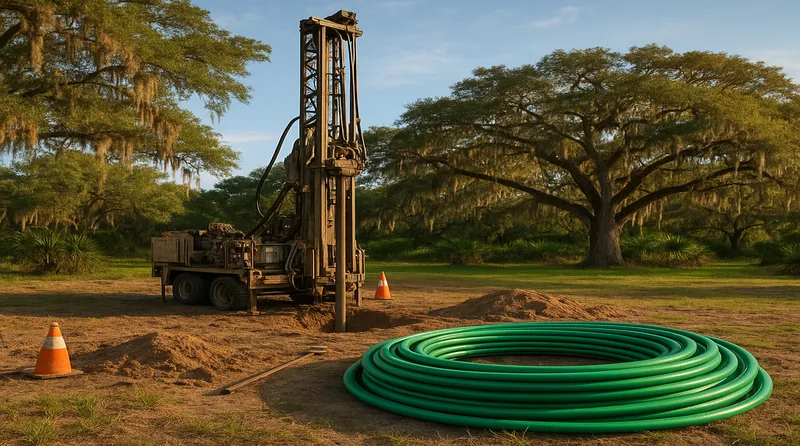
Why South Carolina's Nuclear Grid Changes the Math
South Carolina has a detail in its energy profile that doesn't show up in most geothermal discussions: the state's electricity grid runs primarily on nuclear power. That gives SC a carbon intensity of just 589 lbs CO₂/MWh — one of the cleanest generation mixes in the entire Southeast and rank 39 nationally. Switching from propane or oil to a geothermal heat pump here produces a genuinely low-carbon outcome, not just an efficiency gain.
At 10.90¢/kWh (EIA 2024, rank 35), electricity is below the national average and favorable for geothermal operating costs. The federal 30% tax credit applies statewide, and a state-level geothermal tax credit may provide additional benefit under SC Code §12-6-3587.
Three things make South Carolina's geothermal market distinctive:
- Three completely different markets in one state. The Blue Ridge foothills have 3,200 heating degree days, propane dependence, and crystalline rock geology. The Midlands have mild four-season demand and sandy soils. The Lowcountry coast has 2,800+ cooling degree days, luxury resort properties, hurricane exposure, and saltwater constraints. No single geothermal story covers all of South Carolina.
- The cleanest grid in the Southeast. At 589 lbs CO₂/MWh, a geothermal heat pump running on SC power produces 60–70% less CO₂ than a natural gas furnace and 75–85% less than propane. For homeowners who care about environmental impact, SC is one of the few southeastern states where the carbon argument is genuinely strong.
- Coastal luxury + hurricane resilience. Hilton Head Island, Kiawah, and Isle of Palms have some of the highest-value residential properties in the Southeast. These homes spend $3,000–$6,000/year on cooling alone. Geothermal eliminates the outdoor condenser — removing hurricane damage risk, salt-air corrosion, and poolside noise in one investment.
Quick Verdict: Should You Go Geothermal in South Carolina?
| Your Situation | Verdict | Estimated Payback |
|---|---|---|
| Upstate propane home (Oconee, Pickens, Greenwood) | 🟢 Strong yes | 7–12 years |
| Electric resistance heating | 🟢 Yes | 7–11 years |
| New construction (any region, $400K+) | 🟢 Best opportunity | 4–7 years (incremental) |
| Farm/ranch (USDA REAP eligible) | 🟢 Excellent | 4–6 years |
| Vacation rental (Blue Ridge/Hilton Head) | 🟢 Strong | 6–10 years |
| Coastal cooling-dominant (Charleston, HHI) | 🟡 Premium properties | 12–18 years |
| Midlands aging heat pump replacement | 🟡 Evaluate at replacement | 10–16 years |
| Natural gas (Greenville/Columbia metro) | 🔴 Not recommended | 25–40+ years |
The Nuclear Grid Advantage
South Carolina's grid is powered primarily by nuclear energy — the V.C. Summer and Oconee Nuclear Stations provide baseload generation, supplemented by natural gas and growing solar capacity. This matters for geothermal in two ways:
Environmental impact is real, not theoretical. In states with coal-heavy grids (Nebraska at 1,082 lbs CO₂/MWh, West Virginia at 1,445), switching from gas to electric heat can actually increase carbon emissions. Not in South Carolina. At 589 lbs/MWh, a geothermal COP of 3.5–4.0 produces roughly 0.15 lbs CO₂ per kWh of heating — dramatically cleaner than the 11.7 lbs/gallon from propane or 11.2 lbs/therm from natural gas.
Rate stability from nuclear baseload. Nuclear plants have fixed fuel costs over their operating life. Unlike gas-dependent grids where electricity rates fluctuate with natural gas markets, South Carolina's nuclear backbone provides relative rate stability. When you calculate a 25-year geothermal payback, rate predictability matters — and SC's nuclear foundation provides more confidence in your operating cost projections than states dependent on gas-fired generation.
Climate & Geology: Blue Ridge to Barrier Islands
Blue Ridge Escarpment (Oconee, Pickens, NW Greenville County)
Crystalline rock — granite, gneiss, schist. The southern terminus of the Appalachian geological formation. Hard rock means vertical boreholes are standard and expensive ($22–$30/ft). Terrain often precludes horizontal loops. Ground temps 57–60°F — the coolest in SC and excellent for heating-dominant applications. Heating degree days: 3,000–3,200. Significant propane use where natural gas lines don't reach.
Piedmont Plateau (Greenville, Spartanburg, Anderson, Rock Hill)
Weathered regolith (saprolite) over crystalline bedrock. The decomposed rock layer at the surface can be 20–60 ft deep, making the first section of vertical drilling easier and sometimes allowing horizontal loops on larger suburban lots. Greenville's I-85 corridor has the best combination of installer access and market demand in SC. Ground temps: 60–63°F. Balanced heating/cooling: ~2,800 HDD / 1,800 CDD.
Sandhills Transition (Columbia, Camden, Aiken)
Sandy, loose soil marking the Fall Line. The geological boundary between the Piedmont's hard rock and the Coastal Plain's soft sediments. Drilling is straightforward and inexpensive. Horizontal loops work on half-acre+ lots — a real cost advantage over vertical. Lower thermal conductivity than clay requires slightly longer loop runs, but the installation cost difference more than compensates. Ground temps: 62–65°F.
Coastal Plain (Florence, Orangeburg, Sumter)
Unconsolidated sediments — sand, clay, gravel. Fast, inexpensive drilling. Horizontal slinky loops are often the most cost-effective option. This region has the lowest installation costs in SC but also lower heating loads (shorter winter), so savings are moderate. Ground temps: 63–66°F. Cooling-dominant: ~1,600 HDD / 2,200 CDD.
Lowcountry Coast (Charleston, Beaufort, Hilton Head)
Soft coastal sediments with high water tables and saltwater influence. Drilling is fast but — critically — closed-loop systems only within the saltwater influence zone. This includes all barrier islands (Hilton Head, Kiawah, Isle of Palms, Sullivan's Island, Folly Beach) and tidal marsh communities. Ground temps: 64–67°F — excellent for summer heat rejection. Strongly cooling-dominant: ~1,400 HDD / 2,800 CDD.
| City | Ground Temp (50 ft) | Heating Degree Days | Cooling Degree Days |
|---|---|---|---|
| Greenville | 61°F | 2,800 | 1,800 |
| Spartanburg | 60°F | 3,000 | 1,700 |
| Columbia | 64°F | 2,000 | 2,400 |
| Florence | 64°F | 2,200 | 2,200 |
| Charleston | 66°F | 1,600 | 2,600 |
| Hilton Head | 67°F | 1,400 | 2,800 |
Geology & Drilling Conditions by Region
South Carolina spans the full geological transect from Appalachian crystalline rock to unconsolidated coastal sediment. Drilling costs vary by 50%+ across this range. Here's what your contractor will encounter:
| Region | Dominant Geology | Thermal Conductivity (BTU/hr·ft·°F) | Typical Bore/Trench Depth | Drilling Cost/ft | Key Challenges |
|---|---|---|---|---|---|
| Blue Ridge Escarpment (Oconee, Pickens, NW Greenville) | Crystalline rock — granite, gneiss, schist (Appalachian formation) | 1.4–2.0 (excellent — hard rock is thermally conductive) | Vertical only: 150–200 ft per bore | $22–$30/ft | Hardest drilling in SC — slow progress through unfractured granite. Steep terrain limits equipment access. No horizontal option. Highest cost per foot but best thermal conductivity. Closest to NC mountain installers. |
| Inner Piedmont (Greenville, Spartanburg, Anderson) | Saprolite (weathered regolith, 20–60 ft) over crystalline bedrock | 1.0–1.5 (saprolite) / 1.4–2.0 (bedrock) | Vertical: 150–200 ft; Horizontal: 6–8 ft (where saprolite depth allows) | Vertical: $18–$25/ft; Horizontal: $3–$5/ft | Saprolite layer is soft and fast to drill through. Transition to hard bedrock below requires gear change. Horizontal loops feasible on larger lots (½ acre+) where saprolite is 30+ ft deep. Best installer availability in SC. |
| Outer Piedmont / I-85 Corridor (Rock Hill, York, Chester) | Thin saprolite (10–30 ft) over Carolina Slate Belt (low-grade metamorphic rock) | 1.0–1.4 | Vertical: 150–200 ft; Horizontal: limited — shallow bedrock | Vertical: $18–$25/ft; Horizontal: $3–$5/ft (where possible) | Thinner weathered zone than inner Piedmont. Some properties hit bedrock at 10–20 ft, forcing vertical. Charlotte-area contractors serve this region from NC. |
| Sandhills / Fall Line (Columbia, Camden, Aiken) | Cretaceous-Tertiary sands and clays — Fall Line transition zone | 0.8–1.2 (dry sand) / 1.0–1.3 (moist) | Vertical: 175–225 ft; Horizontal: 6–7 ft | Vertical: $10–$14/ft; Horizontal: $2.50–$4/ft | Easy drilling — no rock. Lower conductivity than Piedmont requires longer loops or deeper bores. Dry sandy soil near surface — moisture content critical. Horizontal loops work well on larger lots. Aiken County horse country estates have ideal acreage. |
| Upper Coastal Plain (Florence, Sumter, Orangeburg) | Unconsolidated Tertiary sands, clays, and gravel | 0.9–1.3 | Vertical: 150–200 ft; Horizontal: 6–7 ft | Vertical: $9–$13/ft; Horizontal: $2.50–$4/ft | Cheapest drilling in SC. Soft formations, no rock. Good horizontal territory. Water table variable (10–30 ft) — confirm before designing horizontal. Some areas have iron-rich groundwater that complicates open-loop. |
| Pee Dee / Grand Strand (Myrtle Beach, Conway, Marion) | Coastal Plain sediments — sand, silt, clay layers | 1.0–1.4 (saturated near coast) | Vertical: 150–200 ft; Horizontal: possible inland (WT > 8 ft) | Vertical: $9–$13/ft; Horizontal: $2.50–$4/ft | Inland Pee Dee has good horizontal conditions. Near coast, water table rises — check carefully. Grand Strand barrier island properties: closed-loop only. Thinnest installer market in SC. |
| Lowcountry / Charleston Metro (Charleston, North Charleston, Mt. Pleasant) | Holocene and Pleistocene marine sediments — soft clay, sand, shell hash | 1.1–1.5 (saturated clays have good conductivity) | Vertical: 150–200 ft; Horizontal: very limited (WT 3–10 ft downtown; higher on elevated sites) | Vertical: $10–$14/ft; Horizontal: $3–$5/ft (elevated sites only) | Downtown Charleston and peninsula: vertical only (WT 3–6 ft). Mt. Pleasant/West Ashley upland sites may allow horizontal. All drilling in unconsolidated sediment — fast, no rock. OCRM review for critical area properties. |
| Barrier Islands (Hilton Head, Kiawah, Isle of Palms, Folly Beach) | Beach sand, shell beds, marsh deposits — saltwater influence throughout | 1.2–1.6 (saturated — good conductivity) | Vertical only: 150–200 ft | $11–$16/ft | Closed-loop MANDATORY — saltwater causes rapid corrosion in open-loop systems. No horizontal (WT 2–6 ft). Marine-grade fittings required. Salt-air corrosion of exposed components. OCRM permitting may apply. Premium pricing but high-value properties. |
Pre-Drill Intelligence: SC DHEC Well Records
Before committing to a loop design, check SC DHEC's well records database for existing water well logs near your property. The Bureau of Water maintains records from thousands of wells across the state — formation types, water-bearing zones, and drilling rates at various depths. Request records for your county at scdhec.gov.
For Piedmont properties, the key question is saprolite depth — how far down before the drill hits hard bedrock. A property with 40 ft of saprolite can potentially use horizontal loops at a fraction of vertical cost. Properties with 15 ft of saprolite are vertical-loop-only. Your installer should investigate this before finalizing design and pricing. A $300–$500 soil probe can save $5,000–$8,000 in unnecessary vertical loop costs.
Regional Costs & ROI
| Region | Avg. System Cost (3–4 ton) | Best Loop Type | Typical Annual Savings | Payback (Before Incentives) | Payback (After 30% ITC) |
|---|---|---|---|---|---|
| Blue Ridge / Upstate (propane) | $22,000–$32,000 | Vertical (hard rock) | $2,000–$2,500 (vs. propane) | 9–16 yr | 7–12 yr |
| Piedmont / Greenville (propane) | $20,000–$28,000 | Vertical or horizontal | $1,800–$2,300 (vs. propane) | 9–15 yr | 6–11 yr |
| Piedmont / Greenville (gas) | $20,000–$28,000 | Vertical or horizontal | $400–$700 (vs. gas) | 29–70 yr | 20–49 yr |
| Sandhills / Columbia | $18,000–$26,000 | Horizontal (sandy soil) | $800–$1,300 (vs. electric HP) | 14–33 yr | 10–23 yr |
| Coastal Plain / Florence | $17,000–$24,000 | Horizontal slinky | $700–$1,200 (vs. electric HP) | 14–34 yr | 10–24 yr |
| Charleston / Lowcountry | $19,000–$28,000 | Vertical (high WT) | $1,200–$1,800 (cooling-heavy) | 11–23 yr | 8–16 yr |
| Hilton Head / Barrier Islands | $22,000–$32,000 | Vertical (mandatory) | $1,500–$2,500 (luxury cooling) | 9–21 yr | 6–15 yr |
Case Study: Oconee County Upstate Propane Home
The Setup
A 2,400 sq ft ranch near Walhalla in Oconee County — the Blue Ridge foothills of western South Carolina. Built 1990. Heating with a 500-gallon propane tank, aging 13 SEER central AC. No natural gas line reaches the property.
Old System Costs
- Annual propane: 750 gallons × $3.10/gallon = $2,325/year
- Annual cooling: $680/year (13 SEER AC, ~5 months)
- Total HVAC: $3,005/year
The Geothermal System
- Equipment: 3-ton WaterFurnace 7 Series, variable speed + desuperheater
- Loop: Vertical closed-loop — 3 bores × 200 ft in crystalline rock (Blue Ridge granite)
- Installed cost: $26,500
- Federal ITC (30%): −$7,950
- SC state credit (25% of federal, if active): −$1,988
- Net cost (ITC only): $18,550
- Net cost (ITC + SC credit): $16,562
The Math
- Annual geothermal electricity: ~$780/year (10.90¢/kWh, COP 3.5 heating / EER 20 cooling)
- Annual savings: $3,005 − $780 = $2,225/year
- Payback (ITC only): $18,550 ÷ $2,225 = 8.3 years
- Payback (ITC + SC credit): $16,562 ÷ $2,225 = 7.4 years
- At $3.50/gallon propane: payback drops to 6.8 years
- 25-year net savings: ($2,225 × 25 × 1.03 inflation factor) − $18,550 = $37,075+
Verdict: Classic Appalachian propane conversion. The Oconee County pattern mirrors the Blue Ridge corridor through western North Carolina and northeast Georgia. Rural Oconee, Pickens, Greenwood, Laurens, and Abbeville counties without gas mains have the clearest ROI in South Carolina.
Case Study: Mount Pleasant Cooling-Dominant Home
The Setup
A 2,800 sq ft two-story in Mount Pleasant, east of Charleston. Dual-zone conventional heat pump (12 SEER, 15 years old). Cooling runs 8+ months. Water table at ~8 ft.
Old System Costs
- Annual HVAC (cooling-dominant): $2,850/year
The Geothermal System
- Equipment: 4-ton ClimateMaster Tranquility 30, two-stage + desuperheater
- Loop: Vertical closed-loop — 4 bores × 200 ft (closed-loop required, coastal saltwater zone)
- Installed cost: $32,000
- Federal ITC (30%): −$9,600
- Net cost: $22,400
- Incremental over conventional replacement: $32,000 − $13,500 = $18,500; after ITC: $8,900
The Math
- Annual geothermal electricity: ~$1,140/year (cooling-dominant at 10.90¢/kWh)
- Annual savings: $2,850 − $1,140 = $1,710/year
- Desuperheater adds $200–$400/year (runs 8+ months in SC's cooling climate)
- Payback (full cost after ITC): $22,400 ÷ $1,960 = 11.4 years
- Incremental payback (vs. replacing anyway): $8,900 ÷ $1,960 = 4.5 years
Verdict: The incremental payback is the right number for a homeowner at the HVAC replacement decision point. At 4.5 years, it's compelling even in a cooling-dominant market. Mount Pleasant's median home value exceeds $550,000 — a $32,000 geothermal system is proportional to the property. The builder-grade 12 SEER unit was leaving enormous cooling efficiency on the table in Charleston's 2,600+ CDD climate.
Case Study: Laurens County Poultry Farm + REAP
The Setup
A 2,100 sq ft farmhouse on a 180-acre poultry operation near Laurens in the Piedmont region. The family runs 4 broiler houses (REAP-eligible — 65%+ gross income from poultry). The farmhouse heats with propane at $2,980/year and cools with a 15-year-old 10 SEER AC at $890/year. Soil: weathered saprolite, 35 ft deep over granitic bedrock. Lot: more than enough for horizontal loops. The property also has a 0.6-acre farm pond, 9 ft deep, within 200 ft of the house.
Old System Costs
- Annual propane (farmhouse only): 920 gallons × $3.24/gallon = $2,982/year
- Annual cooling (10 SEER AC): $890/year
- Total HVAC: $3,872/year
The Geothermal System
- Equipment: 3.5-ton WaterFurnace 5 Series, two-stage + desuperheater
- Loop: Pond loop — 8 slinky coils sunk in the farm pond, 200 ft header to house
- Total installed cost: $20,500 (pond loop is cheapest option)
REAP + ITC Stack
| Line Item | Amount |
|---|---|
| Total geothermal system cost | $20,500 |
| USDA REAP grant (25%) | −$5,125 |
| Remaining eligible for ITC | $15,375 |
| Federal ITC (30%) | −$4,613 |
| SC state credit (25% of federal, if active) | −$1,153 |
| Net out-of-pocket (with SC credit) | $9,609 |
| Net out-of-pocket (ITC only) | $10,762 |
| Annual savings (vs. propane + old AC) | $2,902 |
| Payback (ITC only) | 3.7 years |
| Payback (ITC + SC credit) | 3.3 years |
The Math
- Annual geothermal electricity: ~$970/year (10.90¢/kWh, COP 3.5, EER 22)
- Annual savings: $3,872 − $970 = $2,902/year
- At 40% REAP (competitive round): net drops to $7,257 → payback 2.5 years
- At 50% REAP: net drops to $4,263 → payback 1.5 years
- 20-year net savings (25% REAP): ($2,902 × 20) − $10,762 = $47,278
Verdict: Triple optimization — the farm pond eliminated the most expensive loop type, REAP rewarded the agricultural operation, and the Piedmont saprolite depth (35 ft) kept header trenching costs low. The family eliminated propane delivery to a rural property and gained dramatically improved cooling (the old 10 SEER unit couldn't maintain comfort in August). The poultry operation's strong gross income made REAP qualification straightforward — the Laurens County USDA office processed the application.
REAP application was submitted through the SC USDA Rural Development office in Columbia. Timeline: 5 months from submission to award. The Clemson Cooperative Extension office in Laurens County provided technical assistance with the energy audit portion of the application — a free service.
Month-by-Month Energy Profile
This profile models the Oconee County Upstate propane home (2,400 sq ft, 3-ton system) after geothermal conversion.
| Month | Old Propane Cost | Old Electric (AC) | Geo Electric Cost | Monthly Savings |
|---|---|---|---|---|
| January | $385 | $0 | $105 | $280 |
| February | $340 | $0 | $95 | $245 |
| March | $235 | $0 | $70 | $165 |
| April | $85 | $0 | $35 | $50 |
| May | $0 | $120 | $50 | $70 |
| June | $0 | $210 | $85 | $125 |
| July | $0 | $265 | $105 | $160 |
| August | $0 | $260 | $100 | $160 |
| September | $0 | $180 | $75 | $105 |
| October | $80 | $0 | $30 | $50 |
| November | $215 | $0 | $65 | $150 |
| December | $330 | $0 | $95 | $235 |
| Annual Total | $1,670 | $1,035 | $910 | $1,795 |
Propane at $3.10/gallon. Electric at 10.90¢/kWh (EIA 2024). South Carolina's dual-season climate produces geothermal value in both winter (propane savings) and summer (cooling efficiency). The Upstate's 2,800 HDD + 1,800 CDD creates a balanced annual demand profile — the system earns its keep year-round.
Open-Loop System Assessment by Region
| Region | Open-Loop Viability | Water Temp | Key Considerations |
|---|---|---|---|
| Blue Ridge (Oconee/Pickens) | 🟡 Site-specific | 56–60°F | Low yields in fractured crystalline rock. If your domestic well produces 10+ GPM, worth evaluating. DHEC well permit required. Most properties default to vertical closed-loop. |
| Piedmont (Greenville/Spartanburg) | 🟡 Site-specific | 60–63°F | Variable yields in saprolite aquifer. Some areas produce adequate flow. Water quality generally good. DHEC permit required. |
| Sandhills / Columbia | 🟢 Generally viable | 62–65°F | Good aquifer yields in Cretaceous-Tertiary sands. Sand filtration typically needed. DHEC well construction permit required. |
| Coastal Plain / Florence | 🟢 Generally viable | 63–66°F | Strong aquifer production. Verify iron content — high iron fouls heat exchangers. DHEC permit required. |
| Charleston Metro (mainland) | 🔴 Not recommended | 65–67°F | Saltwater intrusion risk increases toward coast. Brackish groundwater in many areas. Southern Hills aquifer susceptible to contamination. |
| Barrier Islands (HHI/Kiawah/IOP) | 🔴 Not viable | 66–68°F | Saline aquifer throughout. Closed-loop required. Saltwater causes rapid corrosion of heat exchanger components. No exceptions. |
SC DHEC governs all well construction. Open-loop geothermal requires a well construction permit and a licensed well driller. Discharge must comply with state water quality standards. Your installer handles the permitting, but build 2–4 weeks into your timeline.
Loop Type Cost Comparison
| Loop Type | Typical Cost (3-ton) | Best For | South Carolina Notes |
|---|---|---|---|
| Vertical closed-loop | $17,000–$30,000 | Rocky terrain, small lots, coastal | Wide range: Blue Ridge crystalline ($22K–$30K) vs. Coastal Plain sediment ($17K–$22K). Default for barrier islands. |
| Horizontal slinky | $13,000–$18,000 | ½+ acre lots with deep WT | Best value in Sandhills, Coastal Plain, and Piedmont (deep saprolite). Not feasible in Blue Ridge or coastal areas. |
| Horizontal straight | $14,000–$20,000 | Large rural properties | Farms and estates with acreage. Aiken horse country, Pee Dee agricultural land. |
| Open-loop | $12,000–$18,000 | Inland areas with good aquifer | Sandhills/Coastal Plain best. Not viable on coast. DHEC well permit required. Iron content is a common issue. |
| Pond/lake loop | $11,000–$16,000 | Properties with qualifying ponds | Farm ponds throughout rural SC. Min ½ acre, 8 ft deep. Cheapest option where available — significant cost advantage. |
Incentive Stacking: Federal ITC, SC State Credit & REAP
Federal Investment Tax Credit (ITC) — 30%
The federal residential clean energy credit under IRC §25D provides 30% back on total installed cost. No cap. Through 2032. Carries forward to future tax years.
SC State Tax Credit (SC Code §12-6-3587) — [NEEDS VERIFICATION]
South Carolina has historically offered a state income tax credit for geothermal systems equal to 25% of the federal credit amount. If active, on a $24,000 system with a $7,200 federal credit, the SC credit adds ~$1,800 — bringing combined incentives to $9,000 (37.5% total reduction). Verify current status with the SC Department of Revenue at dor.sc.gov before including in your financial plan.
USDA REAP — Strong for SC Agriculture
South Carolina's agricultural sector — tobacco, peaches, poultry, cotton, timber — makes REAP relevant across the rural Piedmont and Coastal Plain. REAP grants cover up to 50%; loan guarantees up to 75%.
Best-Case REAP + ITC Stack
| Line Item | Amount |
|---|---|
| 3-ton horizontal system (installed) | $22,000 |
| USDA REAP grant (25%) | −$5,500 |
| Federal ITC (30% of remaining) | −$4,950 |
| SC state credit (if active) | −$1,238 |
| Net cost | $10,312 |
| Annual savings (vs. propane) | $2,200 |
| Payback | 4.7 years |
Utility Incentive Programs
| Utility | Service Territory | Geothermal Incentive | Status |
|---|---|---|---|
| Duke Energy Progress SC | Upstate, Pee Dee | HVAC efficiency rebates (up to $1,000 for qualifying heat pumps) | [NEEDS VERIFICATION] — (800) 777-9898 |
| Dominion Energy SC | Columbia Midlands | Energy efficiency rebate programs | [NEEDS VERIFICATION] — dominionenergy.com |
| Santee Cooper | Coastal SC, rural | State-owned utility; efficiency programs through 20 member co-ops | [NEEDS VERIFICATION] — santeecooper.com |
| Palmetto Electric Co-op | Hilton Head, Beaufort | May offer heat pump incentives | [NEEDS VERIFICATION] — (843) 681-5551 |
| Berkeley Electric Co-op | Berkeley/Dorchester/Charleston | May offer efficiency programs | [NEEDS VERIFICATION] — berkeleyelectric.coop |
Hurricane & Severe Weather Resilience
South Carolina's coast faces hurricane risk comparable to Louisiana and Florida. Hugo (1989), Matthew (2016), Florence (2018), and Dorian (2019) all caused significant HVAC damage along the coast. The interior faces severe thunderstorms, occasional tornadoes, and ice storms in the Upstate.
What severe weather does to conventional HVAC:
- Hurricane winds (Hugo: 140 mph) destroy outdoor condensers and scatter debris
- Storm surge (coastal) floods and contaminates outdoor equipment — saltwater exposure = total loss
- Falling trees and debris damage outdoor units during any major storm
- Ice storms (Upstate) can damage outdoor coils and fan blades
What severe weather does to geothermal:
- Ground loop: completely unaffected by all weather events
- Indoor heat pump: as protected as any indoor appliance
- No outdoor condenser = no weather damage
- After power restoration, system runs immediately
For barrier island properties (Hilton Head, Kiawah, Isle of Palms) with $1M+ values and 25+ year ownership horizons, the expected cost of outdoor condenser replacements due to storm damage ($5,000–$10,000 every 10–15 years) represents a genuine financial factor that compresses geothermal payback by 2–3 years.
Solar + Geothermal: The Palmetto Combo
South Carolina's solar resource is excellent — 5.0–5.3 peak sun hours/day, among the best in the Southeast. SC Act 236 requires net metering for systems up to 20 kW.
| Component | Cost | After 30% ITC |
|---|---|---|
| 3-ton geothermal (vertical, Piedmont) | $24,000 | $16,800 |
| 8 kW solar array | $22,000 | $15,400 |
| Total | $46,000 | $32,200 |
| Annual energy savings (vs. propane + grid) | ~$3,200/year | |
| Combined payback | ~10 years | |
Peak alignment advantage: SC's heaviest cooling loads coincide with peak solar production (July–August afternoons). Solar directly offsets the geothermal system's electricity draw during its highest-demand hours. Every kWh of solar generation offsets 3.5–4.5 kWh of heating/cooling through the heat pump's COP.
The Honest Gas Assessment
If you heat with natural gas in Greenville, Columbia, or another gas-served community, geothermal rarely makes financial sense at current prices.
- Average SC gas heating cost: ~$600–$900/year
- Average SC AC cooling cost: ~$500–$800/year
- Total conventional HVAC: ~$1,100–$1,700/year
- Geothermal total: ~$700–$1,100/year
- Annual savings: $400–$700
- Net system cost after ITC: $12,600–$19,600
- Payback: 18–49 years
When Gas Homes SHOULD Consider Geothermal
- New construction — avoid gas line connection ($2,500–$4,000), and the incremental cost after ITC drops to $5,000–$8,000. Payback: 4–7 years.
- Your furnace AND AC are both dying — compare replacement cost of both conventional units vs. a single geothermal system
- Environmental priority — SC's nuclear grid makes this argument genuinely strong: 60–70% less CO₂ than gas heating
- You're adding AC to a home without it — geothermal provides both systems in one
- Coastal property replacing storm-damaged equipment — use the insurance payout toward geothermal
Permits & Licensing Requirements
SC DHEC Well Construction Permit
SC DHEC classifies geothermal boreholes as wells. All drilling — both open-loop and closed-loop vertical — requires a licensed well driller registered with DHEC's Bureau of Water. This is a statewide requirement regardless of county.
- Closed-loop vertical bores: Well construction permit required. Bores must be properly grouted to prevent aquifer contamination. DHEC well construction standards apply. Processing: 2–4 weeks.
- Open-loop systems: Full well construction permit plus water use registration. Discharge must meet state water quality standards. More extensive review — 3–6 weeks.
- Horizontal trenching: Does not require DHEC well permit (no drilling). Local building permit only.
OCRM Coastal Zone Permitting
Properties in SC's Critical Area (beachfront and coastal marshes) fall under DHEC's Office of Ocean and Coastal Resource Management (OCRM). The Beachfront Management Act and Coastal Zone Management Act may impose additional review for drilling within the Critical Area. This applies to all barrier island properties and many mainland coastal parcels.
- OCRM review timeline: Add 2–4 weeks for Critical Area properties
- Not required for inland properties — Piedmont, Sandhills, Upstate are not affected
Local Building Permits by Jurisdiction
| Jurisdiction | Permit Type | Approximate Cost | Processing Time | Notes |
|---|---|---|---|---|
| Greenville / Greenville County | Mechanical permit | $100–$300 | 1–2 weeks | Standard process. Best installer market in SC. No special requirements. |
| Columbia / Richland County | Mechanical permit | $100–$250 | 1–2 weeks | Standard process. Sandhills geology — confirm horizontal vs. vertical early. |
| Charleston / Charleston County | Mechanical + possible OCRM | $150–$400 | 2–4 weeks (longer for Critical Area) | Downtown/peninsula: verify OCRM applicability. Mt. Pleasant upland: standard. |
| Beaufort County (Hilton Head) | Mechanical + OCRM for island properties | $200–$500 | 3–6 weeks (island properties) | All HHI properties should assume OCRM review. POA (Property Owners Association) approval may also be required within plantation communities. |
| Spartanburg / Spartanburg County | Mechanical permit | $100–$250 | 1–2 weeks | Standard process. |
| Rural counties (Oconee, Laurens, etc.) | Varies — some minimal | $0–$150 | Immediate to 1 week | Many rural SC counties have minimal HVAC permit requirements. |
Contractor Licensing
- HVAC contractor: SC LLR (Department of Labor, Licensing and Regulation) licenses HVAC contractors through the SC Contractor's Licensing Board. Verify at llr.sc.gov. Two tiers: Mechanical Contractor (Group 4) and HVAC Subcontractor (Group 7).
- Well driller: Must be registered with SC DHEC Bureau of Water. Verify at scdhec.gov. Required for any vertical bore drilling.
- Electrical: Licensed electrician required for electrical connections. SC LLR governs.
Typical Project Timeline
| Step | Timeframe | Notes |
|---|---|---|
| Site assessment / soil probe | 1–2 days | Saprolite depth (Piedmont), water table depth (coast), soil conductivity |
| DHEC well permit (closed-loop) | 2–4 weeks | Statewide requirement for any drilling |
| OCRM review (coastal critical area only) | 2–4 weeks additional | Barrier islands and coastal marsh properties |
| Local mechanical permit | 1–2 weeks | Concurrent with DHEC permit |
| Drilling / trenching | 1–3 days | Blue Ridge crystalline: 2–3 days. Coastal Plain: 1 day. |
| Equipment installation | 2–4 days | Including piping, ductwork (if new), controls, commissioning |
| Final inspection | 1–3 business days | Schedule proactively |
| Total (Upstate/Piedmont) | 3–6 weeks | Standard timeline |
| Total (Coastal/barrier island) | 5–10 weeks | OCRM adds time for island properties |
Finding & Vetting a Qualified Installer
South Carolina's installer market is developing, concentrated in Greenville and Charleston. The Upstate benefits from proximity to experienced NC and GA mountain installers. The coast draws from the Charleston market and occasionally from Savannah, GA.
Where to Find Installers
- IGSHPA Accredited Installer Directory: igshpa.org/accredited-installer — search SC AND neighboring states (NC, GA, TN)
- WaterFurnace Dealer Locator: waterfurnace.com/dealer-locator
- ClimateMaster Dealer Network: climatemaster.com/residential/find-a-dealer
- Bosch Geothermal: bosch-thermotechnology.us
- GeoExchange Directory: geoexchange.org
- SC LLR Contractor Verification: llr.sc.gov
- Clemson Cooperative Extension: May have referrals for REAP-eligible farm installations
Regional Installer Availability
| Region | Est. Qualified Installers | Wait Time | Notes |
|---|---|---|---|
| Greenville / Upstate | 5–8 | 4–6 weeks | Best availability in SC. Multiple IGSHPA-certified. NC mountain installers also serve this area. Ask about Blue Ridge crystalline rock experience for Oconee/Pickens. |
| Spartanburg / Rock Hill | 3–5 | 4–8 weeks | Some Greenville firms travel. Charlotte-area NC contractors serve Rock Hill/York County. |
| Columbia / Midlands | 3–5 | 4–8 weeks | Moderate availability. Greenville firms travel. Ask about Sandhills geology experience and horizontal loop options. |
| Charleston / Lowcountry | 3–5 | 6–10 weeks | Growing coastal market. Demand closed-loop expertise. OCRM permitting experience important for island work. |
| Hilton Head / Beaufort | 2–3 | 8–12 weeks | Thin market. Charleston and Savannah, GA firms travel. Premium pricing. POA approval process adds timeline. |
| Florence / Pee Dee | 1–3 | 8–12 weeks | Thinnest market in SC. Wilmington, NC or Columbia firms may be options. Mobilization surcharge ($1,500–$2,500). |
| Myrtle Beach / Grand Strand | 2–4 | 6–10 weeks | Some coastal specialist firms. Wilmington, NC contractors also serve this area. |
8-Point Vetting Checklist
- IGSHPA accreditation or manufacturer certification — proves geothermal-specific training beyond general HVAC
- SC LLR contractor license (verified at llr.sc.gov) — Mechanical Contractor (Group 4) or HVAC Subcontractor (Group 7)
- SC DHEC registered well driller on staff or under contract — required for any vertical bore
- Regional geology experience — Blue Ridge crystalline rock, Piedmont saprolite, Sandhills sand, and Coastal Plain sediment all drill differently. Ask: "What loop type would you recommend for my specific property, and why?"
- Coastal expertise (if applicable) — OCRM permitting experience, closed-loop requirements, marine-grade fittings, salt-air protection. For barrier island properties, this is non-negotiable.
- Manual J load calculation in the proposal — SC's dual-season climate (2,800 HDD + 1,800 CDD Upstate; 1,400 HDD + 2,800 CDD coast) requires careful sizing for both heating AND cooling peaks
- Written warranty: equipment (10 yr), labor (1–2 yr), loop (25–50 yr) — verify loop warranty from pipe manufacturer
- REAP familiarity (if applicable) — for farm installations, ask whether the installer has completed REAP-funded projects. The documentation requirements are specific.
Maintenance & System Longevity
South Carolina's mild climate and diverse geography create region-specific maintenance considerations. The Upstate has four genuine seasons; the coast has a long, humid cooling season with hurricane exposure.
Maintenance Schedule
| Task | Frequency | DIY or Pro? | SC-Specific Notes |
|---|---|---|---|
| Check/replace air filter | Every 1–3 months | DIY | Monthly during pollen season (March–May) and peak cooling (June–September). SC's pollen is intense — yellow pine pollen blankets everything in spring and loads filters fast. |
| Inspect condensate drain | Monthly during cooling season | DIY | Lowcountry/coastal: 8+ months of condensate production. Algae growth is common. Flush with dilute bleach quarterly. Upstate: less intensive but still check during summer. |
| Clean evaporator coil | Annually (spring) | Pro | Pine pollen, mold spores, and organic particulates from SC's lush vegetation accumulate on coils. Critical for dehumidification performance in the Lowcountry. |
| Check loop pressure/antifreeze | Annually (fall) | Pro | Upstate design temps: 10–15°F (rare cold events). Propylene glycol at 15–20% standard. Coastal: antifreeze less critical but loop pressure still needs monitoring. |
| Desuperheater inspection | Annually | Pro | SC water hardness varies: Upstate (50–150 ppm, soft) vs. Coastal Plain (100–300 ppm, moderate). Coastal installations: inspect more carefully for mineral buildup. |
| Ductwork inspection | Every 3–5 years | Pro | Attic ducts in SC's heat (140°F+ summer attics) stress seals and insulation. Crawl space ducts in Lowcountry: check for moisture intrusion and mold. |
| Compressor and electrical check | Every 2–3 years | Pro | SC's dual-season use means moderate annual compressor hours. Check refrigerant, electrical connections, thermostat calibration. |
| Coastal/salt-air inspection | Annually (barrier islands only) | Pro | While geothermal's indoor equipment avoids salt exposure, manifold connections, piping exposed above ground, and any outdoor components should be inspected for corrosion. Marine-grade maintenance. |
System Lifespan
| Component | Expected Lifespan | Replacement Cost | Notes |
|---|---|---|---|
| Heat pump unit (indoor) | 20–25 years | $5,000–$9,000 | Protected indoors from SC's hurricanes, hail, pollen, and salt air. Major advantage over coastal outdoor condensers which corrode in 8–12 years in salt environments. |
| Ground loop (HDPE pipe) | 50–75+ years | $0 | Buried below ground — no weather, UV, or salt-air exposure. SC's moderate ground temperatures (57–67°F) create low thermal stress. Blue Ridge granite provides excellent loop stability. |
| Circulating pump | 10–15 years | $500–$1,200 | Variable-speed pumps last longer. SC's moderate demand profile is well within design parameters. |
| Compressor | 15–20 years | $2,000–$4,000 | SC's balanced heating/cooling demand prevents the thermal stress of single-season operation. |
| Antifreeze solution | 10–15 years | $200–$400 | SC's mild design temps mean lower glycol stress. Upstate needs slightly more attention than coast. Test every 3 years. |
| Thermostat/controls | 10–15 years | $200–$500 | Smart thermostats with remote monitoring recommended for vacation properties. |
SC Longevity Advantages
- No outdoor unit in hurricane/hail country. Conventional condensers on barrier islands corrode in salt air and face hurricane destruction. Geothermal's indoor unit avoids both — lasting 20–25 years vs. 8–12 for exposed coastal equipment.
- Balanced thermal cycling. SC's dual-season demand (heating AND cooling) maintains ground temperature equilibrium — unlike cooling-only states where thermal drift can become an issue.
- Nuclear grid reliability. SC's baseload nuclear generation provides steady power supply for the heat pump — fewer brownout/surge events that stress equipment.
Vacation Rental & Resort Property Economics
Blue Ridge Foothills (Oconee, Pickens, NW Greenville)
The Upstate's proximity to Atlanta (90 min) and Charlotte drives a growing cabin rental market. Properties on Airbnb and VRBO see 150–200 rental nights/year. For propane-heated rental cabins: geothermal saves $2,000+/year in propane (direct operating expense), adds ~$33,000 in property value at a 6% cap rate, and "geothermal heated" / "eco-friendly cabin" listings command 10–15% premium nightly rates. Guest comfort improves: consistent temps, quiet operation, no propane delivery interruptions.
Hilton Head Island & Sea Islands
Hilton Head's resort communities (Sea Pines, Palmetto Dunes, Shipyard Plantation) and Kiawah Island are among the highest-value rental properties in the Southeast. Homes spend $3,000–$6,000/year on cooling. The geothermal value proposition:
- 50–60% cooling cost reduction across SC's 6-month cooling season
- Desuperheater provides near-free pool heating (significant rental appeal)
- No exterior condenser noise — eliminates poolside AC complaints
- Salt-air corrosion elimination — underground equipment lasts 2–3x longer
- Hurricane resilience — no storm-damaged condenser replacement
- Closed-loop required on all barrier islands
Lake Properties (Hartwell, Murray, Keowee)
Upstate SC lakes along the NC/GA border. Weekend and vacation rental market growing. Propane-heated lake homes with ponds may qualify for pond-loop systems — cheapest installation option. REAP stacking available for agricultural lakefront properties.
Grand Strand (Myrtle Beach/Pawleys Island)
Higher-volume, lower-per-unit-value rental market. Geothermal makes sense primarily for property investors aggregating cooling savings across multiple units or oceanfront properties with $4,000+ annual HVAC costs.
Vacation Rental Tax Treatment
For business-use properties, geothermal qualifies for the Section 48 commercial ITC (same 30%) and MACRS 5-year depreciation. Rental property owners can recover 60–70% of system cost through credits and depreciation in the first 5 years. For barrier island properties, the avoided replacement cost of salt-corroded outdoor condensers adds further value. Consult a tax professional.
How to Claim the Federal Tax Credit (IRS Form 5695)
- Confirm eligibility. ENERGY STAR certified geothermal heat pump at your primary or secondary residence.
- Gather documentation. Itemized invoice, ENERGY STAR certification, DHEC well permit, proof of payment, REAP award letter if applicable.
- Calculate eligible costs. Subtract any REAP grant first.
- Form 5695, Part I. Line 4 for geothermal costs; 30% on Line 6b; transfer to Schedule 3, Form 1040.
- SC state credit. Verify status at dor.sc.gov. If active, 25% of federal credit amount on SC Form SC1040.
- Carryover. Federal carries forward indefinitely. Check SC rules for state credit.
- File and retain for 7+ years.
South Carolina vs. Neighboring States
| Factor | South Carolina | North Carolina | Georgia | Tennessee | Virginia |
|---|---|---|---|---|---|
| Avg. Electricity Rate | 10.90¢ | 11.65¢ | 11.40¢ | 12.87¢ | 12.20¢ |
| Grid CO₂ (lbs/MWh) | 589 (nuclear) | 645 | 780 | ~830 (TVA) | 590 |
| State Incentive | [NV] §12-6-3587 | None confirmed | None confirmed | TVA $1,500 EnergyRight | None confirmed |
| Propane Payback | 7–12 yr | 7–10 yr | 7–11 yr | 5–8 yr | 6–10 yr |
| Gas Payback | 25–40 yr | 20–30 yr | 22–30 yr | 20–35 yr | 18–30 yr |
| Coastal/Cooling Market | Strong (HHI, Charleston) | Moderate (OBX) | Moderate (Savannah) | N/A | Moderate (VA Beach) |
| Hurricane Exposure | Moderate-High | Moderate (coast) | Low-Moderate | Low | Low-Moderate |
| Installer Density | Moderate (Greenville) | Moderate-Good | Moderate | Good (TVA incentive) | Moderate-Good |
| REAP Eligibility | Rural SC statewide | Rural NC | Rural GA | Rural TN | Rural VA |
| Permitting Complexity | Moderate (DHEC + OCRM coast) | Low-Moderate | Low-Moderate | Low | Low-Moderate |
| Unique Advantage | Cleanest grid in SE + HHI luxury + potential state credit | Large installer market + research triangle | Growing market + Atlanta metro | TVA $1,500 rebate | Cleanest grid + strong market |
South Carolina's cleanest-grid-in-the-Southeast advantage (tied with Virginia at 589–590) is genuine and growing. As the nuclear baseload continues providing clean power, every geothermal system installed becomes incrementally greener. Tennessee's TVA $1,500 rebate is the best confirmed incentive among neighbors. If SC's §12-6-3587 state credit is active, SC's incentive stack would be the strongest in the region.
Frequently Asked Questions
How much does geothermal cost in SC?
$17K–$32K before incentives; $11K–$22K after 30% ITC. Blue Ridge vertical: $22K–$32K. Coastal Plain horizontal: $13K–$20K. Pond loops on farms: $11K–$16K. Wide range reflects SC's diverse geology from granite mountains to soft coastal sediment.
Is the nuclear grid actually cleaner?
Yes. 589 lbs CO₂/MWh — cleanest in the Southeast, 31% below the US average. A geothermal COP of 3.5 on SC's grid produces 60–70% less CO₂ than gas heating and 75–85% less than propane.
Can I use open-loop on the coast?
No. All barrier islands and saltwater-influenced areas: closed-loop only. Saline water causes rapid heat exchanger corrosion. Inland SC (Sandhills, Coastal Plain) can often support open-loop with DHEC permits.
Upstate propane payback?
7–12 years (ITC only), 6–10 years (with SC state credit). Oconee, Pickens, Greenwood, Laurens counties without gas mains: $2,000–$2,400/year savings vs. propane.
Worth it for Hilton Head luxury homes?
At replacement event: 8–12 year incremental payback. Full cost: 12–18 years. Benefits beyond payback: no condenser noise, hurricane resilience, salt-air corrosion elimination, desuperheater pool heating.
Gas homes in Greenville/Columbia?
25–40+ year payback. Not recommended unless new construction (4–7 year incremental) or simultaneous furnace + AC replacement event.
How does REAP work for SC farms?
25–50% grant for qualifying agricultural producers. Stack with 30% ITC = 55–80% cost coverage. SC USDA Rural Development in Columbia processes applications. Clemson Extension provides free technical assistance for energy audits.
SC state credit status?
SC Code §12-6-3587 has historically offered 25% of federal credit. Verify CURRENT status at dor.sc.gov — do not assume it's active without checking.
Best loop type?
Blue Ridge: vertical. Piedmont (deep saprolite): horizontal or vertical. Sandhills/Coastal Plain: horizontal slinky. Coast: closed-loop vertical mandatory. Farm with pond: pond loop (cheapest).
How long does it last?
Indoor unit: 20–25 years. Loop: 50–75+ years. Coastal bonus: indoor equipment avoids salt corrosion that kills outdoor condensers in 8–12 years on barrier islands.
What permits are needed?
DHEC well permit (all vertical drilling, statewide). Local mechanical permit. OCRM review for coastal Critical Area properties. SC LLR contractor license + DHEC well driller registration required.
SC vs. NC vs. GA?
SC has cheapest electricity (10.90¢), cleanest grid (589 CO₂), and potential state credit. NC has more installers. GA has Atlanta market. TN has TVA $1,500 rebate. SC's Lowcountry luxury market is unmatched among neighbors.
Bottom Line
South Carolina's geothermal case is built on three pillars: a nuclear-powered grid that makes the switch genuinely clean, the federal 30% tax credit, and three distinct markets that each have their own economics.
If you heat with natural gas in Greenville, Columbia, or another gas-served community, geothermal doesn't pencil out financially. Keep your gas system until it dies, then evaluate geothermal at the replacement event — especially in new construction.
If you're in one of SC's three sweet spots:
- Upstate propane (Oconee, Pickens, Greenwood, Laurens): 7–12 year payback, $2,000–$2,500/year savings, comparable to the Appalachian propane corridor from WV through NC. The best financial case in SC.
- New construction statewide: 4–7 year incremental payback. Skip the gas line, eliminate the outdoor condenser, and lock in operating costs for 25+ years. One of the strongest value propositions in any SC market.
- Lowcountry luxury and resort properties: 12–18 year full-cost payback, but the numbers change at the replacement event (8–12 years incremental). For Hilton Head, Kiawah, and Isle of Palms: no condenser noise, no hurricane damage, no salt-air corrosion, and desuperheater pool heating. At property values of $800K–$5M+, the $22,000–$32,000 investment is proportional.
South Carolina's cleanest-grid-in-the-Southeast advantage is real and growing. At 589 lbs CO₂/MWh, a geothermal heat pump here produces less carbon per unit of heating than a natural gas furnace — a claim that most southeastern states cannot make. The loop lasts 50+ years. The nuclear grid provides rate stability. And if the SC state credit under §12-6-3587 is confirmed active, South Carolina becomes one of the best-incentivized geothermal states in the Southeast.
Sources
- U.S. Energy Information Administration — South Carolina Electricity Profile 2024. Average residential rate: 10.90¢/kWh. Grid: 589 lbs CO₂/MWh. Nuclear primary generation.
- U.S. Energy Information Administration — South Carolina Propane Prices (Residential).
- Internal Revenue Service — Form 5695: Residential Energy Credits. 30% credit through 2032 under IRC §25D.
- SC Code of Laws — Title 12, Chapter 6, §12-6-3587. SC geothermal tax credit statute.
- SC Department of Revenue — dor.sc.gov. Verify current credit status.
- SC DHEC Bureau of Water — Well Construction & Water Quality Programs. Well construction permits, driller registration.
- SC DHEC OCRM — Coastal Zone Management & Permitting.
- USDA Rural Development — REAP Program.
- SC LLR Contractor's Licensing Board — Contractor License Verification.
- Duke Energy Progress SC — Residential Energy Efficiency Programs.
- Dominion Energy South Carolina — Energy Efficiency Programs.
- Santee Cooper — State-Owned Utility Programs.
- Database of State Incentives for Renewables & Efficiency (DSIRE) — South Carolina Incentives.
- International Ground Source Heat Pump Association (IGSHPA) — Accredited Installer Directory.
- WaterFurnace International — Dealer Locator.
- GeoExchange — Geothermal Heat Pump Directory.
- EPA eGRID — Emissions & Generation Resource Integrated Database. SC grid: 589 lbs CO₂/MWh.
- NOAA — South Carolina Climate & Ground Temperature Data.
- Clemson Cooperative Extension — Agricultural Energy Resources and REAP Technical Assistance.
- U.S. Department of Energy — Geothermal Heat Pumps Overview.