
In This Guide
- Why North Dakota Has America's Best-Kept Geothermal Secret
- Quick Verdict: Should You Go Geothermal?
- Does Geothermal Work in Extreme Cold?
- North Dakota Geology: Prairie Soils, Glacial Till & Bakken Drillers
- Regional Costs & ROI
- Case Study: Rural Cass County Propane Farmhouse
- Case Study: Fargo Gas Home — An Honest Look
- Month-by-Month Energy Profile
- Open-Loop System Assessment by Region
- Loop Type Cost Comparison
- Incentive Stacking: Federal ITC & USDA REAP
- Solar + Geothermal: Wind Country's Other Clean Energy Play
- How to Claim the Federal Tax Credit (IRS Form 5695)
- Geology & Drilling Conditions by Region
- Case Study: Burke County Ranch — Pond Loop + REAP
- Permits & Licensing
- Finding & Vetting Installers
- Maintenance & System Longevity
- Vacation Rental & Hunting Lodge Economics
- North Dakota vs. Neighboring States
- Frequently Asked Questions
- Bottom Line
- Sources
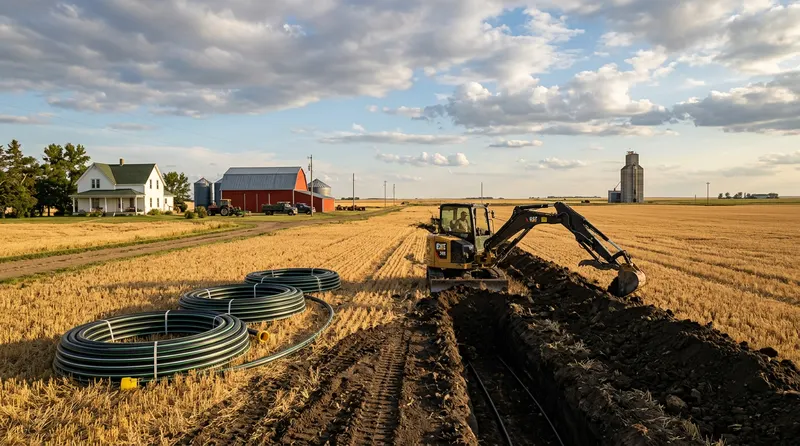
Why North Dakota Has America's Best-Kept Geothermal Secret
North Dakota is a state of paradoxes when it comes to geothermal heat pumps. You've got the cheapest electricity in the entire United States — 7.93¢/kWh average retail (EIA 2024), dead last at rank 51 out of all states and D.C. You've got thousands of oil field workers in the Bakken who drill holes for a living — the exact same skill set needed for vertical geothermal loops. And you've got winters so brutally cold that they expose the fatal weakness of every air-source heat pump on the market.
Yet almost nobody in North Dakota heats with a ground-source heat pump.
The reasons are familiar: cheap natural gas piped into Fargo and Bismarck, a rural population scattered across 70,000 square miles relying on propane deliveries, and the entirely reasonable assumption that when you're sitting on top of lignite coal deposits and the Bakken oil formation, you don't need to think about alternatives.
But that assumption misses three things that are converging right now:
- The cheapest operating costs for any geothermal system in America. When your electricity costs 7.93¢/kWh (residential closer to 10.50¢), a geothermal heat pump with a COP of 4.0 delivers heating at the equivalent of roughly $0.38/therm. That's less than half of what natural gas costs — and it's a fraction of propane. No state in the country can match North Dakota's geothermal operating economics. Not Wyoming, not Idaho, not even Louisiana. You are literally the cheapest place in America to run a ground-source heat pump.
- Bakken drilling expertise is directly transferable. North Dakota has one of the highest concentrations of drilling rig operators per capita in the nation. These crews drill 10,000-foot horizontal oil wells. A 300-foot vertical geothermal borehole is, frankly, a coffee break for them. This available expertise means vertical loop installations — which typically carry a significant cost premium in states without drilling infrastructure — can be more competitive in western North Dakota. The rigs are already here. The operators are already trained. The supply chain already exists.
- Extreme cold is geothermal's biggest advantage, not its weakness. When it's -40°F in Grand Forks (and yes, that happens), an air-source heat pump is a very expensive space heater running on backup resistance strips. A geothermal heat pump doesn't notice. It's extracting heat from ground that's 42–44°F at 150 feet of depth — the same temperature it was in July. The colder your winters, the bigger the performance gap between ground-source and air-source. North Dakota's climate is actually the best possible advertisement for ground-source technology.
There's also an environmental angle that's more complex than it first appears. North Dakota's electrical grid is one of the most carbon-intensive in America — 1,424 lbs CO₂/MWh (EIA 2024), rank 6 nationally, powered heavily by lignite coal from western North Dakota's mines. At first glance, that seems like it should hurt the environmental case for electric heat pumps. But run the numbers: at a COP of 4.0, a geothermal system produces 1,424 ÷ 4 = 356 lbs CO₂ per million BTU of delivered heat. A natural gas furnace at 95% AFUE produces roughly 700 lbs CO₂ per million BTU. Even on North Dakota's coal-heavy grid, geothermal cuts carbon emissions in half compared to gas heating. And as North Dakota's substantial wind energy capacity continues to grow — the state is already the 8th largest wind producer — the grid gets cleaner every year, making geothermal's carbon advantage even larger.
This guide covers all of it: where geothermal makes brilliant financial sense (rural propane homes), where it's honest-to-God hard to justify (Fargo gas homes with $60/month heating bills), and everything in between.
🔍 Get 3 Free Geothermal Quotes for Your North Dakota Home
Compare costs from certified installers serving your region. Takes 2 minutes, no obligation.
Get Your Free Quotes →Quick Verdict: Should You Go Geothermal in North Dakota?
| Your Situation | Verdict | Typical Payback |
|---|---|---|
| Rural farm/ranch — propane heating | ✅ North Dakota's best case — massive savings | 5–8 years |
| Any region — electric resistance heating | ✅ Even at cheapest-in-US rates, big savings | 4–7 years |
| New construction — any location | ✅ Lowest operating costs in the nation | 4–8 years |
| USDA REAP eligible — agricultural property | ✅ Federal ITC + REAP = up to 55% covered | 2–5 years |
| Ranch/farm with acreage | ✅ Horizontal loops on 160 acres cost almost nothing extra | 5–8 years |
| Fargo/Grand Forks — natural gas heating | ⚠️ Honest: very long payback at cheap gas rates | 20–30+ years |
| Replacing aging air-source heat pump | ✅ Massive performance leap in ND's extreme cold | 6–10 years |
| Vacation property / hunting lodge | ✅ Eliminate propane delivery logistics to remote sites | 6–10 years |
Does Geothermal Work When It's -40°F?
Let's address the elephant in the room — or more accurately, the polar vortex in the room. North Dakota is the coldest state in the lower 48. Grand Forks averages -6°F in January. Williston has recorded -50°F. The state routinely experiences weeks where temperatures don't climb above 0°F. So how can a heat pump — a device that moves heat rather than creating it — possibly work in these conditions?
The answer lies in understanding where the heat comes from. An air-source heat pump (the kind you see bolted to the side of houses in North Carolina) tries to extract heat from outdoor air. At 30°F, that works well. At 0°F, it struggles. At -20°F, most air-source systems switch entirely to electric resistance backup — effectively becoming the world's most expensive space heater. At -40°F, some air-source units simply shut down to protect themselves from damage.
A ground-source heat pump doesn't care what's happening above the surface. At 150 feet of depth in North Dakota, the ground temperature is a steady 42–44°F — twelve months a year, regardless of whether it's +95°F in July or -40°F in January. The frost line in North Dakota extends 5–6 feet deep (among the deepest in the nation), but below that, the earth is a remarkably stable thermal reservoir. Your geothermal system extracts heat from this 42–44°F ground using the same refrigeration cycle as any heat pump, except it's always working with a 42°F source temperature instead of a -30°F source temperature.
The performance difference is staggering:
| Outdoor Temp | Air-Source COP | Ground-Source COP | GSHP Advantage |
|---|---|---|---|
| 30°F | 3.0–3.5 | 3.8–4.5 | ~30% more efficient |
| 0°F | 1.5–2.0 | 3.8–4.5 | ~130% more efficient |
| -20°F | 1.0 (backup mode) | 3.5–4.2 | ~300% more efficient |
| -40°F | 1.0 or OFF | 3.3–4.0 | Infinite (ASHP fails) |
At -40°F, the geothermal system is still humming along at a COP of 3.3–4.0, delivering 3.3 to 4.0 units of heat for every unit of electricity consumed. The air-source system is either running pure resistance (COP 1.0) or has shut off entirely. This isn't a marginal advantage — it's the difference between a heating system that works and one that doesn't.
North Dakota communities typically see 8,500 to 9,500+ heating degree days (HDD) annually — roughly double the national average of 4,500. Fargo comes in around 8,700 HDD. Williston exceeds 9,200. Grand Forks approaches 9,500. These extreme heating loads mean your system runs more hours per year than it would in milder climates, which actually improves the payback math — more operating hours means more savings per year compared to the alternative heating system.
One practical note: even in a well-designed North Dakota geothermal system, most installers will include a supplemental electric resistance element in the air handler. This isn't an admission that geothermal can't handle the load — it's insurance for the 1% scenario: a -45°F windchill event combined with a house full of holiday guests and every door opening repeatedly. A properly sized system should handle 95–98% of annual heating hours from the ground loop alone, with the backup strip firing only during the most extreme events of the coldest nights.
North Dakota Geology: Prairie Soils, Glacial Till & Bakken Drillers
North Dakota's geology is less dramatic than Wyoming's mountains or Montana's fault zones, but it's remarkably well-suited for geothermal installation. The state is divided into three major geological regions, each with distinct characteristics for ground-loop design:
The Red River Valley (eastern ND — Fargo, Grand Forks, Wahpeton): This is geothermal installation paradise. The ancient bed of Glacial Lake Agassiz left behind deep deposits of clay, silt, and fine-grained sediment — sometimes hundreds of feet deep. The terrain is famously flat (the Red River Valley is one of the flattest landscapes on Earth), and the soil has excellent thermal conductivity due to its high moisture content. For geothermal purposes, this means:
- Horizontal loops are exceptionally easy and cheap to install — flat terrain, no rocks, soft clay soils that a backhoe glides through
- Vertical drilling is straightforward through the thick glacial sediments
- The high clay content provides excellent thermal contact with loop piping
- Moisture-rich soils maintain consistent thermal conductivity year-round
- Ground temperatures: 40–43°F (colder than southern states due to latitude, but stable)
The Missouri Plateau / Drift Prairie (central ND — Bismarck, Minot, Devils Lake): Central North Dakota is covered by glacial drift — a mix of till, gravel, sand, and clay deposited by the Laurentide Ice Sheet. This glacial material varies in composition from location to location, which means drilling conditions are generally good but less predictable than the Red River Valley. Key characteristics:
- Glacial till provides good thermal conductivity in most areas
- Occasional glacial erratics (boulders) can complicate horizontal trenching — a backhoe operator might hit a 4-foot boulder unexpectedly
- The Missouri River corridor has deep alluvial deposits with excellent aquifer potential for open-loop systems
- Moderate terrain variation — not flat like the Red River Valley, but nothing extreme
- Ground temperatures: 41–44°F
The Badlands and Bakken Region (western ND — Dickinson, Williston, Watford City): Western North Dakota is where the geology gets more complex — and where the Bakken connection gets interesting. The landscape shifts to buttes, ravines, and exposed sedimentary formations (sandstone, shale, lignite seams). For geothermal:
- Bentonite clay is a caution flag. Western ND has significant bentonite deposits — this expanding clay can cause issues with borehole stability and grouting. Installers need to account for bentonite swelling when designing vertical loops.
- Bakken drilling expertise is the silver lining. The oil field workforce knows these formations intimately. Bakken drillers who have been through the boom-bust cycle may be available for geothermal work, and they bring equipment and knowledge that residential geothermal installers in other states simply don't have. A crew that drills 10,000-foot horizontal oil wells can put in six 300-foot geothermal boreholes before lunch.
- Lignite coal seams near the surface can affect thermal conductivity calculations
- More variable terrain means horizontal loops aren't always practical — but many properties still have adequate flat areas
- Ground temperatures: 42–45°F
The Bakken drilling angle deserves emphasis. North Dakota's oil boom created an infrastructure of drilling rigs, trained operators, and supply chains that most states lack entirely. While the oil industry and geothermal installation aren't identical — oil wells are deeper, use different casing, and involve different fluids — the core competencies overlap significantly. Borehole drilling, mud management, pipe handling, and geological assessment are transferable skills. As the Bakken matures and drilling activity moderates, some of this workforce and equipment could pivot to geothermal installation, potentially reducing the cost premium for vertical loops in western North Dakota.
Geology & Drilling Conditions by Region
Understanding North Dakota's subsurface conditions by region helps predict drilling costs and optimal loop design. Here's a detailed breakdown:
| Region | Formation | Thermal Conductivity (BTU/hr·ft·°F) | Typical Bore Depth | Drill Cost/ft | Key Challenges |
|---|---|---|---|---|---|
| Red River Valley (Fargo, Grand Forks, Wahpeton) | Glacial Lake Agassiz clay/silt — 100-300ft deep | 1.0–1.3 | 150–200 ft vertical; 6–8 ft horizontal | $12–16/ft vertical; $6–10/ft trench | High water table in spring; clay swelling during freeze-thaw; perfect horizontal terrain |
| Drift Prairie (Bismarck, Mandan, Jamestown) | Glacial till over Pierre Shale — clay/gravel/sand mix | 0.9–1.2 | 175–225 ft | $13–17/ft | Glacial erratics (boulders) can stall drill bits; variable conductivity; Pierre Shale below 200ft is poor conductor |
| Missouri River Corridor (Bismarck river flats, Garrison) | Deep alluvial sand/gravel — excellent aquifer | 1.1–1.4 | 150–200 ft | $11–15/ft | Open-loop potential (best in state); seasonal flooding near river; alluvial deposits provide excellent conductivity |
| Devils Lake / Turtle Mountains | Thick glacial drift — mixed till, lacustrine clay | 0.8–1.1 | 200–250 ft | $14–19/ft | Remote location = mobilization surcharge ($2K–4K); lower conductivity requires longer loops; Devils Lake rising water table |
| Bakken / Williston Basin (Williston, Watford City) | Fort Union sandstone/shale, bentonite clay deposits | 0.9–1.2 | 175–225 ft | $13–18/ft | Bentonite swelling — borehole stability issues, specialized grouting required; lignite seams affect thermal calculations; oil field drillers available |
| Badlands / SW North Dakota (Dickinson, Bowman) | Sentinel Butte/Bullion Creek Fm — sandstone, siltstone, lignite | 0.8–1.1 | 200–250 ft | $15–20/ft | Most variable formations; butte terrain limits horizontal; lignite coal seams — avoid placing loops through active seams; MT contractors often serve this area |
| Pembina / NE Corner (Cavalier, Pembina, Grafton) | Glacial Lake Agassiz clay transitioning to glacial drift | 1.0–1.3 | 150–200 ft | $12–16/ft | Similar to Red River Valley; excellent horizontal loop terrain; MN installer access; coldest ground temps in state (39–41°F) |
Pre-drill intelligence: The North Dakota Geological Survey maintains well log databases from oil, gas, and water wells across the state. Before committing to a drilling plan, ask your installer to review nearby well logs for formation data. In the Bakken region, the millions of oil well logs available through the NDIC Oil & Gas Division provide incredibly detailed subsurface information — formation types, depth to bedrock, water table levels — that no other state can match. This data can save thousands in avoided drilling surprises.
Soil moisture matters more than soil type in North Dakota. The NRCS Web Soil Survey shows that western ND soils (especially Badlands/Slope County) can have significantly lower moisture content than eastern ND, reducing thermal conductivity by 15–25%. Loop designers should use conservative conductivity values for western installations and consider thermal conductivity testing ($800–1,200) for systems over $30K.
Regional Costs & ROI
North Dakota's geothermal installation costs are influenced by three main factors: soil conditions (which vary dramatically east to west), contractor availability (limited statewide), and the sheer distances involved in a state where your nearest installer might be 200 miles away. Here's what to expect by region:
| Region | Avg System Cost (4-ton) | Drilling/Trenching | Ground Temp | Key Factor |
|---|---|---|---|---|
| Fargo / Grand Forks (Red River Valley) | $22,000–$28,000 | Horizontal ideal — flat clay soils, easy trenching | 40–43°F | Best installer access (MN contractors nearby); lowest install costs in state |
| Bismarck / Mandan | $24,000–$31,000 | Both viable — glacial till, moderate terrain | 41–44°F | State capital; moderate contractor availability |
| Minot / Williston (Bakken region) | $25,000–$34,000 | Vertical often preferred — variable terrain, bentonite caution | 42–45°F | Oil field drilling crews available; remote location adds mobilization costs |
| Devils Lake / rural north | $26,000–$35,000 | Horizontal viable on farm properties; vertical in town | 40–42°F | Most remote region; contractor travel adds $2,000–4,000; coldest ground temps |
| Dickinson / SW North Dakota | $25,000–$33,000 | Variable — Badlands terrain complex; flat areas available | 42–44°F | Bentonite deposits require careful grouting; MT contractors accessible |
The electricity cost advantage is hard to overstate. At an estimated residential rate of ~10.50¢/kWh (the national average is roughly 16¢/kWh), North Dakota homeowners pay 35% less for every kilowatt-hour their geothermal system consumes. A 4-ton system heating a 2,400-square-foot home through a typical North Dakota winter (8,700 HDD) will consume roughly 10,000–12,000 kWh annually for heating — that's $1,050–$1,260 per year in electricity. Compare that to propane at $2.50–$3.00/gallon: the same heating load costs $3,500–$5,000 in propane. Annual savings of $2,400–$3,700 are typical for propane conversions.
For natural gas customers in Fargo or Bismarck, the math is much tighter — we'll cover that honestly in the case studies below.
🎥 Video: Geothermal Installation on a North Dakota Farm
Coming soon — a walkthrough of horizontal loop installation in Red River Valley clay soils, including trenching, pipe laying, and system commissioning in extreme cold conditions.
Case Study: Rural Cass County Propane Farmhouse
This is North Dakota's geothermal sweet spot — a rural farm home on propane with acres of flat land available for horizontal loops.
The Setup
- Location: Rural Cass County, 20 miles west of Fargo (Red River Valley)
- Home: 2,400 sq ft farmhouse, built 1998, well-insulated
- Current heating: Propane furnace (92% AFUE), 500-gallon tank
- Current cooling: No central AC (window units in summer)
- Annual propane consumption: 1,400 gallons (heating + DHW + cooking)
- Propane cost: $2.60/gallon average (rural co-op pricing)
- Annual heating cost (propane): $3,640
- Annual cooling cost (window units): ~$180
- Annual DHW (propane): ~$390
- Total annual HVAC + DHW energy: $4,210
- Property: 160-acre working farm — unlimited space for horizontal loops
The Geothermal System
- System: 4-ton WaterFurnace 5 Series (two-stage)
- Loop: Horizontal closed-loop — 2,400 ft of trench in adjacent field, 7 ft deep
- Desuperheater: Yes — provides ~50% of domestic hot water
- Bonus: First-ever central air conditioning for the home
- Total installed cost: $23,000
The Math
| Item | Value |
|---|---|
| Annual electricity for geothermal heating | ~10,500 kWh |
| Annual electricity for geothermal cooling | ~600 kWh |
| Annual electricity for DHW assist | ~900 kWh |
| Total annual electricity | ~12,000 kWh |
| At ~10.50¢/kWh | $1,260/year |
| Remaining DHW cost (electric backup) | ~$200/year |
| Total annual energy cost with geothermal | $1,460 |
| Annual savings over propane | $2,750 |
Incentive Stacking: The REAP Advantage
| Incentive | Amount |
|---|---|
| Total system cost | $23,000 |
| USDA REAP grant (25%) | −$5,750 |
| Adjusted basis for ITC | $17,250 |
| Federal ITC (30% of adjusted basis) | −$5,175 |
| Net cost to homeowner | $12,075 |
| Propane tank rental eliminated | ~$150/year |
| Payback with ITC + REAP | 4.2 years |
| Payback with ITC only (no REAP) | 5.8 years |
The verdict: A 4–6 year payback on a system that will last 25+ years, in a home that also gains central air conditioning for the first time. After payback, this family saves $2,750+ per year — that's $55,000+ over the remaining system life. The horizontal loop installation was straightforward: the contractor trenched through Red River Valley clay in two days using a standard chain trencher. No drilling rig needed. No rock, no boulders, no surprises. This is what geothermal looks like when the stars align: cheap electricity, expensive fuel being replaced, flat land, easy soil, and federal incentive stacking.
The REAP grant was the game-changer. The family applied through the USDA Rural Development office in Fargo, submitted an energy audit and a feasibility report from their installer, and received a 25% grant ($5,750) that didn't need to be repaid. Combined with the 30% federal ITC on the remaining cost, they covered nearly half the system price. For qualifying agricultural producers, this is the best geothermal deal in the country.
Case Study: Fargo Gas Home — An Honest Look
Not every North Dakota geothermal story has a happy ending on the spreadsheet. Let's look at the most common scenario in the state's two largest cities — and be completely honest about the numbers.
The Setup
- Location: South Fargo, ND
- Home: 2,200 sq ft two-story, built 2005
- Current heating: 95% AFUE natural gas furnace (Xcel Energy gas service)
- Current cooling: 14-SEER central AC
- Annual gas consumption: 1,050 therms (heating + DHW)
- Gas rate: ~$0.75/therm (Xcel Energy residential — among the cheapest in the nation)
- Annual gas cost: $788
- Annual cooling cost (electricity): ~$140
- Total annual HVAC + DHW energy: $928
The Geothermal System
- System: 4-ton ClimateMaster Tranquility 30 (two-stage)
- Loop: Vertical closed-loop — 4 boreholes × 250 ft (city lot too small for horizontal)
- Desuperheater: Yes
- Total installed cost: $28,000
The Math
| Item | Value |
|---|---|
| Annual electricity for geothermal (heating + cooling + DHW) | ~11,000 kWh |
| At ~10.50¢/kWh | $1,155/year |
| Annual savings over gas | −$227 (costs MORE) |
| Federal ITC (30% of $28,000) | −$8,400 |
| Net system cost | $19,600 |
| Simple payback | Never (negative savings) 😬 |
Wait — it actually costs MORE to operate? In this specific scenario, yes. Here's why: North Dakota has both the cheapest electricity AND some of the cheapest natural gas in the nation. When gas is $0.75/therm and electricity is 10.50¢/kWh, the cost per BTU of delivered heat from a 95% gas furnace ($0.79/therm delivered) is actually competitive with a geothermal system running at COP 4.0 ($0.91/therm equivalent). The geothermal system is more thermodynamically efficient, but the fuel cost ratio doesn't favor electricity strongly enough to overcome the efficiency advantage.
Let's be fair and explore the scenarios where this could shift:
- If the gas furnace were an older 80% AFUE model (common in pre-2000 homes), gas consumption rises to ~1,250 therms ($938/year) and the geothermal system saves roughly $217/year less in costs. Still a 90+ year payback. Not compelling.
- If gas prices rise to $1.25/therm (certainly possible as ND's gas production focuses on oil-associated gas from the Bakken), annual gas costs rise to $1,313, creating $158/year in savings. Payback: 124 years. Still terrible.
- If this were new construction, the incremental cost of geothermal over a furnace + AC combo is roughly $12,000–$16,000 ($8,400–$11,200 after ITC). At $158/year savings (optimistic), payback is still 53–71 years.
- If gas prices hit $2.00/therm (a dramatic increase), annual gas costs reach $2,100, savings jump to $945/year, and payback drops to 20.7 years after ITC. That's better — but still borderline.
The honest verdict: For a Fargo homeowner with a working gas furnace, geothermal is not a financial decision. Period. The numbers don't work today, and they require dramatic gas price increases to start working in the future. This isn't a knock on geothermal technology — it's a reflection of North Dakota's unusual energy economics where both electricity AND gas are dirt cheap.
That said, there are legitimate non-financial reasons a Fargo homeowner might still choose geothermal:
- Consistent comfort in extreme cold — no cold-air drafts from a furnace cycling on and off
- No combustion, no carbon monoxide risk — eliminates the gas line and combustion appliance from your home
- Combined heating + cooling + DHW in one system — simplicity and longevity (25+ year equipment life vs. 15-20 for furnace/AC)
- Environmental motivation — even on ND's coal-heavy grid, geothermal cuts carbon ~50% vs. gas
- Future-proofing — if you believe gas prices will rise significantly over 25 years, locking in electric heating at the cheapest rate in America is a hedge
But don't let anyone tell you this is a good investment on dollars alone. It's not. If you're on natural gas in Fargo and want to save money, insulate your attic and seal your air leaks — that's a 2-year payback.
Case Study: Burke County Ranch — Stock Pond Loop + REAP
This is the scenario that makes North Dakota one of the best geothermal markets in America. A 2,000-square-foot ranch house on a cattle operation near Bowbells in Burke County — remote, propane-dependent, and sitting next to a 0.8-acre stock pond that's 9 feet deep.
| Item | Details |
|---|---|
| Home Size | 2,000 sq ft ranch, built 1972, insulated to R-19 walls/R-38 attic (upgraded 2018) |
| Current Heating | Propane furnace (85% AFUE) + window AC units for summer — no central cooling |
| Annual Propane | 1,400 gallons × $2.80/gal = $3,920 + $280 delivery fees + $150 tank rental = $4,350/year |
| Window AC | ~$340/year (3 units running June–August) |
| Total Current HVAC Cost | $4,690/year |
| Geothermal System | 3-ton WaterFurnace 7 Series, variable-speed, desuperheater |
| Loop Type | Pond/lake loop — 6 coils of ¾" HDPE sunk in existing stock pond |
| Loop Cost | $3,800 (pond loops are the cheapest option — no drilling, no trenching, just coils weighted and sunk) |
| Total Installed Cost | $21,500 (equipment $9,800 + pond loop $3,800 + ductwork modifications $3,400 + labor $4,500) |
| Federal ITC (30%) | −$6,450 |
| USDA REAP Grant (25%) | −$5,375 |
| Net Cost After Incentives | $9,675 |
| Annual Geothermal Operating Cost | $1,050 heating + $180 cooling = $1,230/year |
| Annual Savings | $3,460/year |
| Payback Period | 2.8 years (with REAP) / 4.4 years (ITC only) |
| 20-Year Net Savings | $59,525 (with REAP) / $55,875 (ITC only) |
This case study illustrates three things unique to North Dakota:
- Pond loops are absurdly cheap for ranch properties. At $3,800 for the loop field vs. $8,000–14,000 for vertical drilling or trenching, the stock pond essentially eliminates the biggest cost component of geothermal installation. The pond still functions normally — cattle drink from it, it supports wildlife, and in winter the coils operate under the ice.
- REAP eligibility transforms the economics. Burke County is 100% USDA-eligible rural territory, and a cattle ranch is an agricultural operation. At 25% REAP + 30% ITC, more than half the system cost is covered by grants and credits. At 40% REAP (possible with strong application): net cost drops to $6,375, payback to 1.8 years.
- First central cooling ever. Like many older North Dakota ranch homes, this property had no ductwork for central AC — just window units. The geothermal installation included ductwork modifications that provide whole-house heating AND cooling through a single system, eliminating the window units and their noise, dripping condensate, and mediocre performance.
The stock pond question comes up frequently in North Dakota: "Can I use my cattle pond?" Yes — if it meets three criteria: (1) at least half an acre in surface area, (2) at least 8 feet deep at its deepest point (to prevent the coils from freezing the entire pond in winter), and (3) adequate water volume to sustain heat extraction without dropping below 35°F at the coils. Most North Dakota stock ponds built to NRCS specifications meet all three criteria. The coils sit weighted on the bottom — they don't interfere with livestock access, fish habitat, or pond maintenance.
Month-by-Month Energy Profile
This profile models a 2,400-square-foot rural home near Fargo (8,700 HDD, 600 CDD) with a 4-ton ground-source heat pump, compared to propane heating baseline.
| Month | Avg Temp (°F) | Mode | Geo kWh | Geo Cost @ 10.5¢ | Propane Equiv. |
|---|---|---|---|---|---|
| January | 6°F | Heating | 1,850 | $194 | $740 |
| February | 12°F | Heating | 1,620 | $170 | $648 |
| March | 27°F | Heating | 1,280 | $134 | $512 |
| April | 43°F | Heating | 750 | $79 | $300 |
| May | 56°F | Shoulder | 320 | $34 | $128 |
| June | 66°F | Cooling | 250 | $26 | N/A |
| July | 71°F | Cooling | 380 | $40 | N/A |
| August | 69°F | Cooling | 310 | $33 | N/A |
| September | 58°F | Shoulder | 280 | $29 | $112 |
| October | 44°F | Heating | 700 | $74 | $280 |
| November | 26°F | Heating | 1,350 | $142 | $540 |
| December | 9°F | Heating | 1,810 | $190 | $724 |
| Annual Total | — | — | 10,900 | $1,145 | $3,984 |
Several things stand out. First, North Dakota is overwhelmingly heating-dominant — roughly 90% of the geothermal system's annual work is extracting heat from the ground. The cooling season is short (mid-June through August) and relatively mild compared to the punishing winters. Second, the peak winter months (January, December) still cost under $200/month for geothermal versus $700+ for propane — a difference of $500/month during the coldest periods. Third, even the coldest months maintain strong COP because ground temperature doesn't change. The January COP is essentially the same as the June COP — that's the fundamental advantage of ground-source in extreme climates.
For Grand Forks or Devils Lake (9,000–9,500 HDD), multiply the heating months by roughly 1.05–1.10. For Dickinson or Williston (8,500–9,000 HDD), the numbers are comparable to this Fargo baseline.
Open-Loop System Assessment by Region
North Dakota sits atop several significant aquifer systems, which makes open-loop geothermal — where groundwater is pumped directly through the heat pump and discharged — a viable option in certain regions. Open-loop systems are typically cheaper to install and slightly more efficient because the source water temperature is constant. But they require adequate well yield, acceptable water quality, and proper permitting through the North Dakota State Water Commission.
| Region | Aquifer Quality | Water Temp | Open-Loop Viability | Key Consideration |
|---|---|---|---|---|
| Red River Valley (Fargo, Grand Forks) | Excellent — deep glacial aquifers, high yield | 40–44°F | ✅ Strong candidate | Many existing farm wells; discharge via drainage tile or return well. Flat water table makes return wells straightforward. |
| Missouri River corridor (Bismarck, Mandan) | Good — Fox Hills/Hell Creek aquifers, Missouri alluvium | 42–46°F | ✅ Viable | Alluvial aquifer along Missouri has good yield; deeper formations may have elevated TDS. |
| Minot / Souris River region | Moderate — glacial drift aquifers, variable yield | 40–43°F | ⚠️ Case-by-case | Some areas have adequate glacial drift aquifers; others are water-scarce. Test wells essential. |
| Bakken / Williston Basin | Variable — Fox Hills aquifer present but deeper | 42–46°F | ⚠️ Variable | Oil field activity has complicated some aquifer access; water quality may be affected by produced water issues in some areas. [NEEDS VERIFICATION] |
| Devils Lake region | Limited — terminal lake basin, rising water levels | 39–42°F | ⚠️ Challenging | Rising lake levels have complicated groundwater management; discharge permitting may face environmental scrutiny. |
| Dickinson / SW ND | Moderate — Fox Hills, limited glacial aquifers | 42–44°F | ⚠️ Case-by-case | Lignite mining and bentonite deposits can affect water quality; test thoroughly before committing. |
Important permitting note: North Dakota requires a water appropriation permit from the State Water Commission for any groundwater use exceeding domestic use thresholds. Open-loop geothermal systems typically require a permit because they use significant water volume (3–8 GPM continuous during operation). The application process requires documentation of the intended use, expected pumping rates, and a discharge plan. Contact the ND State Water Commission in Bismarck before proceeding with any open-loop design.
Loop Type Cost Comparison
For a typical 4-ton residential system in North Dakota:
| Loop Type | Installed Cost Range | Best For | North Dakota Notes |
|---|---|---|---|
| Horizontal closed-loop | $18,000–$25,000 | Properties with 1/2+ acre of open land | ND's best option — Red River Valley clay is ideal; most rural properties have unlimited space. Cheapest install type by far. |
| Vertical closed-loop | $25,000–$35,000 | City lots, limited land, rocky terrain | Necessary for Fargo/Bismarck city lots. Bakken drilling crews may reduce costs in western ND. Watch for bentonite in SW. |
| Open-loop (well water) | $15,000–$23,000 | Properties with adequate well water supply | Excellent option in Red River Valley and Missouri corridor. Requires State Water Commission permit. Coldest well water in US (40°F) slightly reduces winter COP. |
| Pond/lake loop | $16,000–$22,000 | Properties with a farm pond or dugout | Many ND farms have stock dams or dugouts. Must be deep enough not to freeze solid (8+ ft depth). Some Prairie Pothole lakes may be seasonal. |
| Slinky loop (coiled horizontal) | $19,000–$26,000 | Moderate land area available | Reduces trench length ~40% vs. straight horizontal; good for properties with 1/4–1/2 acre available. |
A note specific to North Dakota: the state's deep frost line (5–6 feet) means horizontal loops should be installed at 7–8 feet minimum depth. In the Red River Valley, this is easy — the clay soils extend deep. In western ND, you may hit harder formations at that depth. Some installers in cold-climate states use a "double-layer" horizontal loop configuration, with pipes at 7 ft and 5 ft depth in the same trench, to reduce total trench length while maintaining adequate depth below the frost line.
Incentive Stacking: Federal ITC & USDA REAP
Let's address the incentive landscape directly: North Dakota has no state income tax — zero. That means no state tax credit for geothermal heat pumps, because there's no state tax to credit against. North Dakota also has no state-level geothermal rebate program as of 2025.
But don't write off North Dakota. The combination of federal programs available here is among the best in the nation — especially for agricultural properties, which describe the vast majority of rural North Dakota.
Federal Investment Tax Credit (ITC) — 30%
The federal residential clean energy credit under IRC Section 25D provides a 30% tax credit on the total cost of a geothermal heat pump system — equipment, labor, loop field, everything. Available through at least 2032, stepping down to 26% in 2033 and 22% in 2034.
Key details for North Dakota homeowners:
- No cap on credit amount — 30% of whatever you spend
- Applies to primary and second homes (not rental-only properties)
- Includes all installation costs — heat pump, loop field, ductwork, electrical upgrades, labor
- Carries forward — unused credit rolls to future tax years if your liability is too small
- No state income tax conflict — this is a federal credit on your 1040, not a state return
For a $23,000 system, that's a $6,900 federal tax credit. For a $30,000 system, $9,000.
USDA Rural Energy for America Program (REAP) — Up to 50%
This is where North Dakota has a massive structural advantage that most states can't match. REAP provides grants of up to 50% and loan guarantees of up to 75% for renewable energy systems — and geothermal qualifies.
Why REAP is a game-changer for North Dakota specifically:
- Virtually the entire state is REAP-eligible. The program serves rural areas with populations under 50,000. Every single community in North Dakota qualifies. Fargo (pop. ~130,000) is the only city that might be excluded in its urban core, and even suburban Fargo likely qualifies. Bismarck, Grand Forks, Minot — all eligible.
- North Dakota is one of the most agricultural states in the nation. Agriculture dominates the economy. A huge percentage of the population qualifies as "agricultural producers" earning 50%+ of income from farming or ranching. These producers are eligible for REAP regardless of location.
- Grants up to 50% of project costs. Typical REAP grants for geothermal range from 25% to 40% of costs. On a $23,000 system, a 25% REAP grant is $5,750 — free money that doesn't need to be repaid.
- The REAP + ITC stack is the best deal in America for geothermal. Combining a 25% REAP grant with the 30% federal ITC covers roughly 48–55% of total system cost.
How REAP + ITC stacking works:
| Item | Amount |
|---|---|
| Total system cost | $25,000 |
| USDA REAP grant (25%) | −$6,250 |
| Adjusted basis for ITC | $18,750 |
| Federal ITC (30% of adjusted basis) | −$5,625 |
| Net cost to homeowner | $13,125 |
| Total incentive coverage | 47.5% |
Note: When you receive a REAP grant, the ITC is calculated on the remaining cost after the grant — you can't double-dip on the subsidized portion. This is IRS guidance. Still, getting nearly half the system paid for by federal programs is extraordinary.
REAP applications are competitive with deadlines typically around March 31 and October 31 each year. The USDA Rural Development office in Fargo administers North Dakota applications. You'll need an energy audit, a technical feasibility report from your installer, and financial documentation. The paperwork is significant, but for a farm family replacing a $4,000/year propane bill, the payoff is life-changing.
Utility Rebates
North Dakota's utility landscape includes several providers worth checking:
- Xcel Energy — serves the Fargo/Grand Forks metro area with both gas and electric service. As of 2025, Xcel offers various energy efficiency programs in its service territories but specific GSHP rebates vary by state and year. [NEEDS VERIFICATION — check current ND program offerings]
- Montana-Dakota Utilities (MDU) — serves western North Dakota (Bismarck, Dickinson, Williston) with gas and electric. MDU has offered efficiency rebates in the past. [NEEDS VERIFICATION — check current rebate availability]
- Basin Electric Power Cooperative and member co-ops — supplies wholesale power to numerous rural electric cooperatives across ND (Cass County Electric, Nodak Electric, Capital Electric, etc.). Some member co-ops have offered heat pump incentives or off-peak heating rates. Contact your specific co-op directly. [NEEDS VERIFICATION]
- Minnkota Power Cooperative — supplies power to co-ops in eastern ND. Some member co-ops offer dual-fuel or off-peak heating rates that can benefit geothermal systems. [NEEDS VERIFICATION]
Even without utility rebates, the REAP + ITC combination available to most North Dakota property owners is more generous than what's available in most states that do have state incentive programs.
Solar + Geothermal: Wind Country's Other Clean Energy Play
North Dakota is famous for wind energy — the state ranks 8th nationally in wind generation capacity, and those turbines spinning across the prairie are a big reason electricity is so cheap here. But there's another clean energy resource that North Dakota largely ignores: solar.
It might surprise you to learn that North Dakota gets 4.5–5.0 peak sun hours per day — not as much as Arizona's 6.5, but more than Germany's 3.0, and Germany is the world's third-largest solar market. The high-latitude summers are long (16+ hours of daylight in June), and the cold, dry air is actually better for solar panel efficiency than hot, humid climates where panels overheat and lose output.
Why does solar matter for geothermal? Because solar panels and geothermal heat pumps are force multipliers for each other.
A geothermal system converts electricity into heating at a 3:1 to 5:1 ratio (COP). Solar panels generate electricity at zero marginal cost. When you pair them, each dollar of solar electricity produces $3–5 worth of heating output through the geothermal system. It's a compounding efficiency that doesn't exist with conventional HVAC.
For a typical North Dakota home:
- Geothermal system consumes ~10,000–12,000 kWh/year
- An 8–10 kW solar array generates ~10,000–13,000 kWh/year in North Dakota
- Net result: Your heating, cooling, and hot water are effectively solar-powered, through the ground
There's a timing mismatch to acknowledge: solar generation peaks in summer when heating demand is lowest, and drops in winter when heating demand peaks. Net metering policies — which allow you to bank summer overproduction and use those credits in winter — are essential for this to work financially. North Dakota has net metering provisions, though policies vary by utility and some co-ops have modified their programs. [NEEDS VERIFICATION — check current net metering status for major ND utilities]
A combined system for a 2,400-square-foot North Dakota home:
| Component | Cost | After 30% ITC |
|---|---|---|
| 4-ton geothermal system | $25,000 | $17,500 |
| 9 kW solar array | $24,000 | $16,800 |
| Total | $49,000 | $34,300 |
| Annual energy savings (vs. propane + grid) | $3,500–$4,800/year | |
| Combined payback | 7–10 years | |
There's a poetic symmetry here: North Dakota embraced wind energy decades ago, and those wind turbines now produce the cheap electricity that makes geothermal heat pumps so economical to operate. Adding solar to a geothermal home completes the clean-energy trifecta — wind powering the grid, sun powering the panels, earth providing the heating and cooling. For a state built on energy production, this is just a different kind of energy production — one that happens to start under your boots.
Permits & Licensing in North Dakota
North Dakota's permitting environment for geothermal systems is relatively straightforward — lighter than coastal states but with specific water-related requirements that matter for open-loop systems.
Contractor Licensing
North Dakota does not have a statewide HVAC contractor licensing requirement. However:
- Well drillers must be licensed through the North Dakota State Water Commission (NDAC 89-02). This applies to anyone drilling vertical boreholes for closed-loop systems.
- Plumbing/mechanical — some cities (Fargo, Bismarck, Grand Forks, Minot) require local mechanical permits and licensed plumbers/HVAC technicians for indoor equipment installation.
- Electrical — connections require a licensed electrician under the North Dakota State Electrical Board.
- IGSHPA certification — not legally required in ND, but strongly recommended. The limited installer base means you want every credential you can verify.
Water Permits (Critical for Open-Loop)
| System Type | Permit Required | Agency | Timeline | Cost |
|---|---|---|---|---|
| Closed-loop (vertical) | Well drilling notification + completion report | State Water Commission | 2–4 weeks | $50–100 filing fee |
| Closed-loop (horizontal/pond) | Building permit only (if required by city) | City/county building dept | 1–2 weeks | $50–200 |
| Open-loop (groundwater) | Water appropriation permit | State Water Commission | 2–6 months | $150–300 + well log fees |
| Open-loop (return well) | Injection well permit + water quality testing | ND Dept of Environmental Quality | 4–8 weeks additional | $200–500 |
City-by-City Permit Requirements
| Jurisdiction | Building Permit | Mechanical Permit | Setback Requirements | Notes |
|---|---|---|---|---|
| Fargo | Required | Required — licensed HVAC contractor | 10ft from property line, 50ft from well | Cass County floodplain overlay may apply near rivers |
| Bismarck | Required | Required | 10ft from property line | Burleigh County rural properties: building permit only |
| Grand Forks | Required | Required | 10ft property line, 100ft from municipal wells | Flood protection certification may be needed in some zones |
| Minot | Required | Required | Standard 10ft | Ward County rural: county building permit, less restrictive |
| Rural counties | Varies — many require none | Not typically required | County-specific or none | Water Commission drilling notification still applies for vertical bores |
Project Timeline
| Phase | Closed-Loop | Open-Loop |
|---|---|---|
| Permits & approvals | 1–3 weeks | 2–6 months (water appropriation) |
| Equipment ordering | 2–4 weeks | 2–4 weeks (concurrent with permits) |
| Drilling/trenching | 2–5 days | 3–7 days (production + return wells) |
| Indoor installation | 2–3 days | 2–3 days |
| Commissioning | 1 day | 1–2 days (water flow testing) |
| Total | 3–5 weeks | 3–7 months |
Key ND-specific considerations:
- Drilling season: Ground freezes 5–6 feet deep by January. Vertical drilling is possible year-round (drill rigs go below frost line quickly), but horizontal trenching is limited to roughly April–November. Plan accordingly — spring is peak install season.
- Frost heave grouting: Boreholes must be grouted to prevent frost heave from pushing pipes upward. Thermally enhanced grout (not plain bentonite) is recommended for ND's extreme frost depths.
- Antifreeze mandatory: All closed-loop systems in North Dakota must use antifreeze solution (typically propylene glycol at 20–25% concentration). The ground loop enters the unit at temperatures below 32°F during peak winter — without antifreeze, the loop would freeze solid.
Finding & Vetting Geothermal Installers in North Dakota
North Dakota has one of the smallest geothermal installer bases in the country. This is both the biggest challenge and the most important decision you'll make. A poorly designed system in a state with -40°F winters isn't just inefficient — it can be a catastrophic failure.
Where to Find Installers
| Resource | URL | Notes |
|---|---|---|
| IGSHPA Installer Directory | igshpa.org/directory | Search ND + nearby MN/MT/SD zip codes |
| WaterFurnace Dealer Locator | waterfurnace.com | Includes dealers who serve ND from adjacent states |
| ClimateMaster Dealer Locator | climatemaster.com | Fewer ND-specific results; check MN listings |
| Bosch Contractor Locator | bosch-thermotechnology.us | Limited ND coverage |
| GeoExchange Directory | geoexchange.org | Industry association directory |
| Rural Electric Cooperatives | Contact your local co-op | Many ND co-ops (Cass County Electric, Nodak Electric, Capital Electric) maintain lists of vetted geothermal contractors |
Regional Installer Availability
| Region | Estimated Active Installers | Notes |
|---|---|---|
| Fargo / Grand Forks / Red River Valley | 5–8 (including MN-based) | Best access — Fargo-Moorhead metro draws MN contractors across the border |
| Bismarck / Mandan | 3–5 | State capital; moderate availability; some MN contractors will travel |
| Minot / Devils Lake | 2–3 | Limited; expect 4–8 week lead times; mobilization surcharges typical |
| Williston / Watford City (Bakken) | 1–3 | Most remote; MT contractors may serve; oil field drillers available for loop drilling only |
| Dickinson / SW corner | 1–3 | MT contractors accessible; some CO-based national companies will serve |
8-Point Vetting Checklist for North Dakota
- IGSHPA certification current? — Accredited Installer or Certified GeoExchange Designer. In a state with no licensing requirement, this is your primary quality signal.
- North Dakota experience? — Have they installed systems in ND specifically? A contractor experienced in Minnesota or Montana may not fully understand ND's unique challenges (bentonite in western ND, extreme frost depth, antifreeze requirements).
- Manual J load calculation? — Not a rule-of-thumb "500 sq ft per ton" estimate. North Dakota's extreme HDD (8,500–9,500+) demands precise heating load calculations. Undersizing in ND is a serious problem.
- Loop design with soil conductivity data? — Did they reference NDGS well logs or propose a thermal conductivity test? Or are they guessing? A contractor who uses the same loop design for Red River Valley clay and Badlands sandstone is a red flag.
- Antifreeze specification included? — Every ND system needs antifreeze. What type, what concentration, what freeze protection level? If the proposal doesn't address antifreeze, walk away.
- References in your region? — Ask for 3 references from ND installations (or nearby MN/MT if they're crossing the border). Call them. Ask about winter performance specifically.
- Warranty backed by manufacturer relationship? — Is the contractor an authorized dealer for WaterFurnace, ClimateMaster, or Bosch? Authorized dealers can process warranty claims directly.
- Written proposal with itemized costs? — Equipment, loop field, indoor work, electrical, permits, antifreeze, commissioning — all itemized. A lump-sum "complete system: $28,000" with no breakdown is unacceptable.
Red flags specific to North Dakota:
- No mention of antifreeze specification or freeze protection in the proposal
- Same loop design for Fargo clay and Williston sandstone
- No experience with systems in climates below -20°F
- No REAP familiarity — if they can't discuss USDA REAP, they haven't served ND's agricultural market
- "We'll drill 4 wells at 200 feet" without referencing any soil data or load calculation
- Mobilization cost not disclosed upfront (can be $2,000–5,000 for remote properties)
Maintenance & System Longevity
A properly maintained geothermal system in North Dakota will outlast virtually any other HVAC option — and in a state where a furnace failure at -30°F is a genuine emergency, reliability matters more than almost anywhere else in the country.
Maintenance Schedule
| Task | Frequency | DIY or Pro | North Dakota-Specific Notes |
|---|---|---|---|
| Air filter replacement | Monthly during heating season (Oct–Apr), every 2–3 months summer | DIY ($5–15/filter) | ND heating season is 7+ months — budget for 8–10 filters/year minimum. Harvest dust in fall, wood stove particulates in rural homes increase filter loading. |
| Antifreeze concentration test | Annually (September, before heating season) | Pro ($75–150) | CRITICAL in ND. If glycol degrades below design concentration, loop can freeze at -40°F ground-entering temps. Test pH and freeze point. Replace glycol every 5–7 years or when pH drops below 7.0. |
| Loop pressure check | Annually | Pro (included in service call) | Pressure loss may indicate a leak. In ND's freeze-thaw cycle, fittings can stress over time. Catch leaks before winter — a loop leak in January is an emergency. |
| Desuperheater inspection | Annually | Pro ($50–100) | Hard water in western ND (Bakken/Badlands) can scale the desuperheater heat exchanger. Flush with vinegar solution if water hardness exceeds 15 grains. |
| Thermostat calibration | Every 2 years | DIY or Pro | Verify setback/recovery programming. In ND, aggressive setbacks can cause long recovery times at -30°F — maintain 65°F minimum setback. |
| Ductwork inspection | Every 3–5 years | Pro ($150–300) | Condensation in ducts during humid summer months (yes, ND gets humid June–August). Check basement/crawlspace ducts for moisture damage. |
| Circulating pump inspection | Every 3–5 years | Pro | Stock a spare pump for remote ranches. If the loop pump fails in January and you're 200 miles from the nearest supplier, you need backup. A $200 spare pump is cheap insurance. |
| Full system inspection | Every 5 years | Pro ($200–400) | Refrigerant charge, electrical connections, loop performance test, heat exchanger inspection. Schedule for September before heating season. |
Component Lifespan
| Component | Expected Lifespan | Replacement Cost | Notes |
|---|---|---|---|
| Ground loop (HDPE pipe) | 50–75+ years | N/A (outlasts building) | HDPE is inert — no corrosion, no degradation. The loop your installer puts in today will still be working when your grandchildren own the property. |
| Compressor | 20–25 years | $1,500–3,000 | Variable-speed compressors (7 Series/Trilogy) tend to last longer — less mechanical stress from constant cycling. |
| Indoor air handler/cabinet | 25–30 years | $800–1,500 | Blower motor and control board are typical failure points. Indoor location = no weather exposure. |
| Circulating pump | 10–15 years | $150–300 | The most common replacement item. Stock a spare for remote properties. |
| Thermostat/controls | 10–15 years | $100–500 | Smart thermostats may need updates; keep programmed setbacks ≥65°F for ND winters. |
| Desuperheater | 15–20 years | $200–400 | Hard water accelerates scaling. Annual flush extends life. |
| Antifreeze solution | 5–7 years | $200–400 per change | Propylene glycol degrades over time. Regular testing and planned replacement prevents catastrophic freeze damage. |
North Dakota longevity advantages: All equipment is indoors — no outdoor condenser exposed to blizzards, hail, ice storms, or the corrosive road salt spray that accumulates on outdoor units near highways. The ground loop is buried below the frost line, completely protected from surface conditions. In a state where outdoor equipment takes a brutal beating 7 months per year, geothermal's all-indoor design is a genuine durability advantage.
Second-generation savings: When the indoor equipment eventually needs replacement (20–25 years), the ground loop is still there. Your second geothermal system costs only $6,000–10,000 for new indoor equipment — the $8,000–15,000 loop field investment is a one-time cost. This makes the 25–50 year economics of geothermal dramatically better than any other HVAC system.
Vacation Rental & Hunting Lodge Economics
North Dakota's outdoor recreation economy creates a specific niche for geothermal heat pumps that doesn't exist in most states: remote hunting lodges and lakeside cabins where propane delivery is the single biggest operational headache.
Hunting Lodge Market
North Dakota is a premier destination for pheasant, duck, and deer hunting. The western half of the state hosts hundreds of hunting lodges and outfitter cabins — most of them heated with propane because there's no gas service within 50 miles. For these properties, geothermal solves two problems simultaneously:
- Eliminates propane dependency in remote locations. A hunting lodge near Bowman or Hettinger might be 30+ miles from the nearest propane supplier. Delivery scheduling, winter road closures, and price spikes during peak season all go away with geothermal.
- Provides reliable climate control for guest comfort. Modern hunting clients expect comfortable accommodations. Geothermal provides whisper-quiet heating AND cooling through a single system — no window AC units, no propane smell, no generator noise.
Marketing premium: Eco-friendly lodges can command a $25–75/night premium. "Heated by the earth — powered by North Dakota wind energy" is a compelling marketing message for the growing segment of outdoor enthusiasts who care about environmental impact.
Lake Property Market
North Dakota's lake properties — Lake Sakakawea, Devils Lake, Lake Darling, and dozens of smaller recreational lakes — are increasingly popular for vacation rentals and seasonal cabins being converted to year-round use. These properties typically have:
- Propane heating (no gas service)
- Large lots with room for horizontal or pond loops
- Water access that may support pond/lake loops (check with SWC for regulations)
- REAP eligibility (most are in USDA-eligible rural areas)
Tax Treatment for Rental Properties
Investment properties can claim the 30% federal ITC under §48 (commercial credit) rather than §25D (residential). Additionally, the equipment portion qualifies for MACRS 5-year accelerated depreciation, which can offset rental income taxes significantly. Combined with REAP, a hunting lodge owner could see 55–65% of system cost covered by tax benefits and grants.
How to Claim the Federal Tax Credit (IRS Form 5695)
The 30% federal tax credit is the single most impactful incentive for North Dakota homeowners — and when stacked with USDA REAP, it can cover nearly half the system cost. Here's exactly how to claim both.
North Dakota vs. Neighboring States
North Dakota shares borders with states that have very different energy landscapes. Here's how the Peace Garden State stacks up:
| Factor | North Dakota | Minnesota | South Dakota | Montana | Wyoming |
|---|---|---|---|---|---|
| Avg Retail Electricity Rate | 7.93¢ (#1 cheapest) | 12.56¢ | 12.14¢ | 11.35¢ | 8.88¢ |
| Residential Rate (est.) | ~10.50¢ | ~14.50¢ | ~13.50¢ | ~12.50¢ | ~10.80¢ |
| Grid CO₂ (lbs/MWh) | 1,424 (#6 dirtiest) | 686 | 548 | 762 | 1,756 |
| State Tax Credit | None (no income tax) | None | None (no income tax) | None | None (no income tax) |
| Heating Degree Days | 8,500–9,500+ | 7,500–9,000 | 7,000–8,500 | 7,000–9,000 | 7,200–9,500 |
| Ground Temp Range | 40–44°F | 42–50°F | 44–50°F | 42–50°F | 44–53°F |
| Installer Availability | Very limited | Good (established market) | Limited | Limited | Very limited |
| REAP Eligibility | Nearly 100% of state | Rural areas | Nearly statewide | Nearly statewide | Nearly statewide |
| Propane Payback Range | 4–8 years | 5–9 years | 5–9 years | 5–8 years | 5–8 years |
| Gas Payback Range | 20–30+ years | 12–18 years | 14–20 years | 12–18 years | 14–20 years |
| Permitting Complexity | Low (no state HVAC license) | Moderate | Low | Low | Low |
| Installer Density | Very low (5–15 statewide) | Good (50+) | Low (10–15) | Low (10–15) | Very low (5–10) |
| Horizontal Loop Potential | Excellent (Red River Valley) | Good | Excellent (prairie) | Mixed (terrain) | Good (ranch land) |
| Unique Advantage | Cheapest electricity in US | Best installer market | Cleanest grid (wind) | DEQ AERLP loans | FORGE project state |
North Dakota's unique position is clear: cheapest electricity in the region (by a mile), but the longest gas payback. That's because both electricity and gas are dirt cheap here — the operating cost gap between an efficient gas furnace and a geothermal system is razor thin. In Minnesota, where electricity costs 40% more but gas prices are also higher, the gap between the two systems is wider, making the payback shorter.
For propane customers, North Dakota's cheap electricity is an unambiguous advantage. You get the lowest operating costs for any geothermal system in the region — probably in the country. A geothermal system in North Dakota operating at COP 4.0 costs less per BTU of delivered heat than the same system in any neighboring state.
Minnesota's more mature geothermal installer market is worth noting. Eastern North Dakota homeowners (Fargo, Grand Forks, Wahpeton) often benefit from Minnesota-based installers who are willing to cross the border. This can improve both pricing (more competition) and quality (more experience). Similarly, western North Dakota homeowners near the Montana border may access Montana contractors.
Frequently Asked Questions
Will a geothermal heat pump work when it's -40°F in North Dakota?
Yes — emphatically. A ground-source heat pump extracts heat from underground, where temperatures stay at 42–44°F year-round in North Dakota, regardless of surface conditions. The system performs essentially the same whether it's 50°F or -40°F above ground. At -40°F, air-source heat pumps fail completely, while geothermal systems maintain a COP of 3.3–4.0. Most ND installations include a backup electric resistance strip for extreme events, but a properly sized system handles 95–98% of annual heating hours from the ground loop alone.
How much does a geothermal system cost in North Dakota?
A typical 4-ton residential geothermal system in North Dakota costs $22,000–$35,000 before incentives, depending on region, loop type, and installer. The Red River Valley (Fargo/Grand Forks) is typically cheapest due to easy trenching in clay soils and proximity to Minnesota installers. After the 30% federal tax credit, most systems net out to $15,400–$24,500. With a USDA REAP grant stacked on top, net costs can drop to $11,000–$18,000.
Is there a North Dakota state tax credit for geothermal?
No. North Dakota has no state income tax, so there's no state tax credit mechanism. However, ND homeowners still qualify for the 30% federal tax credit (IRC Section 25D), and agricultural producers across virtually the entire state can apply for USDA REAP grants covering up to 50% of system costs. The combined REAP + ITC stack can cover 47–55% of total installation costs — more generous than most states that do have state tax credits.
Does geothermal make financial sense if I heat with natural gas in Fargo?
Honestly? The economics are very difficult. Fargo has both cheap natural gas (~$0.75/therm from Xcel Energy) and cheap electricity (~10.50¢/kWh). The operating cost gap between a 95% gas furnace and a geothermal system is minimal — and in some cases geothermal actually costs slightly more to operate. Typical payback for a gas-to-geothermal conversion in Fargo is 20–30+ years. If you're on propane, the story is completely different — payback drops to 5–8 years. For gas customers, consider geothermal only when building new or replacing a failing furnace AND AC simultaneously.
Can Bakken oil field drillers install geothermal loops?
The core drilling skills are directly transferable — borehole drilling, mud management, pipe handling, and geological assessment. However, geothermal loop installation also requires HVAC knowledge (heat pump sizing, refrigerant handling, ductwork) that oil field workers don't typically have. The ideal scenario is a partnership between a drilling crew (for the borehole work) and a qualified HVAC contractor (for the mechanical equipment). This is exactly how many geothermal installations work nationwide — the drilling is subcontracted to a drilling company. In western ND, the existing Bakken drilling infrastructure could make this subcontracting cheaper and more available than in states without oil field expertise.
What is the USDA REAP program and how do I apply?
USDA REAP (Rural Energy for America Program) provides grants up to 50% and loan guarantees up to 75% for renewable energy systems, including geothermal heat pumps. You qualify if you're an agricultural producer (50%+ income from agriculture) or a rural small business in a community under 50,000 people. Nearly all of North Dakota qualifies geographically. Applications are competitive with typical deadlines around March 31 and October 31. Contact the USDA Rural Development office in Fargo at (701) 239-5131. You'll need an energy audit, a feasibility report from your installer, and financial documentation.
How do I find a geothermal installer in North Dakota?
North Dakota has very few dedicated GSHP installers, but several strategies work: (1) Contact IGSHPA (International Ground Source Heat Pump Association) for certified contractors who serve North Dakota; (2) Look across state lines — Minnesota-based installers commonly serve Fargo/Grand Forks, and Montana contractors serve western ND; (3) Ask local HVAC companies if they partner with geothermal drilling contractors; (4) Contact your rural electric cooperative — some co-ops maintain lists of qualified installers. Plan 3–6 months ahead for scheduling, especially for summer installation (the preferred season in ND).
Is the Red River Valley good for horizontal ground loops?
The Red River Valley is arguably the best horizontal loop territory in the United States. The ancient lakebed of Glacial Lake Agassiz left deep deposits of clay and silt — no rocks, no boulders, perfectly flat terrain, and soil with excellent thermal conductivity due to high moisture content. A backhoe can trench through this material effortlessly. Combined with the fact that most valley farms have abundant open land, horizontal loops are both the cheapest and most practical option for the vast majority of eastern North Dakota properties. Expect horizontal loop installations in the Red River Valley to come in at the low end of the cost range ($18,000–$23,000 for a 4-ton system).
How deep do ground loops need to be in North Dakota?
North Dakota's frost line extends 5–6 feet deep — among the deepest in the continental US. Horizontal loops should be installed at 7–8 feet minimum depth to ensure they're well below the frost line year-round. Vertical boreholes typically run 200–300 feet deep per bore, with 4–6 bores for a 4-ton residential system. At 150+ feet of depth, ground temperatures stabilize at 42–44°F regardless of surface conditions. Some ND installers use double-layer horizontal loops (pipes at both 7 ft and 5 ft in the same trench) to reduce total trench length while maintaining adequate depth.
Does North Dakota's coal-heavy grid make geothermal bad for the environment?
This is a common concern, and the math is counterintuitive. North Dakota's grid emits 1,424 lbs CO₂/MWh — one of the highest in the nation. But a geothermal system at COP 4.0 produces only 1,424 ÷ 4 = 356 lbs CO₂ per million BTU of delivered heat. A natural gas furnace at 95% efficiency produces approximately 700 lbs CO₂ per million BTU. Geothermal cuts carbon emissions roughly in half compared to gas, even on ND's coal-heavy grid. And as North Dakota's substantial wind energy capacity continues to grow (8th largest wind producer in the US), the grid gets cleaner every year — making the geothermal carbon advantage even larger over time.
What permits and contractor licenses are required for geothermal in North Dakota?
North Dakota does not have a statewide HVAC contractor license requirement, but well drillers must be licensed through the State Water Commission (NDAC 89-02). Vertical borehole drilling requires a drilling notification and completion report filed with the SWC. Open-loop systems require a water appropriation permit (2–6 months processing). Cities like Fargo, Bismarck, and Grand Forks require local building and mechanical permits. For closed-loop horizontal or pond loop systems in rural areas, permitting requirements may be minimal or nonexistent beyond the well driller's notification. Always verify IGSHPA certification for your installer — in a state without licensing, it's your primary quality assurance.
How often does a geothermal system need maintenance in North Dakota's extreme climate?
Annual professional maintenance is recommended, ideally in September before the heating season begins. The most critical ND-specific maintenance item is the antifreeze concentration test — if glycol degrades below design concentration, the ground loop can freeze at the extreme temperatures North Dakota experiences. Budget for monthly air filter changes during the 7+ month heating season (October through April), and plan for glycol replacement every 5–7 years ($200–400). For remote ranch properties, keep a spare circulating pump on hand ($150–300) — if the pump fails in January and you're 200 miles from a supplier, you want backup immediately. Beyond these items, geothermal systems are remarkably low-maintenance compared to furnaces, and all equipment is indoors — protected from North Dakota's brutal weather.
🔍 Ready to Explore Geothermal for Your North Dakota Property?
Get free, no-obligation quotes from certified installers serving your area. Compare costs, loop types, and payback estimates.
Get Your Free Quotes →Bottom Line
North Dakota is a state of extremes — and those extremes cut both ways for geothermal heat pumps. On the positive side, you have:
- The cheapest electricity in the entire United States — bar none. Every kilowatt-hour your geothermal system consumes costs less here than anywhere else in the country. That means the lowest possible operating costs for any ground-source heat pump installation in America.
- Bakken oil field drilling expertise — thousands of trained drillers and rigs that could pivot to geothermal loop installation, potentially reducing the cost premium for vertical systems in western ND.
- Red River Valley soils that are perfect for horizontal loops — flat, clay-rich, rock-free, and available in abundance. Some of the easiest and cheapest horizontal loop installations you'll find anywhere.
- Near-universal REAP eligibility — virtually every community in the state qualifies for USDA REAP grants, and North Dakota's agricultural economy means a huge percentage of residents qualify as agricultural producers.
- Extreme cold that proves geothermal's worth — when it's -40°F and air-source heat pumps are paperweights, your geothermal system is still delivering heat at COP 3.5+.
On the challenging side:
- Natural gas is also extremely cheap — and for Fargo, Bismarck, and Grand Forks homeowners with gas service, the operating cost gap between gas and geothermal is razor-thin to nonexistent.
- Very limited installer base — you'll likely need contractors from Minnesota or Montana, adding lead time and potentially cost.
- No state incentives of any kind — no tax credit, no rebate program, nothing at the state level.
- Coldest ground temperatures in the lower 48 — ground at 40–44°F provides less heat per loop foot than warmer states, requiring slightly longer loop fields.
Here's the bottom line by scenario:
- Rural propane homes and farms: This is your move. Stack the federal ITC with USDA REAP, run horizontal loops across your acreage, and achieve payback in 4–6 years. You'll save $2,500–$4,000 annually for the next 25 years, gain central AC for the first time, and never schedule a propane delivery again. This is one of the strongest geothermal cases in the entire country.
- Hunting lodges and farm outbuildings on propane: Excellent fit. Remote properties where propane delivery is expensive and unreliable are ideal candidates. Eliminate the propane dependency and the logistics of winter fuel delivery to isolated sites.
- New construction anywhere: Strongly consider it. The incremental cost over conventional HVAC is small, and you lock in the lowest operating costs in America for the life of the building. New homes in the Williston/Bakken area — where construction is active — should seriously evaluate geothermal at the design stage.
- Electric resistance heating: Do it yesterday. Even at North Dakota's rock-bottom electricity prices, a COP 4.0 heat pump uses 75% less electricity than resistance heating. Payback is typically 4–7 years.
- Natural gas homes in Fargo/Bismarck: Be honest with yourself. The economics don't work for a retrofit. Your gas bill is already low. If you want to go geothermal for environmental or comfort reasons, that's valid — but call it what it is: a values-based decision, not a financial one. Wait until your furnace and AC need replacing, then evaluate geothermal as part of that natural replacement cycle.
North Dakota embraced wind energy when everyone said it was a bad bet in a state built on coal and oil. The turbines now power America's cheapest electricity and have become an integral part of the state's economy. Ground-source heat pumps are the same idea, applied in the other direction — instead of harvesting energy from the air above, you're harvesting it from the earth below. North Dakota's soil, electricity rates, and agricultural economy make it one of the best geothermal markets in the country — for the right homeowner. The question isn't whether the technology works in -40°F. It's whether your neighbors will figure that out before you do.
Sources
- U.S. Energy Information Administration — North Dakota Electricity Profile 2024. Average retail rate: 7.93¢/kWh, rank 51st (cheapest in the US). CO₂ emissions intensity: 1,424 lbs/MWh.
- U.S. Energy Information Administration — North Dakota Natural Gas Prices. Residential natural gas pricing data for ND.
- U.S. Energy Information Administration — North Dakota State Energy Profile. Comprehensive energy production and consumption data including coal, oil, wind, and electricity generation mix.
- USDA Rural Development — Rural Energy for America Program (REAP). Grants up to 50%, loan guarantees up to 75% for renewable energy systems including geothermal heat pumps.
- IRS — Form 5695: Residential Energy Credits. 30% Residential Clean Energy Credit for geothermal heat pump systems through 2032.
- DSIRE — North Dakota Incentives for Renewables & Efficiency. Database of state and federal incentive programs available in North Dakota.
- Xcel Energy — North Dakota Service Territory. Electric and gas utility serving Fargo, Grand Forks, and eastern North Dakota.
- Montana-Dakota Utilities (MDU). Gas and electric utility serving Bismarck, Dickinson, Williston, and western North Dakota.
- Basin Electric Power Cooperative. Wholesale power supplier to rural electric cooperatives across North Dakota.
- North Dakota State Water Commission. Administers water appropriation permits required for open-loop geothermal systems.
- North Dakota Geological Survey. Well log databases and geological formation data for pre-drill planning.
- NDIC Oil & Gas Division. Millions of Bakken well logs with detailed subsurface formation data.
- International Ground Source Heat Pump Association (IGSHPA). Installer certification, design standards, and contractor directory.
- WaterFurnace International. Leading geothermal heat pump manufacturer; dealer locator for ND-serving contractors.
- ClimateMaster. Geothermal heat pump manufacturer with dealer network.
- GeoExchange. Geothermal industry association and contractor directory.
- North Dakota State Electrical Board. Licensed electrician verification for system installation.
- International Ground Source Heat Pump Association (IGSHPA). Contractor certification and directory for ground-source heat pump installers.
- U.S. Department of Energy — Geothermal Heat Pumps. Technical overview, efficiency ratings, and system design guidance for ground-source heat pump systems.
- National Weather Service — North Dakota Climate Data. Heating degree day calculations and regional temperature data for system sizing across ND climate zones.
- U.S. Census Bureau — North Dakota Quick Facts. Population: approximately 780,000, 3rd least populated state.
- North Dakota Department of Mineral Resources — Oil and Gas Division. Bakken oil field production data and drilling activity reports relevant to drilling workforce availability.
- U.S. DOE Wind Exchange — North Dakota Wind Energy. Wind generation capacity data; ND ranks 8th nationally in wind energy production.