
In This Guide
- Kentucky's Geothermal Paradox
- Quick Verdict: Who Should Go Geothermal?
- Does Geothermal Work in Kentucky?
- Four Distinct Energy Markets
- Regional Installation Costs
- Real-World Case Studies
- Month-by-Month Energy Profile
- Open-Loop System Assessment
- Loop Type Cost Comparison
- Incentives and Financing
- Solar + Geothermal Stacking
- Vacation Rental & Second Home Analysis
- USDA REAP for Agricultural Properties
- How to Claim the Federal Tax Credit
- Karst Geology: A Kentucky Caution
- Permits & Regulations
- Finding a Kentucky Installer
- Kentucky vs. Neighboring States
- Frequently Asked Questions
- Bottom Line
- Sources
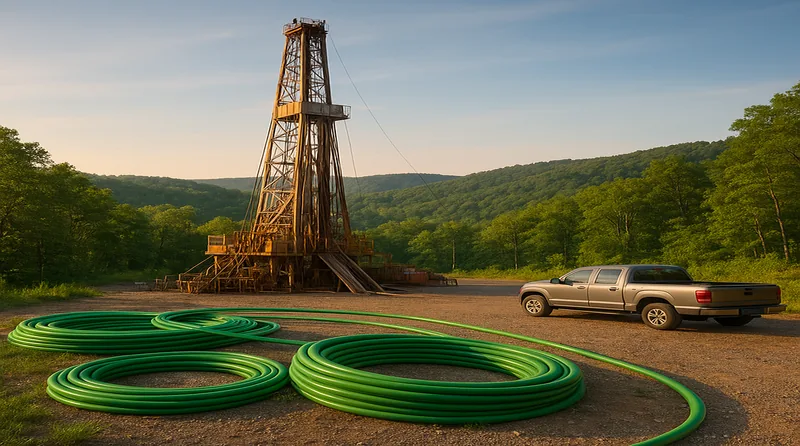
Kentucky sits at a crossroads that makes it one of the more interesting states to analyze for geothermal energy — and one of the most important to get right.
The state runs on coal. At 10.07¢/kWh, Kentucky's electricity is among the cheapest in the country — ranking 40th out of 50 states (EIA 2024). That's good news for anyone running a geothermal system. But it also means the savings gap between geothermal and many conventional heating systems is smaller here than in high-rate states. The math requires honesty.
Here's the key insight: geothermal makes strong economic sense in eastern Kentucky propane country — and a reasonable case for electric-resistance homes — but it's a very hard sell in Louisville and Lexington for homes already on natural gas.
Two Kentuckys. One honest guide.
Quick Verdict: Who Should Go Geothermal in Kentucky?
| Your Situation | Verdict | Typical Payback |
|---|---|---|
| Propane heat — eastern KY Appalachian counties | ✅ Strong yes | 7–9 years |
| New construction — anywhere in Kentucky | ✅ Strong yes | 4–6 years (incremental) |
| USDA REAP eligible farm/rural business | ✅ Excellent | 3–6 years |
| Electric resistance heat — rural co-op areas | ✅ Yes | 7–11 years |
| Propane heat — western KY, rural central KY | ✅ Yes | 7–10 years |
| Vacation rental — Lake Cumberland, Red River Gorge | ✅ Yes — enhanced ROI | 6–9 years |
| Aging heat pump / electric system replacement | ⚠️ Evaluate at replacement time | 9–13 years |
| Natural gas — Louisville, Lexington, Bowling Green | ❌ Not on payback alone | 25–30+ years |
Get Your Kentucky Geothermal Quote
Connect with IGSHPA-certified installers serving your county. Free quotes, no obligation.
Find KY Installers → Free · No obligation · IGSHPA certified onlyKentucky's Geothermal Paradox
Kentucky's cheap electricity cuts both ways. A 3-ton geothermal system in Louisville might cost as little as $370/year to run for heating — genuinely excellent. But a gas furnace in Lexington might cost only $690/year. The spread is thin. At a net install cost of roughly $14,700 after the federal tax credit, you're looking at 25–30 years to break even on gas.
Swing over to Pike County in eastern Kentucky, where propane at $3.20/gallon is the heating fuel — and that same geothermal system saves you $1,800+ per year. Payback: 7–9 years. That's a fundamentally different proposition.
This isn't a flaw with geothermal. It's just geography and infrastructure. Understanding which Kentucky you live in is step one.
Does Geothermal Actually Work in Kentucky?
Yes — and the climate conditions are quite good compared to northern states.
| City / Region | HDD | CDD | Ground Temp (°F) | Primary Heating Fuel |
|---|---|---|---|---|
| Louisville Metro | 4,400 | 1,000 | 57–60 | Natural gas (LG&E) |
| Lexington / Bluegrass | 4,700 | 800 | 57–60 | Natural gas (KU) |
| Bowling Green | 4,200 | 900 | 57–59 | Gas / propane mix |
| Pikeville (eastern KY) | 5,300 | 700 | 54–57 | Propane / electric resistance |
| Paducah / Western KY | 4,000 | 950 | 58–61 | Gas / propane / TVA co-op |
| Hazard / Perry County | 5,100 | 700 | 54–57 | Propane / electric co-op |
Ground temperatures of 54–60°F support COP of 3.5–4.5 in heating mode — excellent efficiency regardless of region. Louisville's 1,000 cooling degree days make cooling savings meaningful, adding $150–$250/year to the ROI regardless of heating fuel type.
Kentucky's Four Distinct Energy Markets
1. Louisville Metro & Suburban Ring
Natural gas territory. LG&E serves Jefferson County and suburbs. Gas rates are low, payback on gas homes runs 25–30 years. Makes sense mainly for new construction or system replacement decisions.
2. Central Kentucky / Bluegrass Region
Lexington, Frankfort, Danville — served by Kentucky Utilities (KU) with natural gas. Similar economics to Louisville. Rural pockets on propane or electric resistance where the math improves. Karst limestone geology requires site-specific evaluation (see karst section).
3. Eastern Kentucky Appalachian Counties
Pike, Floyd, Johnson, Knott, Letcher, Perry, Harlan, Bell, Knox, and surrounding counties — this is where geothermal makes the strongest residential case in Kentucky. No natural gas pipeline. Propane dominant. Electric resistance common in older rural co-op homes. High HDDs + propane dependence + economic transition from coal = an excellent undiscovered geothermal market in the eastern US.
4. Western Kentucky
The Western Coal Fields and Purchase Region (Paducah, Hopkinsville, Madisonville) — mix of gas, propane, and electric resistance. Some TVA service territory through rural co-ops. Lower HDDs than eastern KY reduce heating-season savings, but strong summer cooling loads (950 CDD in Paducah) add value for geothermal cooling efficiency.
Regional Installation Costs
| Region | 3-Ton Vertical (Gross) | After 30% ITC | Horizontal (if available) | Contractor Availability |
|---|---|---|---|---|
| Louisville Metro | $18,000–$26,000 | $12,600–$18,200 | $13,000–$20,000 | Good — multiple firms |
| Lexington / Bluegrass | $17,000–$25,000 | $11,900–$17,500 | $12,000–$19,000 | Good |
| Eastern KY (Appalachian) | $20,000–$30,000 | $14,000–$21,000 | Limited by terrain | Thin — travel premium likely |
| Western KY / Paducah | $17,000–$25,000 | $11,900–$17,500 | $12,000–$19,000 | Moderate |
| Rural central KY | $17,000–$26,000 | $11,900–$18,200 | $12,000–$19,000 | Moderate |
Eastern Kentucky carries a drilling premium due to hard Appalachian sandstone and shale — budget 10–20% above the Louisville range for borehole installation in mountain counties. Horizontal loops are limited by terrain in the mountains; most eastern KY installs use vertical boreholes.
Three-Scenario ROI Summary
Scenario 1 — Propane (eastern/rural KY): 700 gal × $3.20 = $2,240/yr vs. $370–$420/yr geo. Annual savings ~$1,820–$1,870 + cooling $150–$250. Net cost ~$14,000. Payback: 7–9 years.
Scenario 2 — Electric resistance (rural co-op areas): $1,800–$2,500/yr resistance vs. $370–$500/yr geo. Annual savings $1,300–$2,000. Net cost ~$14,000. Payback: 7–11 years. (Note: Kentucky's cheap electricity shrinks the gap vs. high-rate states, but the COP multiplier still delivers meaningful savings.)
Scenario 3 — Natural gas (Louisville, Lexington): 600 therms × $1.15 = $690/yr vs. $370–$420/yr geo. Annual savings ~$270–$320 + cooling $150–$250. Net cost ~$14,700. Payback: 25–30 years. We won't dress this up.
Real-World Kentucky Case Studies
Case Study 1: Pike County Propane Farmhouse — 7.5-Year Payback
- Location: Outside Pikeville, Pike County (Appalachian sandstone/shale)
- Home: 2,400 sq ft ranch, 1978 construction, propane furnace + window AC units
- Prior fuel: Propane — 780 gallons/year at $3.25/gal = $2,535/year + $310 window AC electricity
- System installed: 3.5-ton vertical closed-loop (3 × 280ft boreholes in hard Appalachian rock)
- Gross cost: $25,500 (elevated due to hard-rock drilling + travel from Lexington contractor)
- Federal ITC (30%): −$7,650
- Net cost: $17,850
- Annual geo operating cost: ~$430/year electricity (heating + cooling at 10.07¢/kWh)
- Annual savings: ($2,535 + $310) − $430 = $2,415/year
- Simple payback: $17,850 ÷ $2,415 = 7.4 years
- 25-year NPV: After 7.4yr payback, $2,415/yr × 17.6 remaining years = ~$42,500 in cumulative savings
Hard-rock drilling added ~$4,000 vs. a Lexington installation — but the propane savings still deliver a sub-8-year payback. Desuperheater provides ~55% of domestic hot water in summer months, adding ~$120/year in savings not included above.
Case Study 2: Lexington New Construction — 5.1-Year Incremental Payback
- Location: Jessamine County (outside Lexington, Bluegrass limestone karst)
- Home: 2,800 sq ft new construction, natural gas area but owner chose geothermal
- Baseline comparison: High-efficiency gas furnace + central AC = $14,500 installed
- Geothermal system cost: $27,000 gross (karst site — required pre-drilling geologic review)
- Federal ITC (30%): −$8,100
- Net geothermal cost: $18,900
- Incremental cost vs. gas HVAC: $18,900 − $14,500 = $4,400 incremental
- Annual geo operating cost: ~$520/year (heating + cooling, new construction envelope)
- Annual gas HVAC operating cost would have been: ~$1,350/year (gas heat + AC electricity)
- Annual savings vs. gas: $1,350 − $520 = $830/year
- Incremental payback: $4,400 ÷ $830 = 5.3 years
New construction framing changes the Kentucky calculus entirely. Even in a gas market, the incremental cost of choosing geothermal over a standard gas system is modest — and the operational savings compound over 25–30 years. This owner locks in ~$830/year in savings from day one, protected from gas price volatility indefinitely.
Month-by-Month Energy Profile
Based on the Pike County propane farmhouse (Case Study 1 baseline, 2,400 sq ft eastern KY):
| Month | Old Propane + AC Cost | Geothermal Cost | Monthly Savings | Notes |
|---|---|---|---|---|
| January | $410 | $75 | $335 | Peak heating — 5,300 HDD year, cold mountain winters |
| February | $370 | $68 | $302 | Still heavy heating load |
| March | $240 | $52 | $188 | Shoulder season — heating tails off |
| April | $95 | $28 | $67 | Minimal conditioning |
| May | $40 | $22 | $18 | DHW desuperheater savings begin |
| June | $55 | $35 | $20 | Cooling starts — COP 5.0+ in cooling mode |
| July | $80 | $48 | $32 | Peak cooling — comfortable mountain summers |
| August | $75 | $45 | $30 | Cooling + desuperheater DHW savings |
| September | $40 | $25 | $15 | Cooling tails off |
| October | $135 | $38 | $97 | Heating ramp-up |
| November | $290 | $60 | $230 | Heavy heating resumes |
| December | $375 | $72 | $303 | Near-peak heating |
| Annual Total | $2,205 | $568 | $1,637 |
At 10.07¢/kWh and propane $3.25/gal. Note January and February account for 38% of annual propane use — the heating season concentration in mountain counties creates a pronounced savings spike in winter months.
Open-Loop System Assessment by Region
| Region | Open-Loop Viability | Key Considerations |
|---|---|---|
| Louisville Metro / Jefferson Co. | ⚠️ Site-specific | Variable well yields in glacial/alluvial areas. Ohio River valley may have suitable aquifers. Test well recommended. |
| Bluegrass / Lexington area | ⚠️ Karst caution | Limestone aquifers can yield 10–40 gpm but interconnected karst systems complicate discharge. KY Div. of Water review essential. |
| Eastern KY Appalachian | ❌ Generally not viable | Sandstone/shale yields typically 1–3 gpm — insufficient for open-loop. Vertical closed-loop is standard. |
| Western KY / Purchase Region | ✅ Often viable | Alluvial deposits along Ohio, Green, and Tennessee rivers can yield excellent water. Closed-loop still preferred for simplicity. |
| Pennyroyal Plateau (south-central) | ⚠️ Karst caution | Mammoth Cave karst region — same concerns as Bluegrass. Open-loop requires thorough KGS/DOW review. |
| Lake Cumberland watershed | ⚠️ Site-specific | Cumberland Plateau sandstone — moderate yields where fractured. Verify well yield before committing. |
Most Kentucky installers default to closed-loop — simpler permitting, no karst risk, universally applicable. Open-loop is worth discussing with your contractor only in the western alluvial river valleys where yields are consistently high.
Loop Type Cost Comparison
| Loop Type | Typical KY Cost (3-ton) | Land Needed | Best For | Kentucky Notes |
|---|---|---|---|---|
| Vertical closed-loop | $17,000–$30,000 | Small — 15×15 ft per bore | Suburban lots, eastern KY mountain terrain | Standard statewide; eastern KY +10–20% for hard rock drilling |
| Horizontal slinky | $12,000–$20,000 | ½–1 acre flat/sloped land | Bluegrass farms, western KY rural | 30–40% cheaper; limited in Appalachian mountain counties |
| Horizontal straight | $11,000–$18,000 | 1–2 acres minimum | Lancaster-style farmland, western KY | Best economics where flat land is available |
| Pond/lake loop | $13,000–$20,000 | ½+ acre pond, 8ft+ depth | Farm ponds, Lake Cumberland lakefront | Excellent option; KY has abundant farm ponds and lake access |
| Open-loop | $14,000–$22,000 | Existing well + discharge | Western KY alluvial zones | KY Div. of Water permit required; avoid in karst terrain |
Incentives and Financing
Incentive Stacking Summary
| Incentive | Amount | Status | Contact / Source |
|---|---|---|---|
| Federal ITC (Section 25D) | 30% of total installed cost | ✅ Confirmed through 2032 | IRS Form 5695 |
| LG&E efficiency rebate | Varies by program year | [NEEDS VERIFICATION] | lge-ku.com |
| Kentucky Utilities (KU) rebate | Varies by program year | [NEEDS VERIFICATION] | lge-ku.com |
| Duke Energy KY (northern KY) | Varies | [NEEDS VERIFICATION] | duke-energy.com |
| TVA EnergyRight (eastern KY co-ops) | Varies by co-op | [NEEDS VERIFICATION] | Contact your rural electric co-op directly |
| KY property tax exemption | Assessed value exempt | [NEEDS VERIFICATION] | KRS 132.020 — verify with county PVA |
| USDA REAP (farms/rural business) | 25–50% grant | ✅ Active program | USDA Rural Development KY State Office |
Kentucky has historically been among the least active states on clean energy incentives. There is no state-level geothermal tax credit or rebate as of 2026. The federal 30% ITC is the primary financial incentive — and at $6,000–$9,000 on a typical installation, it's substantial. Call your utility before signing any contract to confirm current rebate availability.
Solar + Geothermal Stacking Strategy
Kentucky's net metering rules (HB 227, 2019) allow residential solar with net metering billing — but with a catch: KU and LG&E customers pay a monthly "standby charge" that somewhat reduces solar economics. Despite this, the solar + geo combination still makes sense for eastern Kentucky propane homes:
- Geothermal alone: Reduces propane spend by ~80% — from $2,240/yr to ~$420/yr electricity
- 4–5 kW solar array: ~$8,000–$10,000 net after 30% ITC — can offset most or all of geothermal electricity
- Combined effect: Near-zero energy cost for heating and cooling — eliminates propane delivery entirely
- Combined payback estimate: 9–13 years for both systems — longer than geo alone, but you eliminate ALL heating/cooling energy costs for 25+ years
For eastern Kentucky homeowners already dealing with propane delivery logistics and price volatility, the complete energy independence argument is often as compelling as the financial case. Note that Kentucky's 10.07¢/kWh rate means solar savings per kWh are lower than in high-rate states — factor this into your combined system analysis.
Vacation Rental & Second Home Analysis
Kentucky's vacation markets — Lake Cumberland, Red River Gorge, Daniel Boone National Forest, and the Mammoth Cave region — present genuine geothermal opportunities:
- Lake Cumberland lakefront cabins: Propane-heated, high summer cooling load (boating season), large lots often suitable for horizontal loops or pond loops. Geothermal payback: 7–10 years. "Eco-friendly geothermal heated" is a genuine VRBO/Airbnb differentiator in this market.
- Red River Gorge / Natural Bridge rentals: Propane-dependent, significant summer hiking tourism + fall foliage season + shoulder-season shoulder demand. Four-season rental income improves ROI over a primary residence calculation.
- Bluegrass horse farm properties: Large agricultural lots, consistent year-round temperature needs for horse barns and farm offices, often REAP-eligible. Pond loops from farm ponds are cost-effective. The combination of REAP + 30% ITC can reduce net cost by 55–80%.
If the vacation property generates rental income, consult a tax professional about MACRS depreciation of the geothermal system (5-year accelerated schedule for energy property) in addition to the 30% ITC — this can significantly accelerate the financial return.
USDA REAP for Kentucky Agricultural Properties
Kentucky's agricultural sector — tobacco, horse farming, beef cattle, and small-grain operations — makes REAP highly relevant. Eastern Kentucky farms transitioning from coal-economy to agriculture and rural tourism are natural REAP candidates.
REAP Math: Eastern Kentucky Farm Example
| Item | Amount |
|---|---|
| 4-ton vertical system (farmhouse + outbuilding heating) | $28,000 |
| USDA REAP grant (25%) | −$7,000 |
| Federal ITC 30% (on $28,000 − $7,000 = $21,000) | −$6,300 |
| Net cost after stacking | $14,700 |
| Annual propane savings (farm + house) | $3,100/year |
| Payback | 4.7 years |
A 50% REAP grant (competitive rounds) drops net cost to $7,700 and payback to 2.5 years. Apply early — Kentucky REAP funds are awarded quarterly and competition is real.
Apply through the USDA Rural Development Kentucky State Office. Your county extension office can assist with the application.
How to Claim the Federal Tax Credit (IRS Form 5695)
- Confirm system eligibility. Your ground-source heat pump must meet ENERGY STAR requirements. Check the manufacturer's AHRI certificate — WaterFurnace, ClimateMaster, Bosch, and most major brands qualify. System must be installed at your primary or secondary residence.
- Gather documentation. Collect: (a) itemized installer invoice showing total cost (equipment, labor, drilling, loop), (b) ENERGY STAR or AHRI certification for the heat pump unit, (c) proof of residence. Retain all documentation for at least 7 years.
- Complete IRS Form 5695, Part I. Enter total installed cost on Line 12a. If you received a USDA REAP grant, subtract the grant amount — only your net out-of-pocket qualifies for the ITC.
- Calculate the credit. Multiply Line 12a by 0.30. No dollar cap through 2032. On a $25,500 installation, that's $7,650.
- Transfer to Form 1040. The credit from Form 5695 flows to Schedule 3, Line 5 — reducing your tax liability dollar-for-dollar.
- Handle carryforward if needed. Unused credit carries forward to subsequent tax years. Eastern KY homeowners with lower annual tax liability may need 2–3 years to fully use a large credit.
- File and retain records. File Form 5695 with your federal return. Keep installer invoice, ENERGY STAR cert, and permit docs for 7+ years.
Karst Geology: A Kentucky-Specific Caution
Kentucky sits over some of the most famous karst limestone terrain in the United States — Mammoth Cave is in Kentucky. This matters for geothermal in specific regions.
Karst geology features dissolved limestone formations, caves, sinkholes, and interconnected groundwater. In the Bluegrass Region around Lexington, Frankfort, and Danville — and in the Pennyroyal Plateau through south-central Kentucky — karst features are common.
For vertical boreholes: Karst limestone has good thermal conductivity (1.4–2.2 BTU/hr·ft·°F), but drilling can encounter voids or caves. Experienced crews use specialized grouting techniques to seal around irregular formations. Require proof of karst drilling experience from any installer working in Bluegrass or south-central KY.
For open-loop systems: Karst aquifers are interconnected and often serve as drinking water sources. The Kentucky Division of Water may impose additional requirements or restrict open-loop discharge in karst areas. Get DOW guidance before committing.
Eastern Kentucky is safe: The Appalachian counties (Pike, Floyd, Harlan, etc.) are primarily sandstone and shale — not karst limestone. Karst is a central and south-central Kentucky consideration, not an eastern KY issue.
Permits & Regulations in Kentucky
- Licensed well driller required: Kentucky requires a licensed water well driller for all geothermal boreholes — your installer must hold a valid KY driller's license through the Kentucky Division of Water.
- Kentucky Division of Water: Borehole installations must comply with the Kentucky Water Well Standards Act and 401 KAR Chapter 6. Your driller handles this paperwork.
- Karst areas: Additional DOW/environmental review may apply — see karst section above.
- Local permits: Standard mechanical and electrical permits from your county/city building department. Most Kentucky jurisdictions process these routinely; budget 2–4 weeks.
Overall, Kentucky's regulatory environment for geothermal is not burdensome compared to coastal states. The primary requirements are things a competent installer handles routinely.
Finding a Kentucky Geothermal Installer
Start with the IGSHPA certified contractor directory. Louisville and Lexington have established geothermal contractors. Eastern Kentucky is thin — expect travel premiums from Lexington or Virginia/West Virginia border contractors.
Questions to ask any Kentucky installer:
- Are you licensed as a Kentucky water well driller, or working with a licensed sub?
- Have you drilled in this county's geology before? (For eastern KY: Appalachian hard rock. For Bluegrass: karst limestone.)
- What drilling method for hard rock? (Eastern KY requires rotary capable of penetrating sandstone/shale.)
- For karst areas: How do you handle formation voids in grouting?
- Who pulls the Division of Water permits?
- Can you provide local references from the past 18 months?
Kentucky vs. Neighboring States
| Factor | KY | TN | WV | OH | VA | IN |
|---|---|---|---|---|---|---|
| Electricity rate | 10.07¢ | 12.87¢ | 11.78¢ | 11.29¢ | 15.94¢ | 13.21¢ |
| Grid CO₂ (lbs/MWh) | ~1,744 | ~830 | ~1,171 | ~1,005 | ~604 | ~1,393 |
| State incentive | None | None | None | None | None | None |
| Propane payback | 7–9 yr | 5–7 yr | 4–6 yr | 8–12 yr | 7–10 yr | 6–8 yr |
| Gas payback | 25–30+ yr | 20–35 yr | 20–30 yr | 22–35 yr | 20–30 yr | 22–35 yr |
| Best scenario | Eastern KY propane | East TN propane | Electric baseboard | SE OH propane | SW VA propane | NE IN propane |
Kentucky's position: Lowest electricity rate of any neighbor — great for operating costs. But the high grid CO₂ (1,744 lbs/MWh) means geothermal switching from gas is carbon-negative in the short term. No state incentives (same as WV, OH, TN). Propane-to-geo economics are strongest in eastern Appalachian counties, similar to southeast Ohio and southwest Virginia.
Frequently Asked Questions
On pure payback, no — 25–30+ years on Louisville's cheap LG&E gas rates. Where it can make sense: new construction (incremental cost vs. gas HVAC is modest, operating savings compound for 30 years), or if your gas system is failing and you're comparing geo to a new furnace + AC at replacement time. Energy independence and long-term price certainty are valid reasons even when the raw payback math is unfavorable — but "it'll pay for itself quickly" isn't true for Louisville gas homes.
Very realistic — this is Kentucky's strongest geothermal scenario. The main variables: propane price (higher prices = faster payback; 2022/23 spikes would have delivered 5–6 year payback), your actual propane consumption (cold mountain winters and larger homes increase savings), and whether you currently have central AC (adding cooling simultaneously improves the baseline you're comparing against). Get a site assessment with your actual utility bills in hand — a qualified installer can model your specific numbers.
TVA's EnergyRight program has historically offered heat pump rebates through member co-ops, and some eastern Kentucky rural electric co-ops participate. Big Sandy RECC, Cumberland Valley Electric, and East Kentucky Power Cooperative serve these counties — call your specific co-op directly to ask about current GSHP incentives. Program terms change annually and vary by cooperative. Don't assume based on what a neighbor received two years ago.
It can — but it doesn't disqualify geothermal. Karst limestone has good thermal conductivity and can support excellent geothermal installations. The considerations: (1) your driller needs karst experience and proper grouting techniques for voids/caves, (2) open-loop systems in karst aquifers require careful Kentucky Division of Water review, (3) pre-drill review of Kentucky Geological Survey karst maps is standard due diligence. Ask any Bluegrass contractor specifically about their karst experience — this differentiates qualified from unqualified installers in the region.
No state-level geothermal tax credit or rebate as of 2026 — Kentucky is among the least active states on clean energy incentives. The federal 30% ITC (Section 25D) is the primary incentive. Some utilities (LG&E, KU, Duke Energy KY) offer efficiency rebates that may apply to ground-source heat pumps — call your utility to verify current program availability. USDA REAP grants (25–50%) are available for agricultural and rural business properties.
Kentucky's grid emits ~1,744 lbs CO₂/MWh — one of the highest in the nation due to heavy coal generation. At COP 3.8, geothermal effectively produces ~459 lbs CO₂ per million BTU of heat delivered. Natural gas direct combustion produces ~117 lbs/MMBTU. On raw carbon math, switching from gas to geothermal in Kentucky actually increases emissions right now. However: (a) for propane and oil homes, geothermal is cleaner, (b) Kentucky's grid will decarbonize over the 25-year system life — geothermal automatically gets cleaner as the grid does, and (c) the efficiency multiplier means you're doing more with less fuel at the grid level regardless.
Possibly — but Lake Cumberland is a U.S. Army Corps of Engineers reservoir, which means any modifications within the lake itself require federal permitting. Most Lake Cumberland geothermal installations use vertical closed-loop systems on land rather than pond loops in the reservoir. If you have a private pond or impoundment on your property (separate from the lake), a pond loop is an excellent and cost-effective option. Verify with a local installer familiar with the Corps of Engineers restrictions in the Lake Cumberland watershed.
It makes operating costs genuinely low. A 3-ton system in Kentucky might cost $370–$500/year for heating and cooling — far less than the same system in Connecticut or New York. Over a 25-year ownership period, you're looking at $9,000–$12,500 in total operating costs — vs. $40,000–$56,000 in propane over the same period. The cheap electricity that makes competing gas bills affordable is the same cheap electricity that makes geothermal's operating cost so attractive. The cheap rate is your friend once you own the system.
At 10.07¢/kWh, solar savings per kWh are lower in Kentucky than in high-rate states — the economics are less compelling than in Connecticut or New York. For eastern Kentucky propane homes, geo alone delivers the big savings (eliminating $2,000+/year in propane). Adding solar on top extends the payback but achieves near-total energy independence. For gas homes where geo payback is already 25-30+ years, solar doesn't change the fundamental calculus. If solar interests you, evaluate it on its own merits with current KY net metering rules before combining it with a geo project.
Eastern Kentucky Appalachian counties — Pike, Floyd, Harlan, Bell, Perry, Knott, Letcher — have the strongest residential ROI due to propane dependence, high HDDs (5,000–5,300 in mountain counties), and complete absence of natural gas pipeline infrastructure. These homeowners are permanently off the gas grid; geothermal is the logical long-term solution. Second-best: rural western Kentucky propane areas and Lake Cumberland/Red River Gorge vacation rental properties. Weakest: Louisville and Lexington on cheap LG&E/KU gas.
Bottom Line: Who Should Go Geothermal in Kentucky?
Strong case — go geothermal:
- Eastern Kentucky propane homes in Pike, Floyd, Johnson, Knott, Letcher, Perry, Harlan, Bell, Knox counties — 7–9 year payback, clear long-term win
- Rural western Kentucky propane-heated homes — similar economics
- Homes on electric resistance heat, especially without central AC
- New construction anywhere in Kentucky — modest incremental cost, 30-year operating advantage
- Agricultural properties eligible for USDA REAP — potential 3–5 year payback with grant stacking
- Lake Cumberland, Red River Gorge vacation rentals — rental income premium + propane elimination
Weak financial case — think carefully:
- Louisville and Lexington metro homes on natural gas — 25–30+ year payback on cheap LG&E/KU gas
- Any KY home where the primary goal is carbon reduction (coal grid limits near-term environmental benefit for gas conversions)
Ready to Explore Geothermal for Your Kentucky Home?
Compare quotes from certified installers — especially important in thin eastern KY markets where getting multiple bids can save thousands.
Get Free Quotes → Free · No obligation · IGSHPA certified onlySee how Kentucky compares in our Tennessee geothermal guide, West Virginia guide, and Ohio guide. For propane-specific analysis, see our geothermal vs. propane comparison. For payback by state and fuel type, see our payback period hub.
🎬 Video: Geothermal in Kentucky
Coming soon — Chuck the Contractor will cover eastern Kentucky's propane-to-geothermal conversion market, including the Appalachian rock drilling challenge and real ROI from Pike County installations.
Sources
- EIA — Kentucky Electricity Profile (10.07¢/kWh, 2024 average)
- EIA — State CO₂ Emissions from Electricity Generation
- NOAA — U.S. Climate Normals (Kentucky HDD/CDD by station)
- Kentucky Division of Water — Well Construction Standards (401 KAR Chapter 6)
- Kentucky Geological Survey — Karst and Groundwater Resources
- IRS — Residential Clean Energy Credit (Section 25D)
- ENERGY STAR — Geothermal Heat Pump Federal Tax Credits
- IGSHPA — Find a Certified Geothermal Contractor
- LG&E and KU Energy — Efficiency Programs
- USDA — Rural Energy for America Program (REAP)
- DSIRE — Kentucky Incentives and Policies for Renewables
- U.S. Census — Kentucky QuickFacts
- Kentucky Association of Electric Cooperatives — Member Co-ops Directory